
Table of Contents:
- What is an Apricot Goldendoodle
- What Do Apricot Mini Goldendoodles Look Like
- Comparing Different Mini Goldendoodle Shades
- Genetics Behind This Coloring
- Changes and Fading
- Final Words
- Frequently Asked Questions
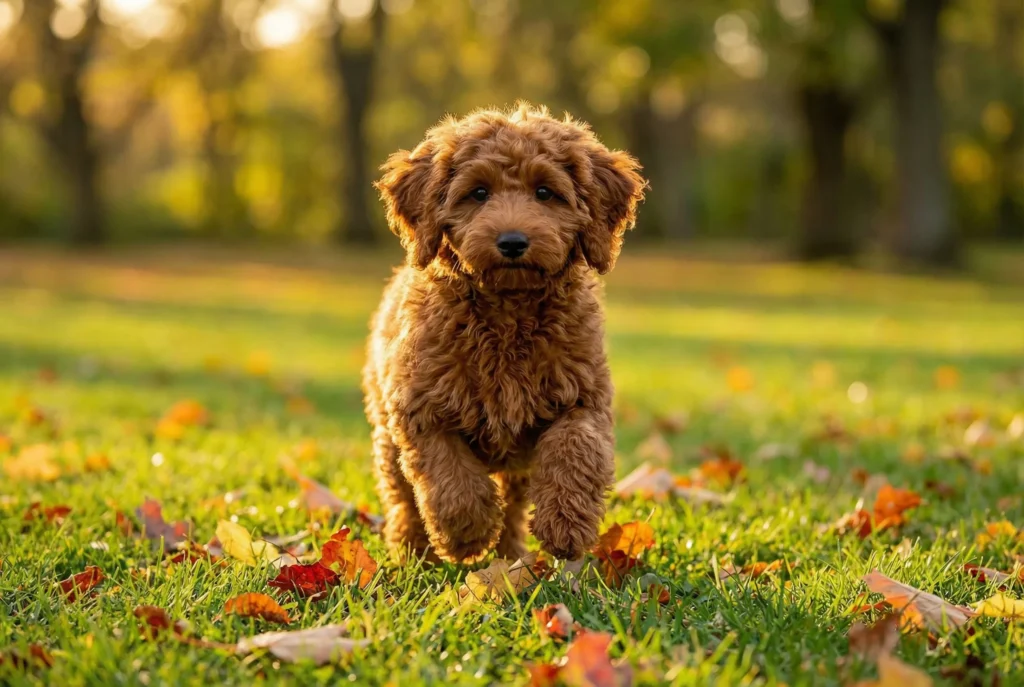
The apricot Mini Goldendoodle represents one of the most sought-after variations, featuring warm peachy-orange tones ranging from pale cream with hints of peach to rich sunset hues. This distinctive coloring comes from recessive genes inherited from Poodle lineage and typically appears in 20-30% of Mini Goldendoodle litters.
What is an Apricot Goldendoodle
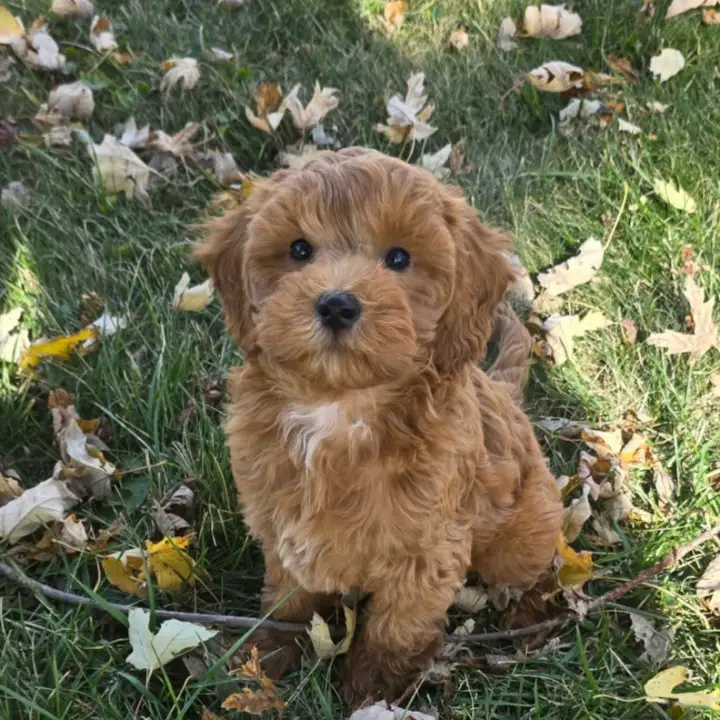
The apricot Goldendoodle falls within the warm spectrum between cream and red, displaying peachy-orange undertones that distinguish it from other light-colored variations. True apricot Mini Goldendoodles exhibit consistent coloring across their body with slightly darker ears and backs, while their legs and chest may show lighter shading.
What precisely defines this shade can be difficult as it exists on a spectrum. The American Kennel Club (AKC) recognizes it as a distinct Poodle variation, describing it as having a warm, peachy tone that’s darker than cream but lighter than red.
The genetics creating this beautiful shade involve the “e” locus (extension gene) combined with specific intensity genes. When dogs carry two copies of the recessive “e” gene, they cannot produce black pigment in their coat, resulting in shades ranging from cream to deep red. The apricot Goldendoodle sits in the middle of this spectrum, displaying moderate pigment intensity.
What Do Apricot Mini Goldendoodles Look Like
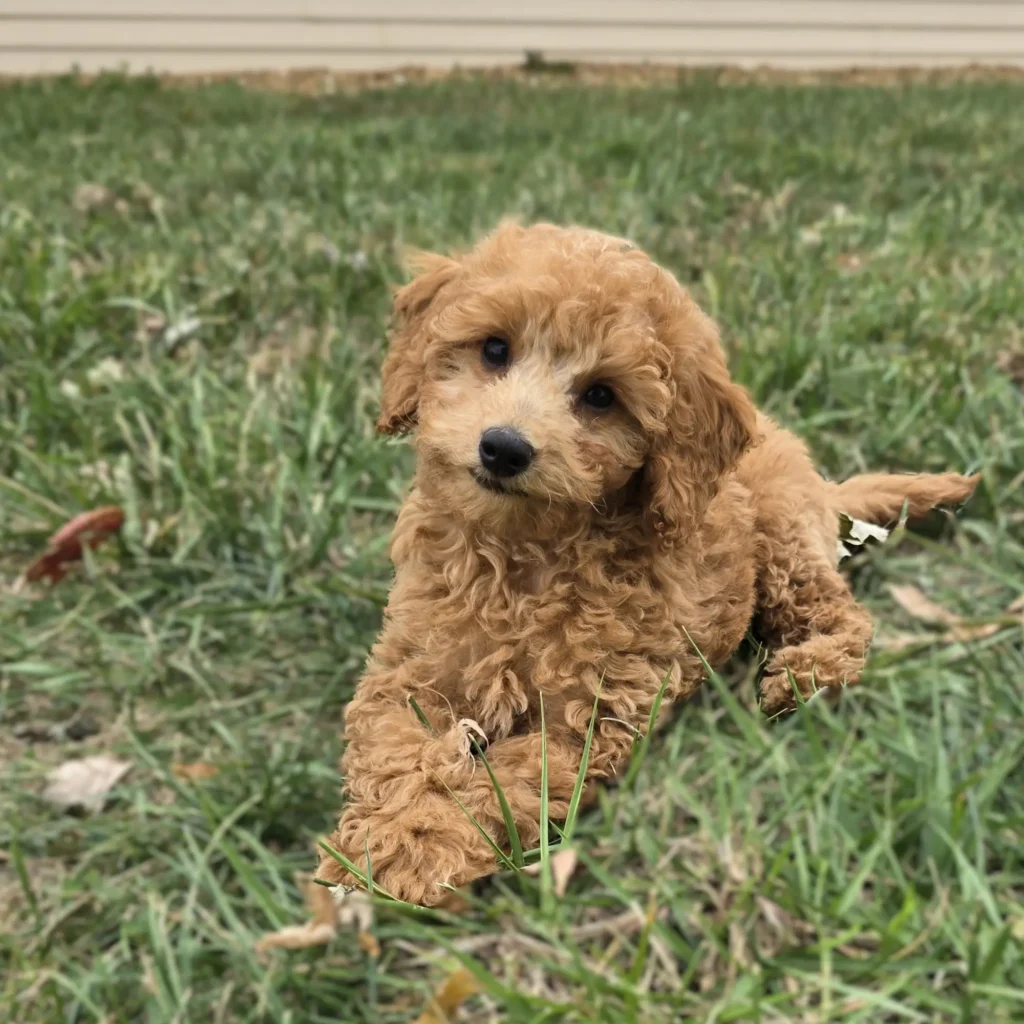
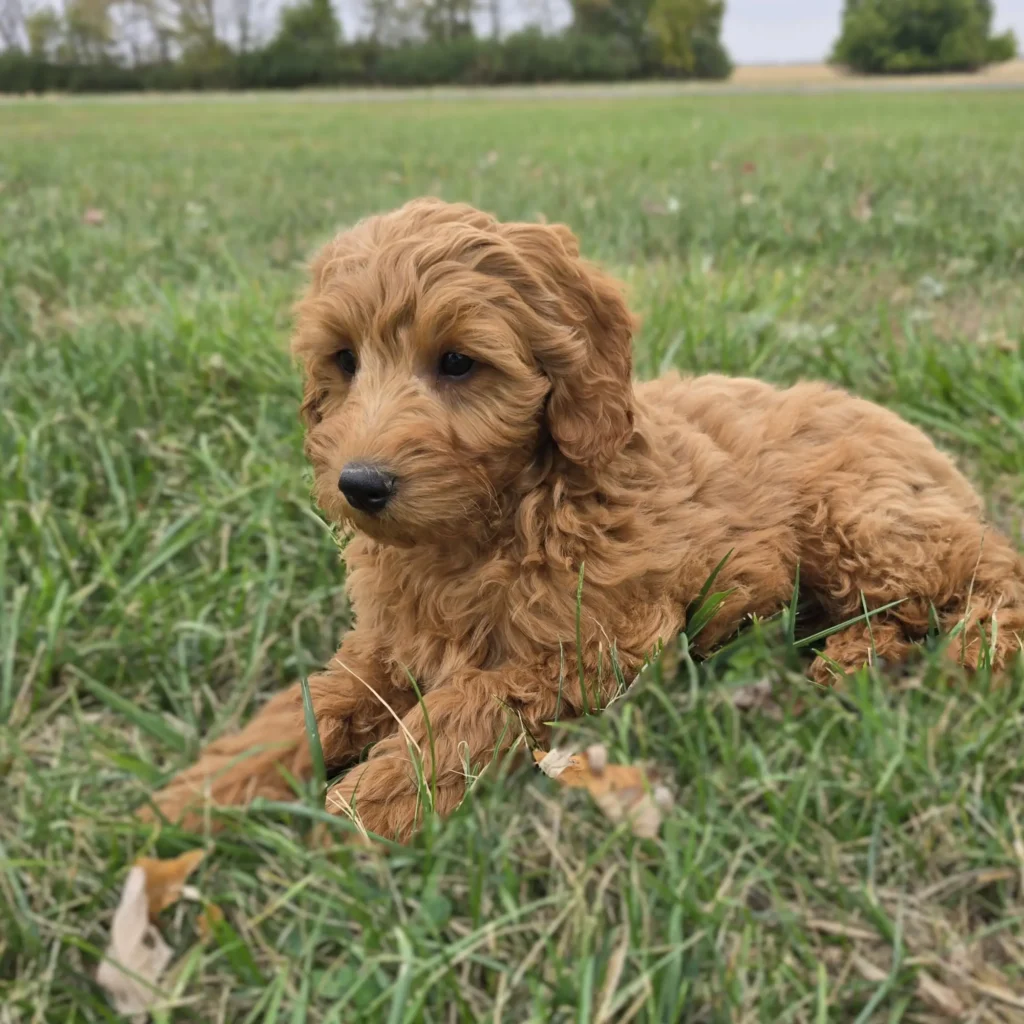
Apricot Mini Goldendoodle appearance features warm, peachy-orange tones with varying intensity levels across the coat. The ears typically display the darkest coloring, often appearing deep or almost light red, while the body shows medium tones. Feathering on the legs, chest, and tail may appear lighter, sometimes approaching cream with peachy undertones.
Nose leather ranges from liver (brown) to rose-pink, never black. Eye coloring typically appears dark amber to light brown, complementing the warm coat tones beautifully.
Puppy coats differ considerably from adult appearance. Most puppies are born darker than their adult shade, often appearing deep apricot or light red at birth. The true adult shade becomes apparent around 6-12 months as the puppy coat sheds and adult guard hairs grow in.
Spectrum and Variations
Light variations approach cream with subtle peachy undertones, particularly noticeable around the ears and back. These dogs may appear almost cream in certain lighting but display warm peach tones in natural sunlight.
Dark apricot Mini Goldendoodle variations approach red territory, displaying rich peachy-orange tones throughout the body. These dogs show more intense pigmentation with deeper ear coloring sometimes appearing reddish-brown.
The true medium peachy tone doesn’t lean too cream or too red. This middle-ground represents the classic standard, featuring warm peach hues across the body with slightly darker points on ears, back, and tail.
Physical Features
Beyond coat appearance, apricot Mini Goldendoodle traits include the standard size range of 15-35 pounds at maturity, with most falling between 20-30 pounds. Height typically measures 13-20 inches at the shoulder.
Coat type varies from wavy to curly, with F1B generations (75% Poodle) typically displaying curlier coats than F1 (50% Poodle/50% Golden Retriever). All coat types require regular maintenance to prevent matting and maintain the beautiful appearance.
Comparing Different Mini Goldendoodle Shades
Understanding comparisons helps potential owners select the shade best matching their preferences and lifestyle. Apricot Mini Goldendoodle and red variations, cream, and tan shades each offer distinct appearances with different maintenance considerations.
Apricot vs Red Mini Goldendoodles
The difference between these shades lies primarily in pigment intensity. Red Mini Goldendoodles display deep, rich mahogany or russet tones throughout their coat with minimal variation. Apricot vs red Goldendoodle comparison shows apricot as lighter and warmer, with peachy-orange tones rather than deep russet shades.
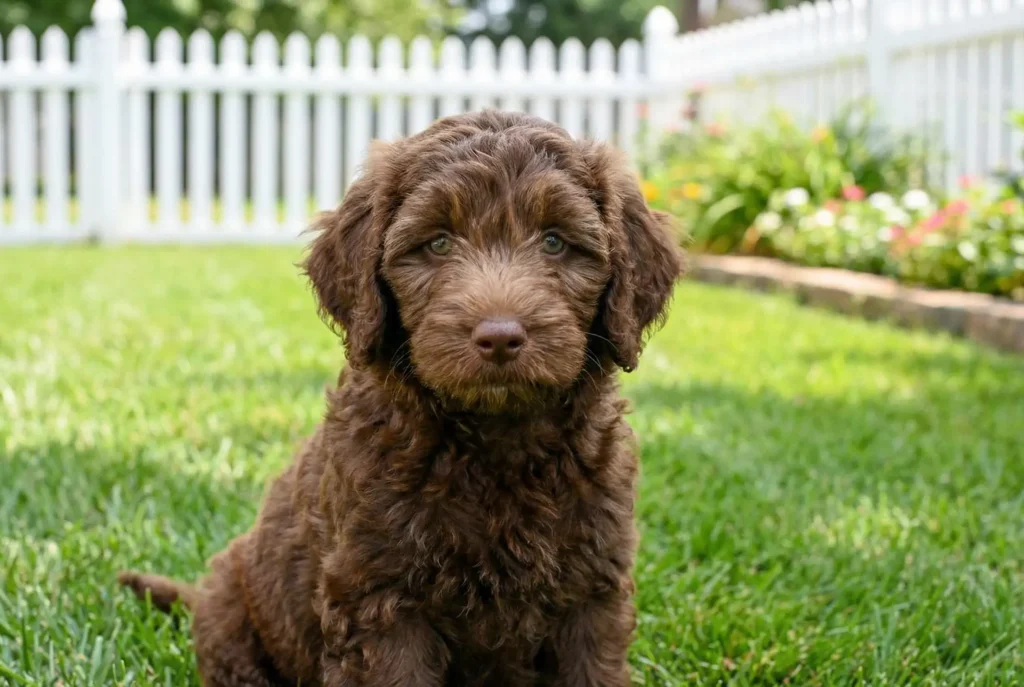
Pigmentation provides the clearest distinction. Both have liver noses and eye rims, but red variations typically show darker, more chocolate-brown pigmentation. Apricot nose leather appears lighter, often more rose-pink than deep liver.
Fading patterns differ significantly. Red Mini Goldendoodles typically lighten to medium red or dark apricot with age, while apricot dogs often fade toward cream or light peachy shades.
Apricot vs Cream and Tan Variations
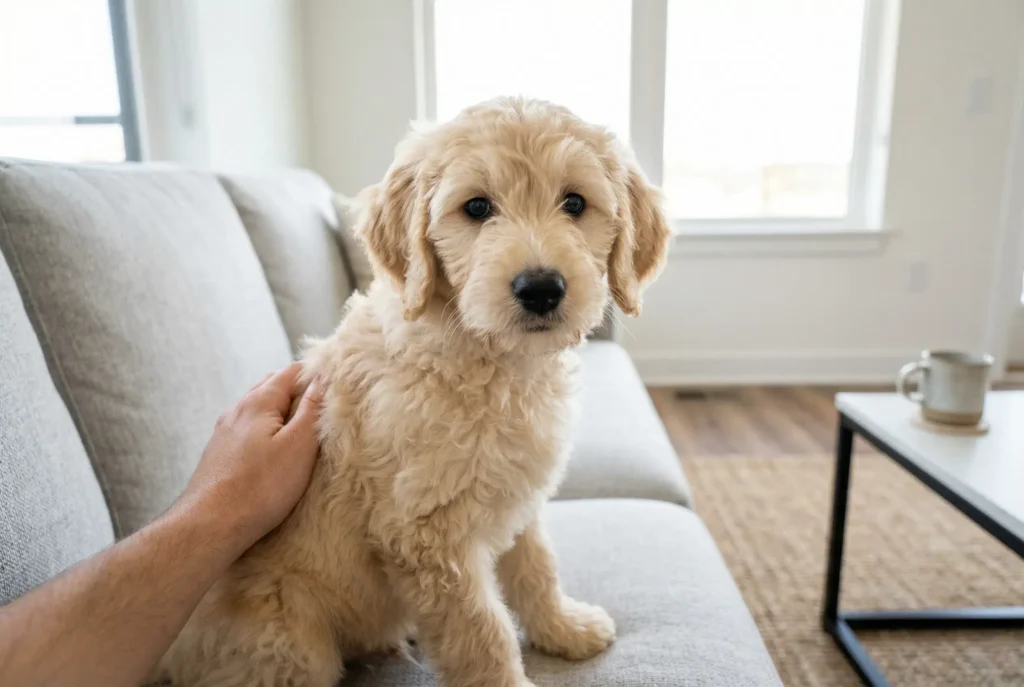
Apricot vs cream Mini Goldendoodle comparisons reveal cream as cooler-toned without the warm peachy undertones. Cream dogs appear almost white in certain lighting, with subtle ivory or champagne hints. The peachy variation clearly displays warm peach-orange tones, particularly visible in natural sunlight.
The distinction from tan involves both tone and intensity. Tan variations lean toward golden-brown shades with warmer, more brownish undertones than peachy-orange hues.
Decisions between these shades often come down to desired warmth level. Families wanting truly light-colored dogs should choose cream, while those preferring subtle warmth find the peachy option ideal.
Most Popular Mini Goldendoodle Shades Compared
The most popular shade varies by region and trend cycles, though cream, apricot, and red consistently rank highest in breeder surveys. Currently, this peachy variation represents approximately 25-30% of intentional breeding programs, with cream slightly ahead at 30-35% and red at 20-25%.
Comparing to gold shows gold as deeper and more golden-yellow than peachy-orange tones. Golden variations display true yellow-gold hues reminiscent of Golden Retrievers, while apricot leans toward warm peach.
Genetics Behind This Coloring
Understanding apricot Goldendoodle genetics helps explain inheritance patterns and predict puppy appearance. How Goldendoodles get this shade involves complex genetic interactions between multiple loci controlling pigment production, distribution, and intensity. The primary factor involves the “e” locus, where dogs must inherit two recessive “e” genes to express shades in the cream-to-red spectrum.
The inheritance pattern follows recessive genetics. Both parents must carry at least one “e” gene to produce puppies with this coloring. The intensity genes determine exact shade within the range.
Poodles contribute the primary genetic material, as Golden Retrievers typically carry dominant genes producing gold or red. Gene expression varies by generation. F1 puppies (first-generation crosses) less commonly express this shade since Golden Retrievers rarely carry the necessary recessive genes.
Parent Combinations That Produce Apricot
Parent pairings most reliably come from apricot-to-apricot or apricot-to-red combinations where both parents carry two “e” genes. These combinations guarantee all puppies fall within the cream-to-red spectrum, though exact shades vary.
Breeding apricot Mini Goldendoodles intentionally requires selecting parents with desired genetics. Breeders serious about producing puppies with this shade use genetic testing through services like Embark or Animal Genetics.
Generation Impact on Expression
F1 vs F1B generation differences significantly affect expression likelihood and intensity. F1 puppies (50% Golden Retriever, 50% Poodle) less frequently display this coloring as Golden Retriever dominant genes often mask the recessive “e” genes required.
F1B generations result from breeding F1 Goldendoodles back to Poodles, creating 75% Poodle and 25% Golden Retriever genetics. This breeding strategy increases expression likelihood substantially.
Changes and Fading
Apricot Goldendoodle fading represents one of the most common concerns for families choosing this shade. Most puppies lighten to some degree as they mature.
The typical change timeline begins around 4-6 months as the puppy coat sheds. The adult coat growing in often appears 1-2 shades lighter than the birth coat. Most significant fading occurs during the first two years, with appearance typically stabilizing by age 2-3.
Fading affects different body areas unevenly. Ear coloring typically maintains the deepest tones longest, sometimes staying rich while the body fades to lighter shades or cream.
Why lightening occurs involves multiple factors including genetics, sun exposure, age, and hormonal changes. The same genes producing this coloring often include fading characteristics inherited from Poodle lineage.
When and Why Coats Fade
Puppy to adult transformation typically progresses through predictable stages. Newborn puppies often appear darkest, with deep apricot to light red coloring. By 6-8 months, most dogs display their approximate adult shade, though further subtle lightening continues through age two.
The adult appearance generally settles 1-3 shades lighter than puppy coloring. A puppy born deep apricot might mature to medium shade, while a light puppy could fade to cream with peachy undertones.
Sun exposure accelerates fading significantly. Dogs spending extensive time outdoors develop noticeably lighter coats than house dogs, particularly on the back, ears, and top of the head.
Preventing and Managing Changes
Keeping vibrancy requires proactive strategies addressing both environmental and care-related factors. While genetic fading cannot be prevented, minimizing environmental damage helps maintain maximum intensity throughout the dog’s life.
Aging changes are inevitable, but several practices slow the process:
- Limit direct sun exposure during peak UV hours (10am-4pm)
- Apply pet-safe sun protection sprays before extended outdoor activities
- Provide shaded rest areas during outdoor play
- Keep coat length slightly longer to protect underlying hair from sun damage
Enhancing shampoos formulated for red and peachy dogs help maintain vibrancy. These products typically contain gentle pigment-depositing ingredients that restore warm tones while cleaning.
Regular grooming maintains coat health supporting optimal expression. Professional grooming every 6-8 weeks keeps coats looking their best.
Health and Temperament
A common question asks whether coat appearance influences health in Mini Goldendoodles. The reassuring answer is that coloring doesn’t affect health. Apricot Mini Goldendoodle temperament similarly remains independent of appearance, with personality traits determined by breeding, genetics, socialization, and individual disposition rather than pigmentation.
Lifespan averages 12-15 years, identical to other variations. Longevity depends on genetics from parent breeds, overall health maintenance, nutrition, exercise, and preventive veterinary care.
Hypoallergenic qualities match other variations, with coat curliness rather than shade determining allergy-friendliness.
Personality traits include:
- Friendly, outgoing nature enjoying human companionship
- Intelligent, eager-to-please temperament facilitating training
- Moderate to high energy levels requiring daily exercise
- Social disposition getting along well with children and other pets
- Adaptable nature adjusting to various living situations
Final Words
If you’re ready to welcome an apricot Mini Goldendoodle puppy into your family, choosing a responsible breeder is essential for ensuring your puppy’s health, temperament, and quality of life. At Love of Puppies, every puppy is raised with exceptional care and attention from day one. We prioritize matching families with puppies based on temperament and lifestyle compatibility, ensuring a perfect fit for both puppy and family.
Frequently Asked Questions
Do apricot Mini Goldendoodles stay the same shade?
Most lighten 1-3 shades from their puppy appearance as they mature. The transformation typically occurs between 6-24 months as the puppy coat sheds and adult hair grows in. While ears often maintain darker tones, the body typically fades to lighter shades or cream with peachy undertones.
What’s the difference between apricot and cream Mini Goldendoodles?
The peachy variation displays warm orange undertones clearly visible in natural sunlight, while cream appears cooler-toned with ivory or champagne hints and minimal warmth. Cream dogs can look almost white in certain lighting, whereas the peachy option always shows warm peach tones.
Can two cream parents produce apricot puppies?
Yes, if both cream parents carry genes for moderate pigment intensity. Cream exists on the same genetic spectrum, differing only in intensity gene expression.
How can I prevent my apricot Mini Goldendoodle from fading?
While genetic fading cannot be prevented, minimizing sun exposure helps maintain maximum intensity. Limit outdoor time during peak UV hours, provide shaded rest areas, and consider pet-safe sun protection for extended outdoor activities. Use enhancing shampoos formulated for peachy dogs and maintain regular grooming keeping coats clean and healthy.