
Available Puppies in Kentucky
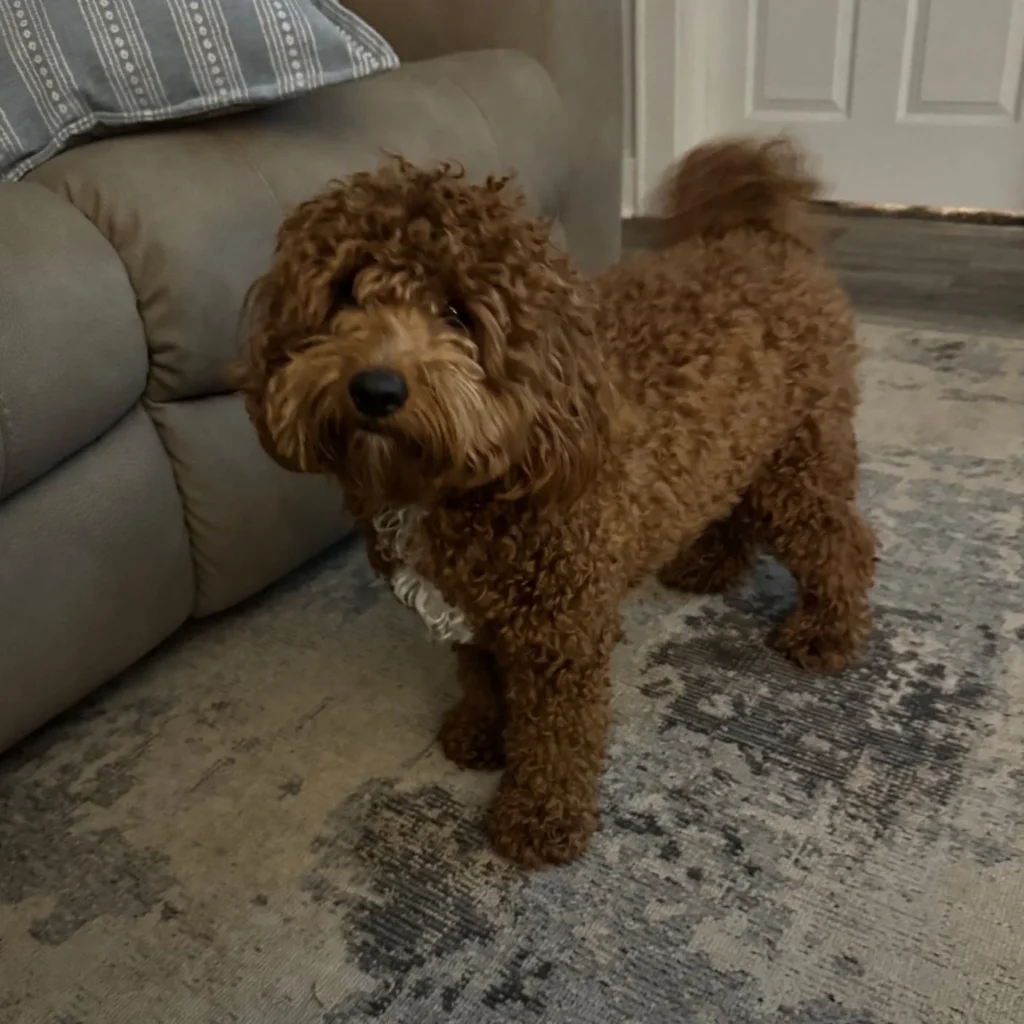

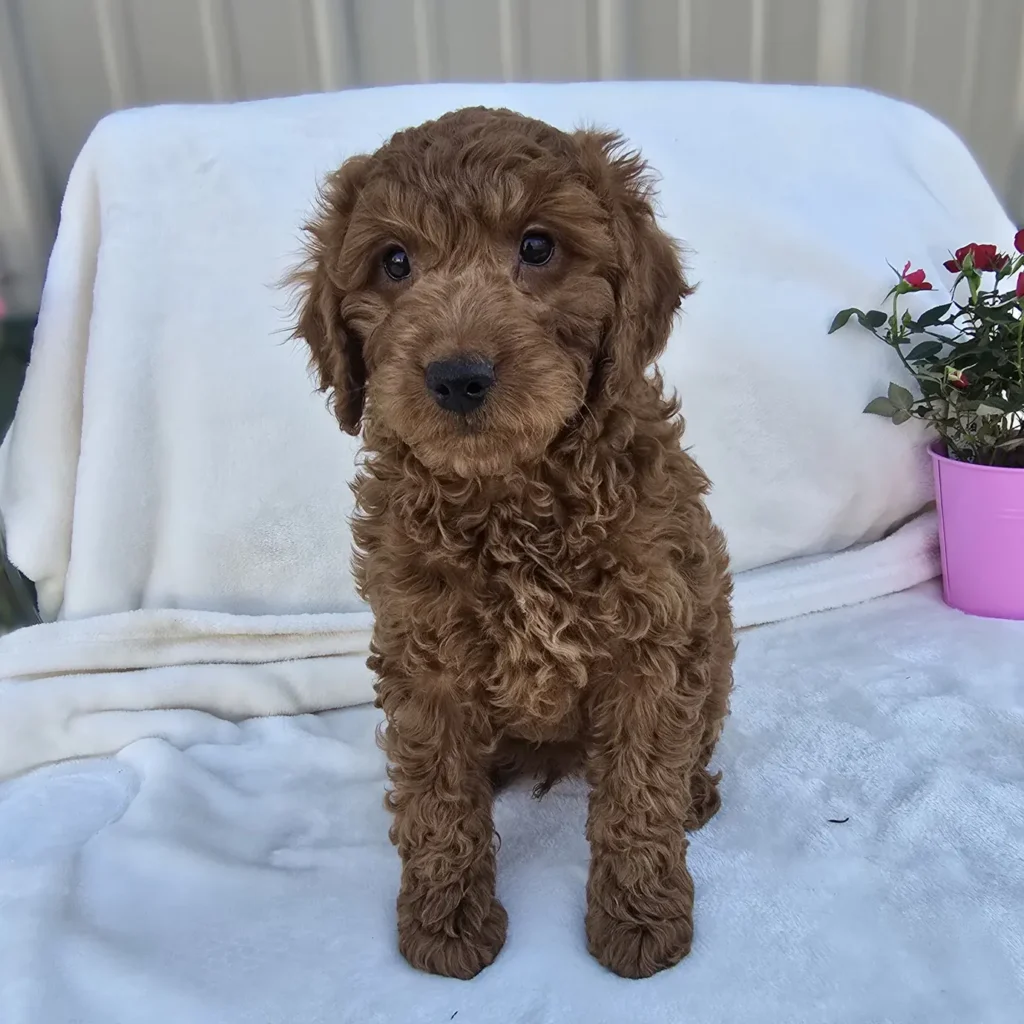
Mini Goldendoodles for Sale in Kentucky
Love of Puppies operates with 9+ years of breeding experience, focusing on early puppy development and family matching. We serve families throughout Kentucky.
What comes with your puppy:
- Comprehensive warranty against inherited conditions.
- Personality evaluation to align puppy traits with household lifestyle.
We monitor how each puppy interacts and responds before connecting them with families. Active puppies match well with energetic households; quieter puppies suit more relaxed environments. This pairing reduces behavior mismatches that can lead to surrendering dogs.
Kentucky Mini Goldendoodle Breeder Reviews
Check Out Our TikTok & Follow for the Latest Puppy Updates from the Farm! 🐾

Transportation to Kentucky
We bring Mini Goldendoodle puppies to Kentucky families using two methods. For those within 2–3 hours of Sullivan, we establish midpoint meeting locations to cut travel time in half. For buyers at greater distances, we deliver puppies to nearby airports for pickup.
We conduct all puppy transportation directly instead of contracting third-party pet shippers. This keeps us in control of travel circumstances and lets us discuss care details when you collect your puppy.
What Mini Goldendoodles Need Daily
Mini Goldendoodles result from crossing Golden Retrievers with Miniature Poodles, producing dogs that weigh 15–35 pounds at maturity. This size works in various living situations — city apartments, suburban homes, and rural properties across KY.
Their coat genetics favor low shedding, which reduces the amount of loose hair and dander circulating in homes. This makes them more compatible with allergy-prone households than breeds with heavy seasonal shedding.
Miniature Goldendoodles in Kentucky require established routines to prevent unwanted behaviors.
Core care components:
- Activity time: 30–60 minutes daily — when dogs don’t get enough movement, they channel energy into chewing belongings and excessive vocalization.
- Brushing: 3–4 sessions weekly prevents coat knots; scheduled grooming every 6–8 weeks maintains appropriate length and skin condition.
- Training sessions: 10–15 minutes daily teaching commands and boundaries.
- Social experiences: exposing puppies to various people, animals, and places before 16 weeks creates adult dogs with fewer anxiety responses.
Both Golden Retrievers and Poodles were bred for work. Without proper outlets for their energy and intelligence, behavioral issues develop. The time investment follows a predictable pattern that accommodates most schedules.
Size and Space Considerations
At 13–20 inches in height and 15–35 pounds in weight, Mini Goldendoodles fit physically in apartments and condos. Living space dimensions don’t eliminate the need for regular exercise, though.
A small apartment functions properly when you provide daily outdoor activity. A house with a fenced yard doesn’t replace structured walks — dogs need human-directed exercise and environmental stimulation that yards alone don’t deliver.
Their moderate size offers advantages: they fit comfortably in vehicles, older children can manage them on leash with oversight, and they’re less intimidating to visitors who feel nervous around larger breeds.
Selecting a Mini Goldendoodle for Sale in Kentucky
When choosing a Mini Goldendoodle, consider these practical factors:
- Generation choice: F1 offers moderate shedding with easier grooming; F1B delivers minimal shedding but demands more brush time.
- Energy assessment: We evaluate each puppy’s drive — select based on your household’s actual activity level, not general breed descriptions.
- Size projection: We show parent dogs to estimate your puppy’s adult weight within a reasonable range.
- Coat type: Curl intensity varies within litters — we identify which puppies have looser versus tighter curl patterns.
We encourage discussing your specific situation rather than making selections based only on photos or breed generalizations.
Additional delivery areas:
Frequently Asked Questions
How do Mini Goldendoodles handle Kentucky's humid summers?
They tolerate humidity reasonably well but need shade access and fresh water throughout the day. During peak afternoon heat (85°F+), limit strenuous activity and schedule exercise for cooler morning or evening hours.
What's the grooming time difference between F1 and F1B?
F1B coats need brushing 4–5 times per week compared to F1’s 3–4 times because of increased curl. Professional grooming intervals stay consistent at 6–8 weeks for both.
Do these dogs bark constantly?
Persistent barking comes from inadequate exercise or boredom, not breed characteristics. With proper daily activity and mental challenges, they bark appropriately (strangers approaching, unusual sounds) without creating noise problems.