
Available Puppies in Tennessee
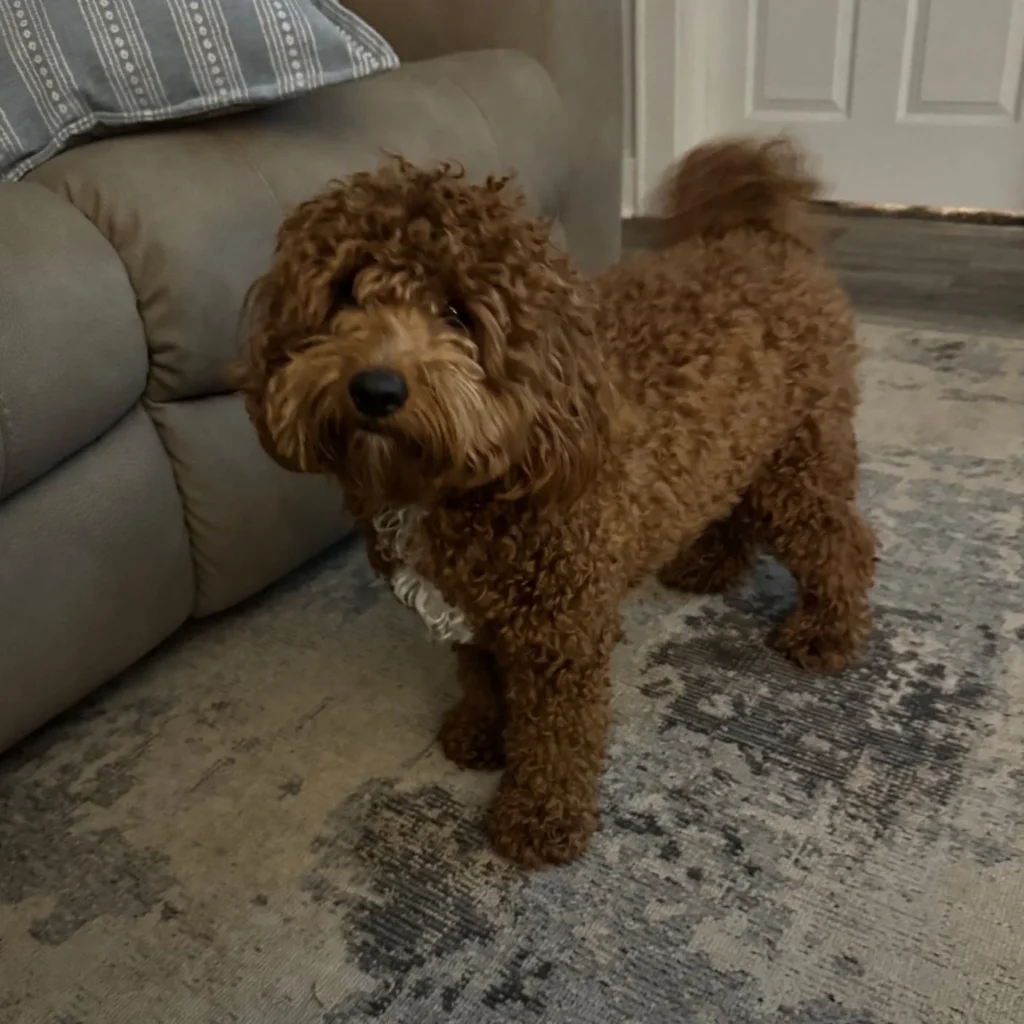

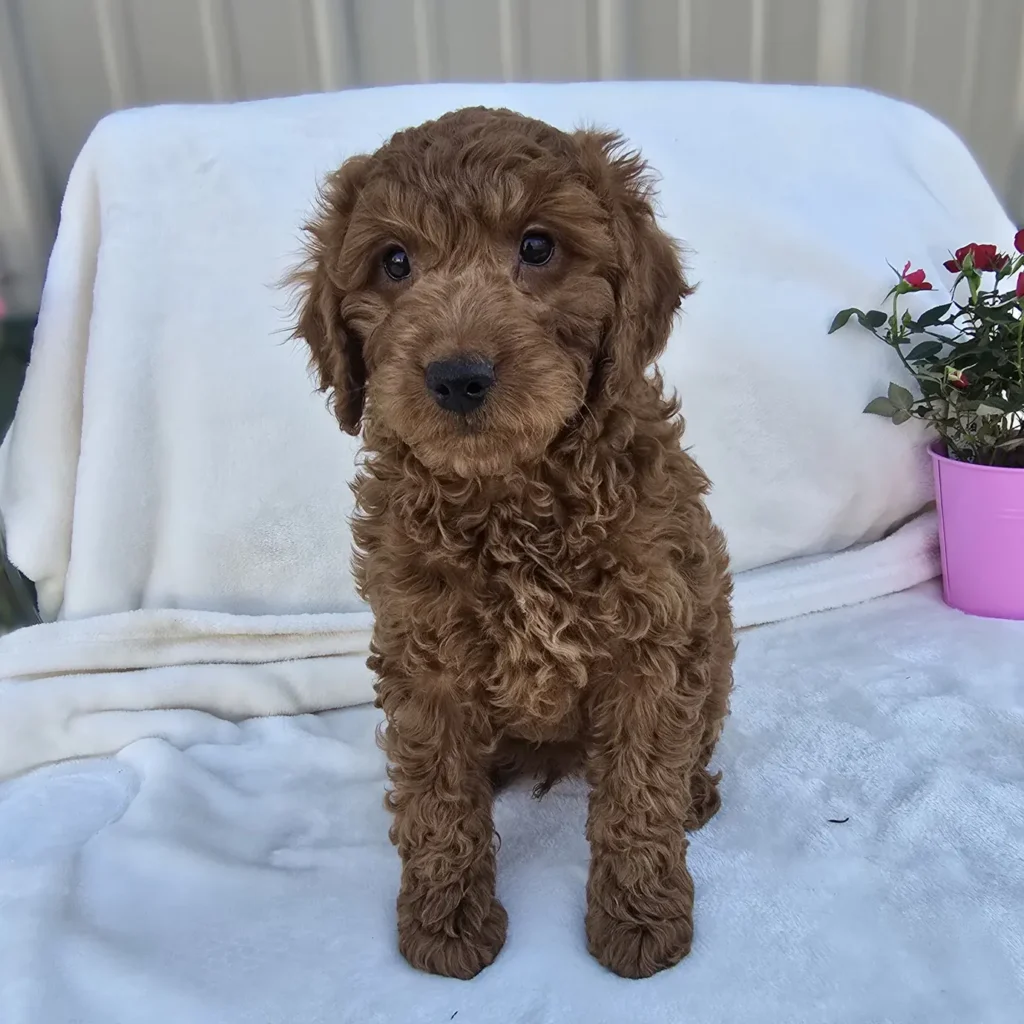
Mini Goldendoodles for Sale in Tennessee
Love of Puppies brings over 9 years of breeding expertise to Tennessee households from our Sullivan, Illinois location. We specialize in matching puppy personalities with family dynamics through systematic behavioral observation.
Our process includes:
- Genetic health warranty protecting against inherited disorders.
- Temperament profiling where we document each puppy’s play style, energy output, and social interactions.
- Direct breeder communication from selection through placement and beyond.
High-energy puppies connect with families who camp, trail-run, or maintain active outdoor schedules. Calmer puppies go to households preferring leisurely walks and indoor activities. This matching reduces the incompatibility issues that result in dogs being returned.

Tennessee Mini Goldendoodle Breeder Reviews
Check Out Our TikTok & Follow for the Latest Puppy Updates from the Farm! 🐾
Bringing Your Puppy to Tennessee
Mini Goldendoodles for sale in Tennessee reach families through two transportation methods. Buyers within driving proximity can arrange a halfway meeting point that cuts travel time for both parties. Those located farther out receive puppies at Nashville International or Memphis International airports through our personal delivery.
We complete every puppy handoff ourselves without contracting external pet transport services. This keeps travel conditions under our direct supervision and allows real-time care discussions when you collect your puppy.
Core Care Components
Mini Goldendoodles in Tennessee develop proper habits when daily structures start immediately upon arrival.
Mandatory daily requirements:
- Movement: 30–60 minutes of directed activity — walks, fetch sessions, or trail time. Denied physical outlet results in furniture destruction and attention-seeking barking.
- Coat maintenance: brush 3–4 times each week to stop tangles before they form; professional grooming sessions every 6–8 weeks for sanitary trims and length control.
- Instruction time: brief 10–15 minute training blocks daily to establish commands and reinforce household expectations.
- New experiences: deliberately exposing puppies to varied locations, unfamiliar people, and other animals before 16 weeks produces adults with stable temperaments and reduced fearfulness.
Skipped exercise creates behavioral problems. Neglected brushing produces painful mats that irritate skin. These tasks follow predictable patterns that integrate into typical family schedules.
Tennessee Weather Considerations
Tennessee’s climate accommodates Mini Goldendoodles in Tennessee comfortably across seasons. Summer months (June–September) bring temperatures of 85–92°F with high humidity — schedule exercise during morning hours before 9 AM or evening after 7 PM. Ensure water availability and shaded resting spots during peak afternoon heat.
Winter temperatures across most of Tennessee (December–February) typically stay between 30–50°F. Their natural coat insulation handles this range without additional gear. Eastern mountain regions may experience colder spells requiring dog sweaters when temperatures approach 20°F for extended outdoor periods.
The state’s moderate climate means no extreme adaptations. You won’t manage Arizona-level heat protocols or Minnesota-style winter equipment.
Adult Size and Housing Fit
These dogs reach maturity at 15–35 pounds with shoulder height between 13–20 inches. This size range works equally in Nashville apartments, Knoxville townhomes, Memphis condos, and Chattanooga houses.
Available square footage doesn’t predict compatibility — your exercise commitment does. A 550-square-foot apartment functions when you deliver consistent daily outdoor engagement. A 2,500-square-foot house with a fenced yard still demands structured walks — yards provide bathroom access but can’t replace human-directed activity or exposure to changing environments.
Their weight class offers advantages: they transport easily in vehicles, older children can handle leash duties under supervision, visitors uncomfortable around large breeds find them less intimidating.
Selection Considerations
When choosing Mini Goldendoodles in Tennessee, evaluate:
- Generation impact: F1B trades increased brushing frequency for minimal shedding. F1 accepts light hair release in exchange for simpler coat care.
- Realistic energy assessment: We document each puppy’s movement patterns and stamina. Match your choice to actual current routines, not aspirational fitness goals. High-drive puppies require owners who genuinely walk 60 minutes daily.
- Adult weight projection: Both parent dogs are available for viewing, allowing size estimates within roughly 10 pounds. Parent dimensions provide the most reliable growth prediction.
- Curl variation: Individual puppies within the same litter show different curl tightness. We identify which ones display relaxed waves versus dense spirals based on your grooming preference.
Discuss your household specifics — existing pets, children’s ages, work schedules, activity habits — instead of selecting purely by photos.
Additional delivery areas:
Frequently Asked Questions
How does Tennessee humidity affect grooming needs?
Tennessee’s summer humidity can accelerate mat formation if brushing lapses. Moisture in the coat from humid air causes tangles to tighten faster than in dry climates. Maintain your 3–4 (F1) or 4–5 (F1B) weekly brushing schedule consistently. Professional grooming stays at 6–8 week intervals year-round.
What temperatures require limiting outdoor time?
Above 90°F with high humidity, restrict exercise to early morning or late evening. Below 25°F in mountain regions, shorten walks to 15–20 minutes or add protective clothing. Most of Tennessee stays within their comfortable range (30–85°F) where no special precautions are needed.
Are they safe around children?
Temperament-wise, proper socialization creates patient, tolerant dogs. Always supervise interactions with children under 6 who may grab or handle roughly. Teach kids appropriate touching and recognition of the dog’s stress signals.
How long can they stay home alone?
Adult dogs (12+ months) manage 6–8 hour periods when adequately exercised before and after. Crate training prevents destructive behavior during absences. Puppies under 6 months need more frequent breaks—plan for midday check-ins or dog walker services if your work schedule regularly exceeds 8 hours.