Table of Contents:
- How Is Cream Mini Goldendoodle Different From White, Apricot, and Gold?
- English Cream Mini Goldendoodles
- Coat Types in Cream Mini Goldendoodles: Wavy, Curly, and How Cream Behaves in Each
- What Actually Shapes the Cream Mini Goldendoodle’s Personality?
- Frequently Asked Questions
A cream Mini Goldendoodle is one of the most searched color variants of the breed — and one of the most misunderstood. Buyers want to know whether the color holds as the dog matures, how coat texture affects the shade, and whether the “English cream” label means anything concrete. This guide answers all three questions directly, with specific numbers and a clear timeline for what to expect from puppyhood through adulthood.
How Is Cream Mini Goldendoodle Different From White, Apricot, and Gold?
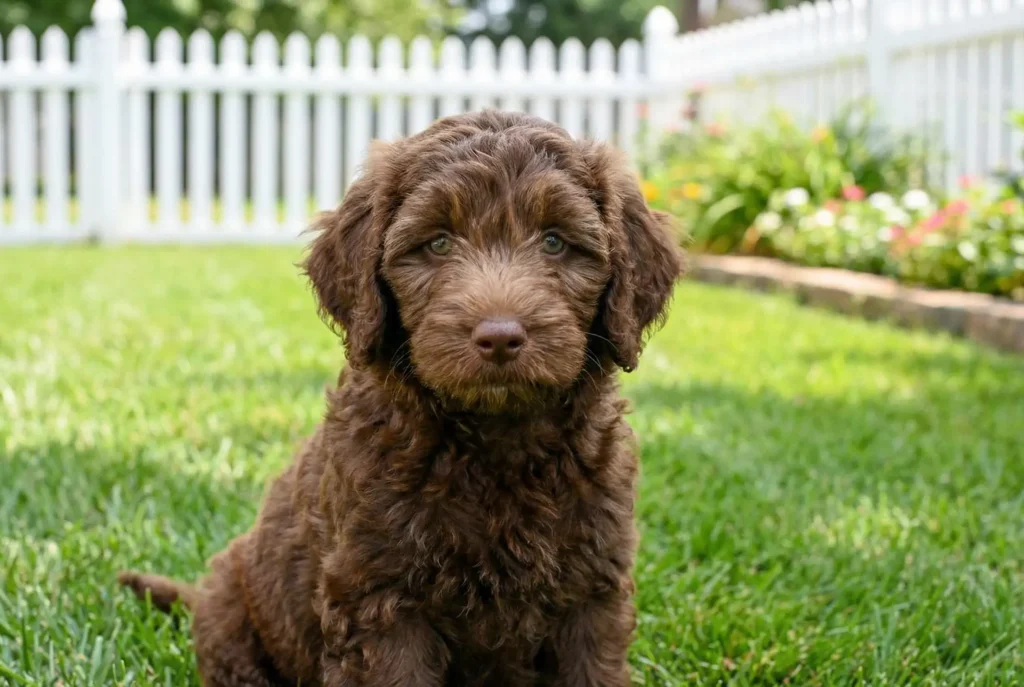
Cream sits between near-white and pale gold on the Mini Goldendoodle cream color spectrum. It is not a single fixed shade but a range. Most buyers picture a warm, buttery tone similar to vanilla ice cream, but what breeders list as cream can range from an almost snowy off-white to pale champagne gold. The color comes from both parent breeds: Golden Retrievers carry the golden pigment that produces cream and gold shades, while white or cream Poodle lines dilute that pigment toward lighter expressions.
The most common buyer confusion is between cream, apricot, and white. White is the lightest — technically an extreme dilution with almost no pigment visible in the coat. Apricot is warmer and more saturated, carrying a distinctly peachy-orange undertone. Cream sits in between: it has visible warmth but reads as clearly lighter than apricot. The boundaries between these shades are not sharp, and a dog that one breeder lists as light apricot may appear identical to what another calls deep cream.

The Cream Color Spectrum: From Near-White to Pale Gold
The cream color in Mini Goldendoodles falls into three informal sub-shades that most buyers encounter. Understanding where a puppy sits within that range helps set accurate expectations before pickup day — and before comparing puppy photos to adult photos from breeders’ websites.
- White-cream. The palest expression — coat reads as off-white with minimal golden undertone. Most common in F1B and Multigen dogs with white Poodle parentage. Adult coats remain very light but may develop a slight ivory warmth by 2 years.
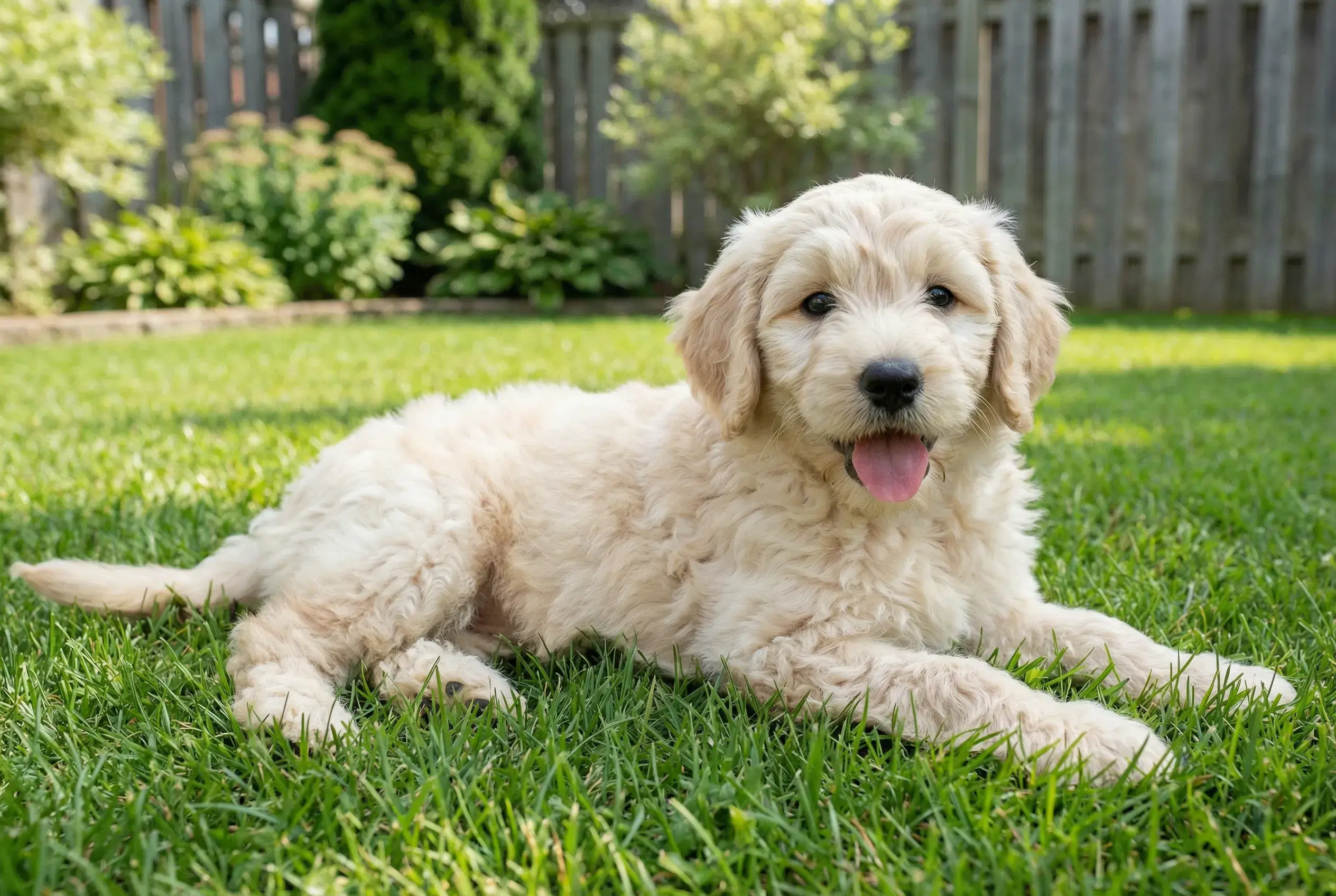
- Butter cream. The most photographed shade — warm, soft, and consistent with what most buyers envision when searching for a cream dog. Typically stable from 12 months onward, with the deepest color often visible around the ears and back.
- Pale gold. The deepest expression within the cream range — easily mistaken for light apricot. Most common in F1 dogs with American Golden Retriever parentage. This shade can deepen slightly in the first 18 months before stabilizing.
Will a Cream Mini Goldendoodle Stay Cream?
Most cream Mini Goldendoodles do not stay exactly the same shade as adults that they were as 8-week puppies — but the direction of change depends on genetics, not chance. Dogs carrying the fading gene lighten over time. A puppy that arrives as pale gold at 8 weeks will often fade toward butter cream or white-cream by 18 months. The reverse is less common but happens in F1 dogs: a near-white puppy with American Golden Retriever influence may warm slightly toward pale gold in the first year.
The critical window is 6 to 18 months — this is when the adult coat replaces the puppy coat and color change is most dramatic. By 18 months, color is largely stable. Asking the breeder for adult photos of the puppy’s parents is the most reliable way to predict where the dog will land on the spectrum as a full grown cream Mini Goldendoodle.
English Cream Mini Goldendoodles
The term “English cream” refers to a specific Golden Retriever lineage — not simply a color. An English cream Mini Goldendoodle has a parent or grandparent from English-type (British/European) Golden Retriever lines, which are genetically distinct from American Golden Retrievers in build, temperament tendencies, and coat color. The English type produces lighter coats — closer to cream and white — while American lines trend toward gold and red. When a breeder accurately uses this label, it tells you something real about parentage, not just appearance.
Coat Types in Cream Mini Goldendoodles: Wavy, Curly, and How Cream Behaves in Each
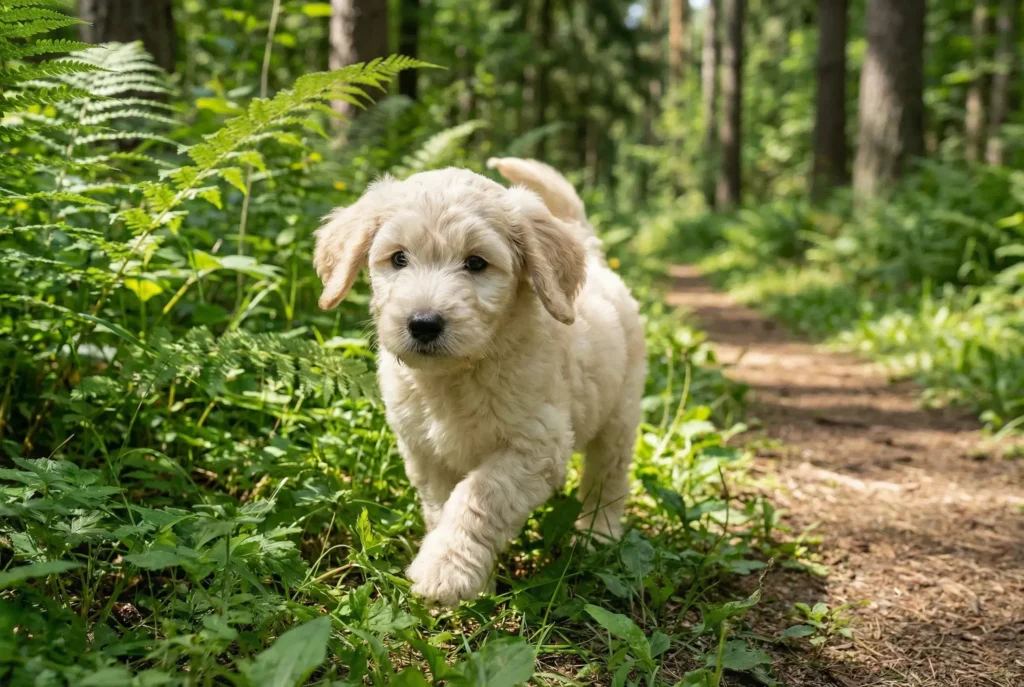
Cream Mini Goldendoodles come in three coat textures, and the texture changes how the color appears, how quickly dirt shows, and how much grooming the dog requires. Color and coat type are experienced together as a single visual reality, and cream behaves differently depending on whether the coat is wavy or curly — a connection most general breed guides miss entirely.
| Coat Type | Generation | Cream Appearance | Dirt Visibility | Brushing Frequency | Pro Grooming |
| Wavy (fleece) | F1 (50% Poodle) | Soft, diffused, slightly golden | Moderate | 2–3x per week | Every 6–8 weeks |
| Curly (wool) | F1B (75% Poodle) | Crisp, bright, stays paler longer | Higher | Daily | Every 6–8 weeks |
| Straight | F1 — less common | Flattest — shows cream undertone clearly | Lower | 1–2x per week | Every 8–10 weeks |
Wavy Coat and Cream: How the Color Looks in F1 Dogs
The wavy coat is the most common texture in F1 cream Mini Goldendoodles, and it produces the warmest, softest interpretation of the cream shade. The loose wave pattern scatters light across the coat differently than tight curls, giving it a slightly golden, lived-in quality that reads as distinctly warmer than a curly-coated dog of the same base color. Wavy coats brush out easily 2 to 3 times per week and mat less aggressively than curly coats, but they show light staining from saliva and tear moisture more readily because the flatter surface area catches and holds discoloration.
Curly Coat and Cream: F1B Color Expression and Grooming Implications
A curly-coated cream Mini Goldendoodle reads as brighter and cooler in tone than its wavy-coated counterpart. The tight curl structure traps light rather than diffusing it, producing a crisper, more uniformly pale appearance — the classic “white teddy bear” look that drives much of the search interest in the cream color. The tradeoff is grooming intensity: curly cream coats require daily brushing to prevent mats, and they show environmental staining more visibly than darker coats precisely because the baseline is so light.
What Actually Shapes the Cream Mini Goldendoodle’s Personality?
Four factors drive temperament in this breed, in order of influence.
- Parent dog temperament. The single strongest predictor of how a puppy will behave as an adult. Ask to meet or see video of both the sire and dam — their energy level, sociability, and response to strangers will tell you more than any color label.
- Generation and Poodle percentage. F1B dogs (75% Poodle) tend to be more alert and higher-energy than F1 dogs (50% Poodle). This is the generation effect buyers frequently overlook when focusing on coat type and color.
- Early socialization by the breeder. Puppies exposed to varied sounds, people, surfaces, and handling from weeks 3 to 8 arrive with a behavioral head start that color selection cannot replicate. This is a non-negotiable marker of a quality breeding program.
- Consistency in the new home. Mini Goldendoodles of every color are people-oriented dogs that form strong attachments quickly. Separation anxiety is a documented tendency across the breed and is best managed through structured crate training from day one, not breed selection.
Grooming a Cream Mini Goldendoodle: Specific Care the Color Requires
Cream-coated dogs require the same grooming routine as any Mini Goldendoodle, with two additional priorities: preventing yellowing and managing staining. These are not significant problems with consistent upkeep, but they are invisible on darker-colored dogs and become very visible on light coats. Both are straightforward to address once you understand the cause.
Preventing Yellowing and Tear Staining on a Cream Coat
Yellowing in cream Mini Goldendoodle coats has three main causes: tear staining around the eyes, saliva staining on the paws and muzzle, and product buildup from shampoos that contain optical brighteners or heavy conditioners. Tear staining is the most visible — it appears as a rust-brown streak from the inner corner of the eye along the muzzle. It is caused by porphyrins in tears, not dirt, and does not wash out with standard shampoo. Wiping the under-eye area with a damp cloth daily and keeping the hair in that area trimmed short are the two most effective preventive measures.
Saliva staining on the paws produces a similar rust-brown discoloration. Rinsing the paws after outdoor time and keeping paw fur trimmed short both help. For bathing, a whitening shampoo formulated for light-coated dogs keeps the cream tone clean without over-stripping the natural oils that protect the skin and coat.
Brushing, Bathing, and Professional Grooming Schedule for Cream Dogs
The grooming schedule follows the same framework as any coat type, with frequency adjusted for texture. Wavy-coated dogs need brushing 2 to 3 times per week; curly-coated dogs need daily brushing to stay mat-free. Professional grooming every 6 to 8 weeks covers trimming, nail clipping, and ear cleaning. On cream dogs specifically, asking the groomer to scissor rather than clip the face and ear areas preserves the rounded, soft silhouette that is the signature look of this color.
- Slicker brush for routine brushing. The long pins reach through the outer coat to the denser underlayer where mats actually form. Work in sections rather than surface brushing — pulling a brush over the top of the coat without reaching the skin does not prevent matting.
- Steel comb as a finishing tool. Run through the coat after every brushing session to confirm no tangles remain in the deeper layers. If the comb catches, a mat is forming — address it immediately rather than leaving it to the next session.
- Brightening shampoo every 3 to 4 baths. Formulated for white and light coats, these products neutralize yellowing tones without the harsh bleaching agents found in some human brightening products. Do not use it at every bath — over-use dries the coat and creates a brittle, straw-like texture over time.
- Daily eye and muzzle wipe. Takes under 60 seconds and prevents the accumulation of tear staining that is the most common cosmetic complaint from cream dog owners. A soft damp cloth or pet-safe eye wipe is sufficient — no specialist products required for routine maintenance.
Frequently Asked Questions
Will my cream Mini Goldendoodle puppy stay cream as an adult?
Probably — but with some shift. Most cream puppies lighten as they mature, especially those with Poodle lines carrying the fading gene. The most dramatic change happens between 6 and 18 months during the adult coat transition. By 18 months, the color is largely stable. Puppies that arrive as pale gold are more likely to lighten; those that arrive as white-cream may show little change at all.
What coat type is most common in cream Mini Goldendoodles?
Wavy coats dominate in F1 dogs; curly coats dominate in F1B lines. Both produce cream coloring, but the curly coat reads as brighter and paler, while the wavy coat carries a warmer golden undertone. Straight coats can occur in F1 dogs but are uncommon and are not what most buyers have in mind when searching for the teddy bear aesthetic.
Do cream Mini Goldendoodles shed more than darker-colored dogs?
No — shedding is determined by coat type and furnishing genes, not color. A curly cream F1B sheds minimally; a wavy cream F1 sheds lightly. Color has no relationship to shedding volume. Light hairs are simply more visible on dark furniture and floors, which can create the perception of more shedding, but the actual volume is identical to a red or apricot dog of the same generation.
Are English cream Mini Goldendoodles calmer than other colors?
Only when the label accurately reflects English Golden Retriever lineage — and even then, the effect is moderate. English-type Goldens do trend calmer than American lines, but the Poodle parent contributes 50 to 75% of the genetics in most Mini Goldendoodle crosses. Individual variation within the same litter often exceeds the average temperament difference between English and American lines.
Does Coat Color Affect Personality?
No — with one partial exception. Color itself has no bearing on personality.