Table of Contents:
- Complete Checklist for Owners
- Grooming Readiness: What to Know Before Your Puppy Comes Home
- Daily Routine: Exercise, Feeding, and Mental Stimulation
- Frequently Asked Questions
This master checklist for Mini Goldendoodle new owners covers every category that matters in the first days and weeks at home. Completing each item before the puppy arrives is the single most effective way to reduce first-week stress for both the dog and the family.
Complete Checklist for Owners
1. Documents to Collect From the Breeder
Every item below should be in your hands on pickup day — not promised later by email.
- Vaccination and deworming records. A responsible breeder ensures every puppy is up to date on vaccinations and deworming treatments before going home. Confirm exactly which vaccines were given and on what dates — your vet needs this information at the first appointment to schedule the next rounds correctly.
- Health guarantee. A comprehensive health guarantee is standard practice among reputable Mini Goldendoodle breeders. Read the terms in full before you leave — note the duration, what conditions are covered, and what you as the owner are required to do to keep the guarantee valid.
- Feeding information from the breeder. Ask which food, formula, and portion sizes the breeder has been using. Keeping the puppy on the same food for the first 7 to 10 days at home prevents digestive upset — one of the most avoidable first-week problems. Any food transition should happen gradually over 5 to 7 days.
2. Home Preparation and Safety
A Mini Goldendoodle puppy explores entirely with its mouth. Preparing your home before the puppy arrives is how you prevent the most common household accidents in the first weeks.
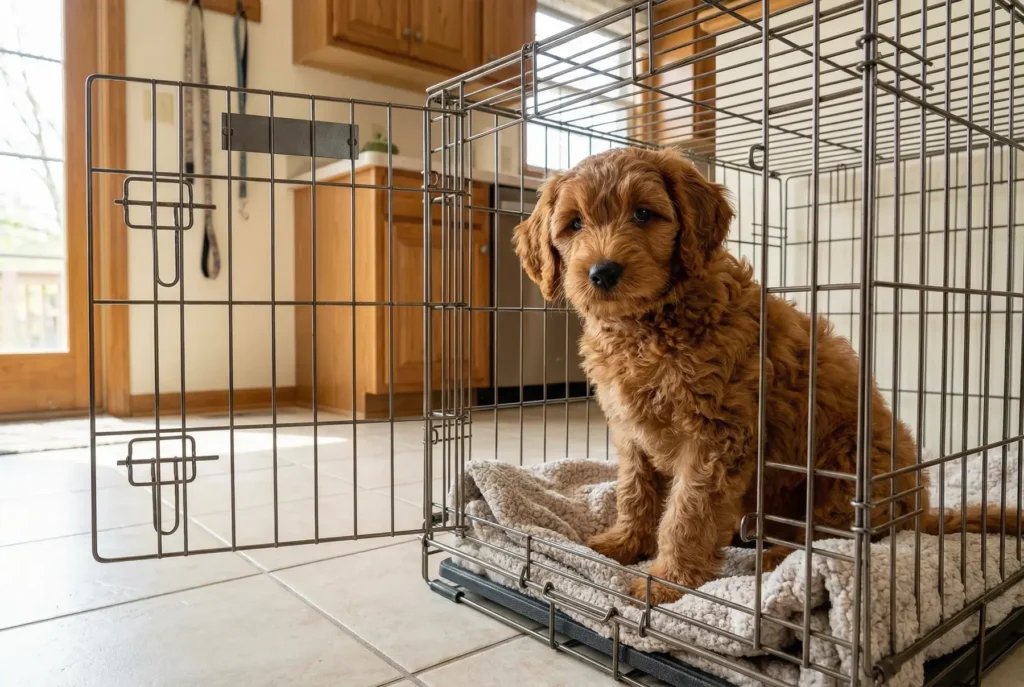
- Crate sized correctly. Choose a crate that allows your puppy to stand up, turn around, and stretch out comfortably. Plan for a crate with a divider panel that grows with the dog. Mini Goldendoodles reach 15 to 35 pounds at adulthood. A space that is too large makes potty training significantly harder.
- Comfortable bed or crate mat. Place a mat or lined bed inside the crate from the first night. Cover three sides with a blanket to create a den-like environment — this reduces first-night anxiety and helps the puppy settle faster.
- Puppy-proofing completed. Remove small objects from lower shelves, secure electrical cords at floor level, and block off any dangerous areas such as open stairwells or rooms the puppy cannot be supervised in. Baby gates are useful from day one.
- Outdoor area secured. If you have a yard, check fencing for gaps at the base before the puppy’s first outdoor session. Mini Goldendoodle puppies are small enough to fit through openings that would not concern a larger dog.
- Designated potty spot chosen. Pick one consistent outdoor location for bathroom breaks and use it every time from day one. Consistency in location — paired with a single cue word used every trip — is what builds the association that makes potty training faster.
3. Supplies to Have Ready
Stock these items before pickup day. Running errands in the first 48 hours is disruptive for a puppy adjusting to a new environment.
- Slicker brush and steel comb. Mini Goldendoodles need brushing 2 to 3 times per week to prevent mats and distribute natural oils. A slicker brush reaches the coat’s depth, while a steel comb checks that no tangles remain after brushing. Starting brushing from day one gets the puppy comfortable with the process before the adult coat fully develops.
- Food and water bowls. Choose bowls sized appropriately for a small to medium dog. Stainless steel is easy to clean and does not retain odors. Consistent placement of the food and water station helps establish routine, which supports potty training in the first weeks.
- Collar with ID tag and leash. Have the ID tag ready with your name and phone number before pickup. A puppy is most likely to bolt in the first week, when everything around it is unfamiliar. A standard 4-foot leash gives enough control for outdoor bathroom trips without encouraging pulling habits from day one.
- Puzzle toys and chew items. Mini Goldendoodles inherit genuine cognitive needs from their Poodle lineage. Boredom is one of the most consistent drivers of destructive behavior in this breed. Puzzle feeders and appropriate chew toys provide daily mental stimulation and redirect chewing away from furniture and household items.
- Gentle dog shampoo. Bathing every 4 to 6 weeks is recommended for Mini Goldendoodles. Have a puppy-safe shampoo ready at home from the start — wait at least one week after pickup before the first bath to avoid adding unnecessary stress while the puppy is still adjusting.
4. Veterinary Preparation
- Schedule the first vet appointment before pickup day — not after the puppy arrives. A wellness exam within the first few days of bringing the puppy home lets your vet review the vaccination and deworming records from the breeder and establish the schedule for upcoming rounds. Calling ahead means you choose a vet you trust rather than taking the first available appointment during a stressful first week.
- First wellness exam booked in advance. Bring every document from the breeder — vaccination history, deworming records, and health guarantee — to this appointment. Your vet uses these to confirm what has been done and plan the next steps for your puppy’s preventive care.
- Upcoming vaccine schedule confirmed. Your vet will review the breeder’s records and tell you exactly when the next rounds are due. Ask at this visit about flea and tick prevention — products vary by age requirement, and your vet can recommend what is appropriate for your puppy’s current age and your region.
- First professional grooming appointment reserved. Mini Goldendoodles typically have their first professional grooming session between 12 and 16 weeks, after the initial puppy vaccination series is complete. Book early — groomers experienced with doodle coats fill quickly, and this first session establishes how the dog relates to grooming for the rest of its life.
- Ear care routine established. Mini Goldendoodles have floppy ears that trap moisture and are prone to ear infections. Ask your vet to demonstrate how to check and clean ears at home. Regular inspection — and cleaning with a vet-recommended solution when needed — prevents the most common recurring health issue in this breed.
5. Training and Socialization — First Weeks at Home
The first weeks at home establish behavioral patterns that are significantly harder to change later. Mini Goldendoodles are quick learners — they pick up good habits as readily as bad ones. Consistency from day one produces better results than intensive correction later.
- Crate training started from night one. Introduce the crate as a positive space from the first night. Place the puppy in the crate at consistent times — after the final bathroom trip at night, during naps, and whenever the puppy cannot be actively supervised. Most Mini Goldendoodle puppies adapt to a crate routine within 1 to 2 weeks when the schedule is consistent from the start.
- Bathroom routine established from day one. Take the puppy out frequently during waking hours and immediately after meals, naps, and play sessions. Use the same outdoor spot and the same cue word every time. The combination of location consistency and a reliable verbal cue builds the association — not the frequency of trips alone.
- Basic commands began in week one. Mini Goldendoodles respond well to positive reinforcement and can recognize their name within a few days of consistent use. Keep early training sessions short — 5 to 10 minutes, two to three times daily. Sit, stay, and come are the three commands with the most practical impact in the first month.
- Separation anxiety addressed from the start. Mini Goldendoodles form strong bonds quickly and can develop separation anxiety if never left alone in the first weeks. Gradually increase alone time in the crate from the beginning — even short 15-minute periods help the puppy learn that being alone is safe and temporary. Interactive toys or background sound can help ease the transition.
- Puppy obedience class enrolled. Structured puppy classes serve two purposes: they reinforce the training foundation you are building at home, and they provide controlled socialization during the most critical development window. Aim to enroll within the first 2 weeks of bringing your puppy home.
- Early socialization planned. Introduce your Mini Goldendoodle to new people, environments, sounds, and other pets in a controlled, calm way during the first month. Expose them gradually — never force interactions. Early positive exposure builds the confident, friendly temperament this breed is known for.
Grooming Readiness: What to Know Before Your Puppy Comes Home
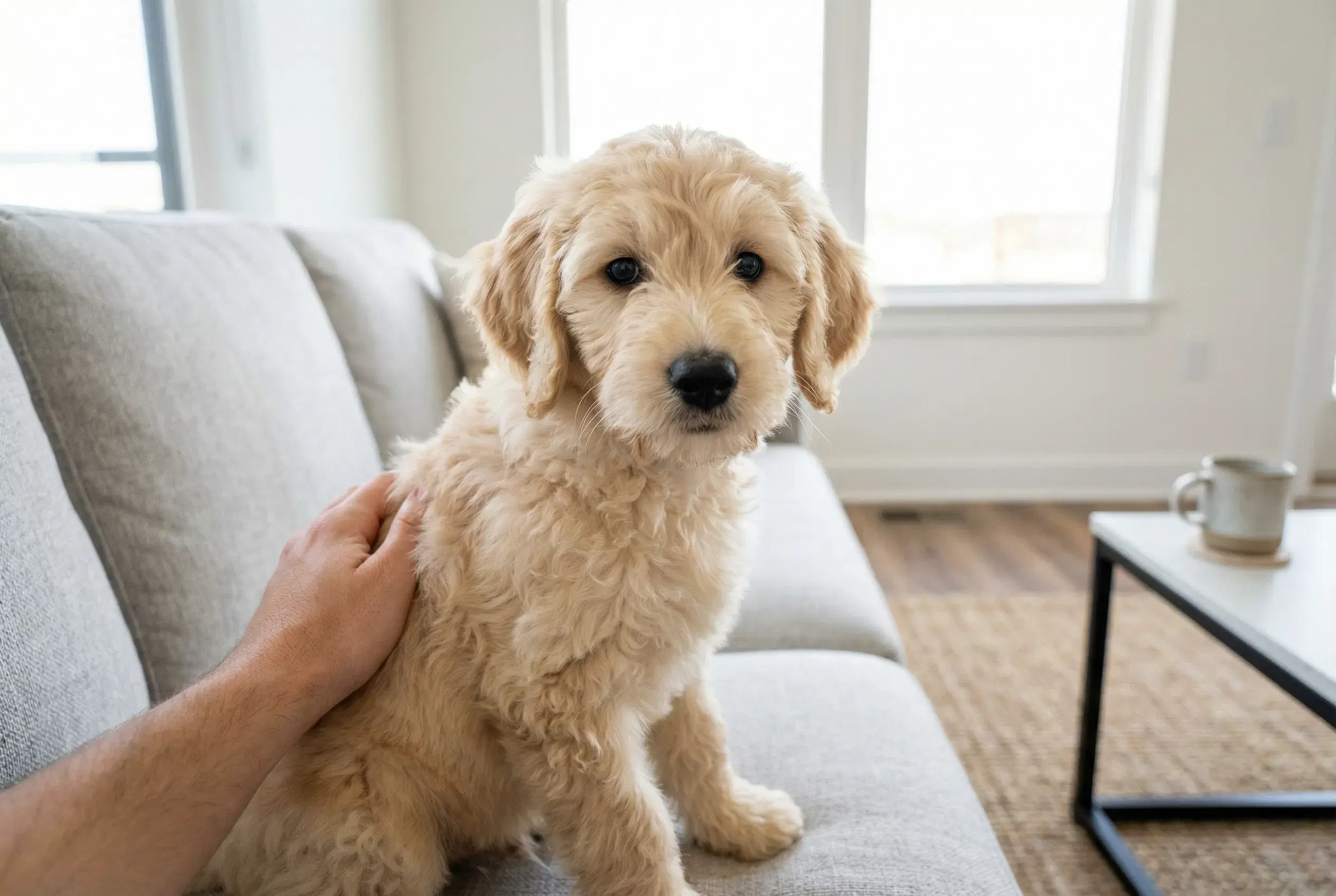
Grooming is one of the most underestimated commitments of Mini Goldendoodle adoption — and starting correctly from week one determines whether the coat remains manageable for the dog’s lifetime. The breed’s wavy or curly coat requires consistent at-home maintenance between professional appointments. Starting a brushing routine immediately also teaches the puppy to accept and enjoy grooming — a habit that makes every future session easier.
At-Home Brushing and Bathing
Brush your Mini Goldendoodle 2 to 3 times per week with a slicker brush to prevent matting and distribute natural oils through the coat. Pay particular attention to the areas behind the ears, under the armpits, and around the collar — these spots mat first and are most often missed. After brushing, run a steel comb through the coat to confirm no tangles remain in the deeper layers.
Bathe every 4 to 6 weeks using a gentle, dog-safe shampoo to keep the coat clean and soft. Avoid bathing more frequently than needed — over-bathing strips the natural oils that protect both the coat and skin. After bathing, dry the coat thoroughly. Damp spots left in the coat, especially in wavy or curly areas, turn into mats that are difficult or impossible to comb out.
Professional Grooming Schedule
Schedule professional grooming sessions every 6 to 8 weeks for trimming, nail clipping, and ear cleaning. The first professional session typically happens between 12 and 16 weeks, after the initial puppy vaccination series is complete. This first visit is as much about acclimation as it is about the trim — a positive first experience with a groomer shapes how the dog relates to professional grooming for the rest of its life. Trim hair around the eyes and paw pads regularly between professional visits for comfort and hygiene.
Daily Routine: Exercise, Feeding, and Mental Stimulation
A predictable daily routine is one of the most effective tools for a settled, well-behaved Mini Goldendoodle. This breed adapts well to apartments and smaller homes, but daily exercise and mental engagement are non-negotiable regardless of living situation.
Exercise
Mini Goldendoodles are moderately active dogs that thrive on regular exercise. Daily walks, play sessions at a dog park, or interactive indoor games all meet their physical needs. Their exercise requirements are manageable — even apartment living works well with consistent daily walks and neighborhood outings. For puppies under 6 months, keep structured exercise sessions shorter to protect developing joints.
Feeding Schedule
Feed a high-quality puppy formula from 8 weeks until the puppy reaches 12 to 18 months, then transition to adult food. Puppies require more frequent feeding than adult dogs — typically three to four times daily in the first months, reducing to twice daily as they mature. Consistent meal times support potty training by making bathroom timing more predictable. When changing food brands, use a gradual 7 to 10 day transition to avoid digestive upset.
Mental Stimulation
Physical exercise alone is not sufficient for a breed this intelligent — daily mental engagement is equally important. Puzzle feeders, training sessions, interactive games, and rotating toys all count as mental exercise. A Mini Goldendoodle that receives adequate mental stimulation is calmer, less destructive, and easier to live with. Without it, boredom becomes a behavioral problem — Mini Goldendoodles that are under-stimulated will find their own entertainment, usually in ways owners do not appreciate.
For over 9 years, Love of Puppies has connected families with healthy, well-socialized puppies. The focus from the beginning has been on producing puppies that embody the best traits of both the Golden Retriever and the Miniature Poodle: intelligence, a loving nature, and a low-shedding, family-friendly coat.
Frequently Asked Questions
How long does the Mini Goldendoodle adoption process take?
The timeline from first inquiry to pickup depends on the breeder’s current availability and how specific your requirements are. Flexible buyers may be matched to a puppy within a few months, while those with specific generation or color preferences may wait longer. Applying early — before you are fully ready to bring a puppy home — is a practical approach with reputable breeders who maintain waitlists. At Love of Puppies, the team works closely with each family to ensure a good match and a smooth transition.
How often do Mini Goldendoodles need grooming?
Mini Goldendoodles need brushing 2 to 3 times per week at home to prevent matting and keep the coat healthy. Bathing is recommended every 4 to 6 weeks using a gentle, dog-safe shampoo. Professional grooming sessions — for trimming, nail clipping, and ear cleaning — should be scheduled every 6 to 8 weeks. The first professional grooming appointment typically happens between 12 and 16 weeks, after the puppy’s initial vaccination series is complete.
Are Mini Goldendoodles good for families with children?
Yes — Mini Goldendoodles are known for their gentle, patient temperament and typically get along well with children, seniors, and other pets. Their friendly nature and manageable size make them one of the most family-compatible hybrid breeds available. Early socialization and consistent training reinforce these natural tendencies and produce a confident, well-mannered companion. Like any breed, supervision around very young children is recommended until the dog demonstrates reliable calm behavior.
How long do Mini Goldendoodles live?
Mini Goldendoodles typically live between 10 and 15 years, depending on genetics, diet, exercise, and overall health care. Preventive veterinary care — including regular check-ups, vaccinations, dental hygiene, and weight management — plays a significant role in longevity. Dogs that receive consistent care and appropriate nutrition throughout their lives tend to reach the higher end of this range. As a hybrid breed, Mini Goldendoodles benefit from the genetic diversity of crossing two distinct lines, which generally supports robust overall health.
What health issues are Mini Goldendoodles prone to?
Like all breeds, Mini Goldendoodles can be predisposed to certain health conditions, including hip dysplasia, skin allergies, and ear infections. Their floppy ears are particularly prone to trapping moisture, which makes regular ear inspection and cleaning an important part of routine care. Purchasing from a breeder who conducts health checks and provides a health guarantee reduces — but does not eliminate — the risk of inherited conditions. Regular veterinary check-ups throughout the dog’s life are the most reliable way to catch and address health issues early.