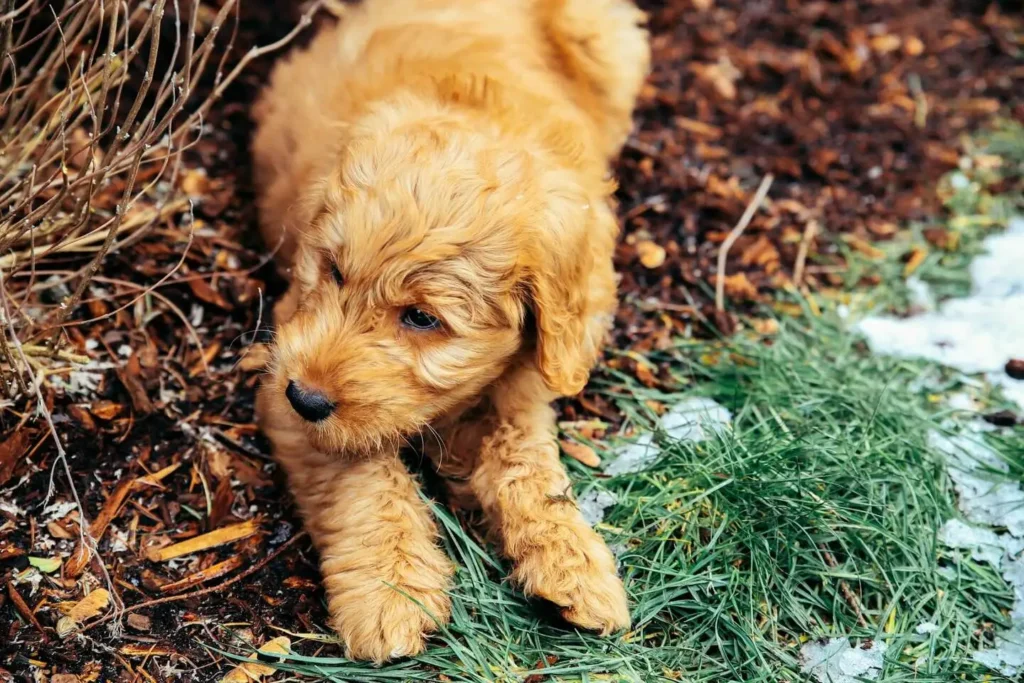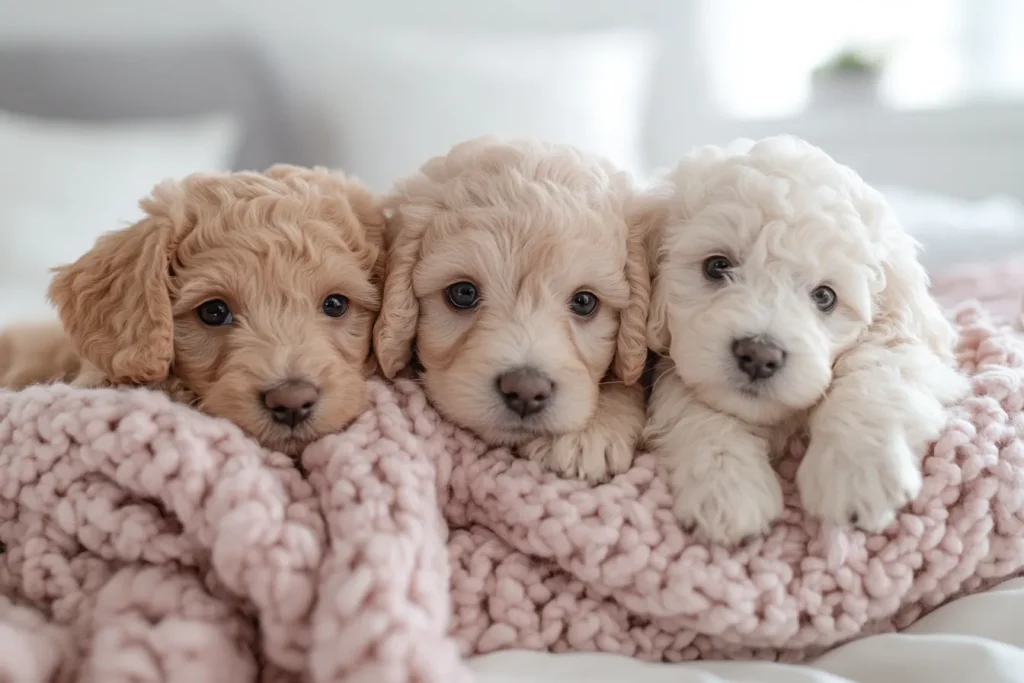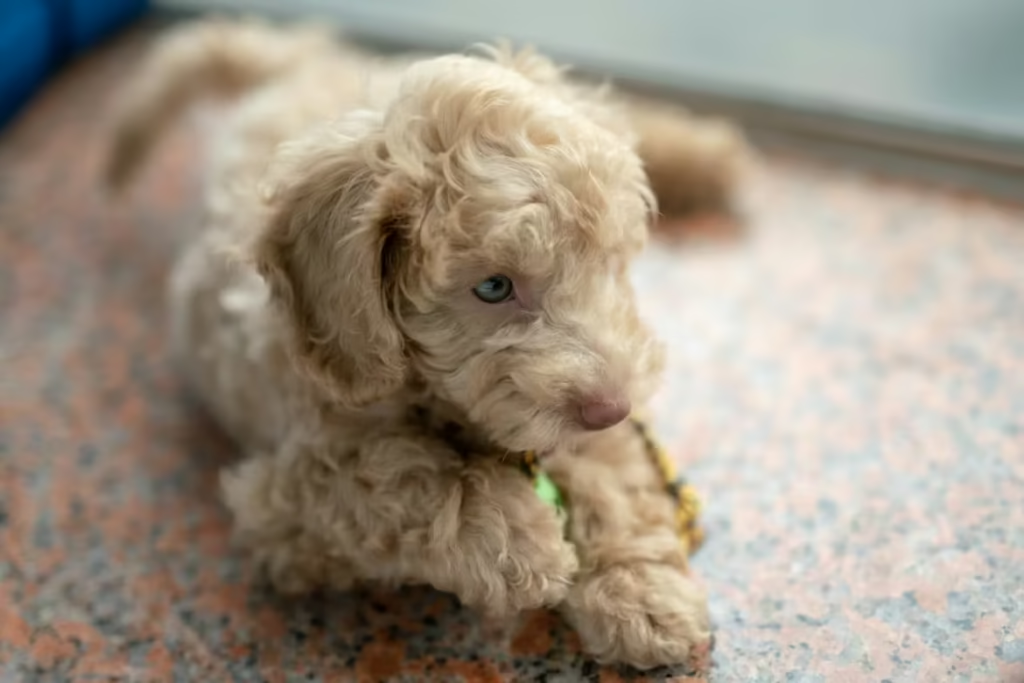
Mini Goldendoodles come in more coat colors than almost any other designer breed — from pale ivory to deep mahogany red, rich chocolate, and striking two-toned patterns. Most owners are surprised to learn that the color they bring home at 8 weeks often looks noticeably different by 12 months.
What Colors Do Mini Goldendoodles Come In?
Mini Goldendoodles are available in at least 12 distinct base colors, a range that far exceeds their Golden Retriever parent. The Poodle side of the equation drives most of this variety: Miniature Poodles carry genes for black, brown, red, apricot, cream, silver, and dilute shades, all of which can be expressed in hybrid offspring. Because no breed standard governs the Goldendoodle, breeders are not restricted to a narrow color palette the way AKC breeds are, according to the Goldendoodle Association of North America (GANA) — which means color diversity continues to expand with each new generation.
| Color | Frequency | Typical Source | Fades with Age? |
| Cream | Very Common | Poodle + Golden Retriever | Minimal |
| Apricot | Most Common | Golden Retriever dominant | Moderate — lightens |
| Gold / Light Gold | Common | Golden Retriever dominant | Moderate |
| Red | Less Common | Poodle recessive gene | Yes — often fades to apricot |
| Chocolate / Brown | Moderate | Poodle B locus recessive | Yes — can silver down |
| Black | Uncommon | Poodle E locus dominant | Sometimes — may gray |
| Silver / Silver Beige | Rare | Poodle progressive gray gene | Already faded from birth |
| Caramel | Uncommon | Dilute apricot/red | Moderate |
Cream and White Mini Goldendoodles
Cream is one of the most consistent and stable Mini Goldendoodle coat colors available, and it rarely shifts dramatically with age. True cream sits between white and pale apricot — it carries a faint warm undertone that keeps it from looking stark or clinical. Many buyers confuse cream with white, but true white Mini Goldendoodles are uncommon and typically result from the extreme lightening of the base coat. The most reliable way to recognize a cream puppy is the warm biscuit tone in the ears and along the spine, which tends to hold even as the coat transitions to its adult texture between 5 and 8 months.
English Cream Mini Goldendoodles — a term some breeders use for very pale, plush-coated dogs — are not a separate variety but rather a marketing distinction reflecting a specific shade and coat texture influenced by European Golden Retriever lines.
Apricot and Gold Mini Goldendoodles
Apricot is consistently the most sought-after mini goldendoodle color across the United States, according to buyer preference data from multiple breeders. It ranges from a soft peach-honey tone to a deeper, almost amber shade depending on the depth of the Poodle parent’s apricot gene. Light gold, by contrast, reads closer to the classic Golden Retriever shade — warm yellow with minimal red pigmentation. The practical difference for owners: apricot dogs whose color comes from the Poodle’s recessive gene tend to fade more predictably than gold dogs whose color comes from Golden Retriever heritage. Both shades are in high demand and command similar pricing from ethical breeders.
Red Mini Goldendoodles
Red is the deepest and most visually striking solid mini goldendoodle coat color, and it is also the most likely to change significantly between puppyhood and adulthood. A dark red Mini Goldendoodle puppy at 8 weeks may fade to a medium apricot by age 2, particularly if the Poodle parent carries the progressive greying (fading) gene. Red color is created by concentrated pheomelanin — the same pigment that produces apricot and cream, just at higher intensity. Breeders who prioritize holding red color typically select parent dogs tested negative for the progressive fading gene and use F1B or Multigen crosses to increase Poodle influence.
Chocolate, Black, and Rare Solid Colors
Black, chocolate, silver, and caramel are the rarest solid mini goldendoodle colors, each requiring specific recessive gene combinations from both parent dogs.
Chocolate (also called liver or brown) results from two copies of the recessive b allele at the B locus, which modifies the standard black pigment.
Black Goldendoodles require the dominant E allele to allow black pigment expression while suppressing the red/yellow phaeomelanin from the Golden Retriever side — making them genetically unusual in this cross.
Silver dogs are actually born black and progressively fade through a genetic process tied to the Poodle’s silvering gene, with the clearest indicator appearing on the muzzle and paw pads as early as 6 weeks.
Mini Goldendoodle Color Patterns Explained
Beyond solid base colors, Mini Goldendoodles can display at least five distinct coat patterns — each determined by separate gene loci from the Poodle parent. Pattern dogs are increasingly popular, often priced higher than solid-colored dogs of the same generation, and frequently misidentified even by experienced owners. The three patterns buyers encounter most often — parti, phantom, and abstract — look visually similar but follow different genetic rules and produce different distribution of color across the coat.
Parti Mini Goldendoodles
A parti Mini Goldendoodle has a coat that is at least 50% white, with solid patches of a second color covering the remaining area. The white distribution in parti dogs is caused by the recessive S locus (piebald gene), which both parents must carry to produce parti offspring — meaning two solid-colored parents can produce parti puppies if both carry the hidden gene. Common parti combinations include white and apricot, white and chocolate, and white and black. Unlike merle, parti coloring carries no known health risks and is considered aesthetically desirable. Ethical breeders test for the S locus to predict parti probability in litters.
Phantom and Abstract Mini Goldendoodles
Phantom and abstract are two very different patterns that are frequently confused by buyers browsing listings. A phantom mini goldendoodle displays tan or cream point markings above both eyes, on the muzzle sides, chest, inside of the legs, and under the tail — mirroring the Doberman or Rottweiler pattern. Abstract coloring is often associated with partial expression of the same white-spotting genetics that produce parti coats, along with other modifiers of white, and is the most common multi-color pattern in Mini Goldendoodles.
Merle Mini Goldendoodles
Merle is the most visually dramatic mini goldendoodle color pattern, producing mottled patches of diluted pigment against a darker base — but it is also the one that carries genuine health risks when handled irresponsibly. The merle gene (M locus) creates its distinctive dappled effect by randomly diluting eumelanin in patches across the coat. When two merle-carrying dogs are bred together, approximately 25% of the resulting litter will be double merle — inheriting two copies of the M allele.
Mini Goldendoodle Coat Color Changes: What to Expect From Puppy to Adult
Nearly every mini goldendoodle puppy will look at least somewhat different by adulthood, and the degree of change depends primarily on generation, base color, and whether the Poodle parent carries the fading gene. This is the most common source of buyer surprise — and the most under-discussed topic in breeder conversations. Understanding the typical timeline and which colors are most vulnerable to change allows new owners to set realistic expectations and avoid feeling misled.
When Does Color Change Happen
The most significant mini goldendoodle coat color changes occur between 4 and 8 months, when the soft puppy coat transitions to the denser adult coat — a process sometimes called “blowing the puppy coat.” During this window, owners typically notice the coat lightening overall, with color often concentrating most visibly around the ears and muzzle. By 12 months, most Mini Goldendoodles have settled into their adult color, though subtle shifts can continue until 18 to 24 months. F1B and Multigen dogs tend to experience less dramatic color shifts than F1 dogs, because higher Poodle genetics stabilize coat texture and color expression more consistently.
Which Colors Fade the Most
Not all mini goldendoodle colors are equally stable — red and chocolate are the most prone to significant fading, while black and cream tend to hold closest to their puppy shade.
| Base Color | Fading Level | Typical Adult Outcome |
| Red | High | Often fades to medium or light apricot by age 2 |
| Chocolate / Brown | High | May silver down to café au lait or silver beige |
| Apricot | Moderate | Lightens by 1–2 shades; rarely reaches cream |
| Gold | Moderate | Slight lightening; generally stable after 12 months |
| Cream | Low | Minimal change; may deepen slightly in ears |
| Black | Low | Holds well; silver dogs begin fading from birth |
Sun exposure accelerates fading in all darker coats — a mini goldendoodle that spends several hours outdoors daily will typically lighten faster than an indoor dog of the same color. Nutrition also plays a role: dogs receiving adequate omega-3 fatty acids and zinc tend to show richer, more vibrant coat color than dogs on nutritionally insufficient diets.
Color, Health, and What Responsible Breeders Test For
Most mini goldendoodle colors are cosmetic and carry no health implications — but two specific genetic scenarios create real risk that buyers must understand before choosing a puppy.
The first is double merle, described in the patterns section above. The second is Color Dilution Alopecia (CDA) — a skin condition linked to the dilute (d) gene that produces blue, charcoal, or fawn-colored coats. Dogs with two copies of the recessive d allele (dd genotype) may develop progressive hair thinning, flaking, and bacterial skin infections beginning between 6 months and 3 years of age. CDA is not life-threatening but is chronic and currently has no cure, only management. Silver and blue Mini Goldendoodles with dd genotypes are at risk — buyers should request genetic test results confirming d locus status before purchasing any dilute-colored puppy.
What ethical breeders test for before color-specific breeding
- Merle (M locus) DNA test. Confirms whether each parent carries one or two copies of the merle gene. No reputable breeder produces merle litters without this documentation.
- Dilute gene (D locus) panel. Identifies whether breeding dogs carry the dd genotype associated with CDA risk in dilute-colored offspring.
- OFA health certifications. Hip, elbow, cardiac, and eye clearances confirm that color selection is not overriding health as the breeding priority.
- Progressive Retinal Atrophy (PRA-prcd) testing. Particularly relevant for chocolate and black Goldendoodles, since Poodles carry elevated PRA rates and chocolate dogs can be confused with dilute dogs visually.
Choosing a Mini Goldendoodle Color: What Actually Matters
Color does not affect temperament, intelligence, shedding level, or hypoallergenic qualities in Mini Goldendoodles — these traits are determined by generation, genetics, and breeding practices, not coat shade. Despite this, color remains the single most common primary selection criterion for buyers, which breeders report consistently. The healthiest approach is to treat color as a preference rather than a requirement, and to prioritize generation-appropriate health testing, breeder transparency, and verified parent temperament above any specific shade.
A practical framework for choosing a mini goldendoodle color:
- Decide on a color range, not a single shade. If you love warm tones, any combination of cream, apricot, gold, and red will satisfy — and you will have far more ethical breeders to choose from than if you insist on one specific shade.
- Ask your breeder for parent color test results. Any reputable breeder producing chocolate, black, merle, or dilute-color puppies should be able to produce DNA panel documentation without hesitation.
- Request puppy photos at multiple ages. A photo at 4 weeks looks very different from the same dog at 10 weeks. Breeders who photograph puppies at consistent ages give you a more honest picture of adult color trajectory.
- Factor in fading when comparing prices. A “rare” dark red or black mini goldendoodle puppy that carries the fading gene may look quite different from its listing photos within 18 months. Ask specifically about fading gene test results for any high-pigment colors.
Frequently Asked Questions
What is the most common Mini Goldendoodle color?
Apricot is the most common and most requested mini goldendoodle color across the United States. It ranges from a light peach to a medium honey tone and reflects the Golden Retriever’s dominant influence on pheomelanin expression. Cream is a close second in frequency, particularly in F1B and Multigen lines where Poodle genetics are higher.
Do Mini Goldendoodles change color as they grow?
Yes — nearly all mini goldendoodle puppies experience some degree of coat color change between 4 and 18 months. The transition from puppy to adult coat typically causes lightening, with red and chocolate dogs showing the most dramatic shifts. The Poodle fading gene is the primary driver of significant color change, particularly in darker coats.
What is the rarest Mini Goldendoodle color?
True black and silver are the rarest solid mini goldendoodle colors. Both require specific recessive gene combinations from the Poodle side that are statistically unlikely when crossed with a Golden Retriever’s restricted yellow/red color range. Among patterns, double phantom coloring is exceptionally rare and commands the highest premiums.
Is a merle Mini Goldendoodle safe to buy?
A merle Mini Goldendoodle produced by a single-merle-to-non-merle pairing is generally safe from the most severe merle-related health issues. However, even single-merle dogs can have a somewhat higher risk of hearing or eye abnormalities than non-merle dogs. The greatest risk emerges in double merle dogs — the offspring of two merle parents — who face elevated rates of deafness and vision abnormalities. Always request DNA test results confirming that only one parent carries the merle gene.
Does coat color affect shedding or allergy potential in Mini Goldendoodles?
No — coat color has no influence on shedding level or hypoallergenic properties. These traits are determined by coat type (curly vs. wavy), furnishing genes, and generation. An apricot F1B will shed roughly the same as a black F1B of identical genetics. Buyers who prioritize low-shedding should focus on F1B or Multigen generation and verified furnishing gene status rather than color.