Table of Contents:
- How Puppy Teeth Develop: Teething Timeline From 3 Weeks to 7 Months
- What Full Grown Goldendoodle Teeth Should Look Like
- Building a Daily Dental Care Routine at Home
- Spotting Dental Problems Before They Get Serious
- Professional Dental Cleanings: Safety, and Frequency
- Where Dental Care Fits Into Your Mini Goldendoodle’s Overall Maintenance Schedule
Mini Goldendoodle dental care starts the day you bring your puppy home and continues for the rest of their life. These small-mouthed crossbreeds inherit a Poodle-side tendency toward crowded teeth and plaque accumulation, which means skipping brushing even for a few weeks can set the stage for gum disease and tartar buildup that eventually affects the heart, kidneys, and liver. This guide covers every stage of your Mini Goldendoodle’s dental health, from the first baby teeth at 3 weeks old to professional dental cleaning costs for a senior dog.
How Puppy Teeth Develop: Teething Timeline From 3 Weeks to 7 Months
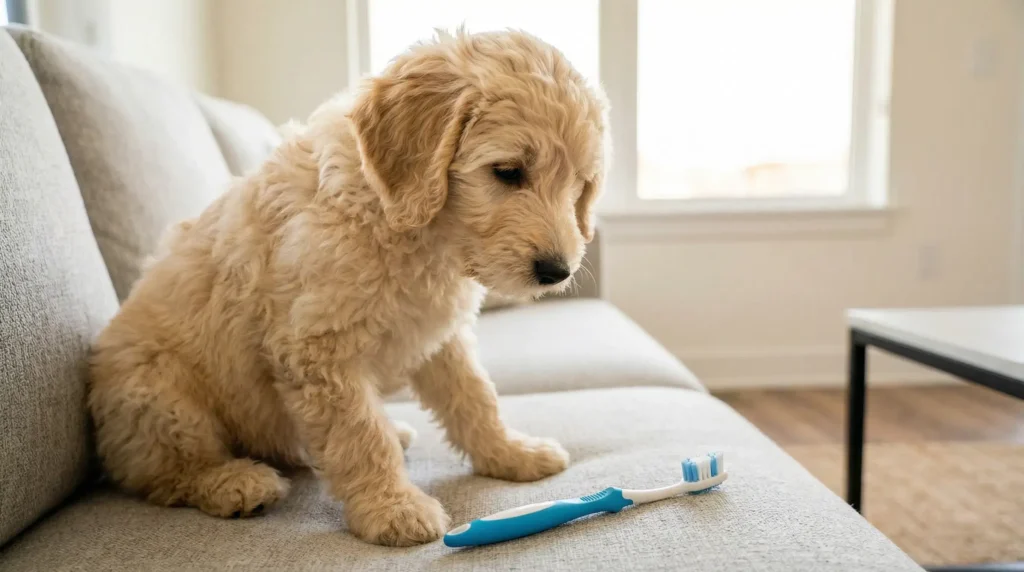
Mini Goldendoodle puppies grow their first set of 28 deciduous teeth between 3 and 6 weeks of age. By the time a puppy arrives in your home at 8 weeks, those razor-sharp mini goldendoodle puppy teeth are already fully in place. The transition to 42 permanent adult teeth begins around 12 weeks and usually wraps up by 6–7 months, though timing can shift depending on size and generation (F1, F1B, or Multigen).
How Many Baby Teeth a Mini Goldendoodle Puppy Has and When They Fall Out
A Mini Goldendoodle puppy has exactly 28 baby teeth, the same count as every other dog breed. These deciduous teeth are noticeably smaller and sharper than adult teeth, designed for weaning rather than heavy chewing. Between 12 and 16 weeks, the incisors start loosening first, followed by premolars and canines. Most owners find tiny teeth on the floor or notice them missing during play. A puppy who swallows a few is perfectly normal.
Retained baby teeth are a genuine concern in Mini Goldendoodles because their small jaws leave less room for adult teeth to push through. If a deciduous tooth has not fallen out by 6 months, a veterinarian should evaluate whether extraction is needed. Double teeth in the same socket trap food debris, accelerate plaque formation, and can shift the bite alignment of incoming permanent teeth.
| Age | Stage | Tooth Count | What to Expect |
| 2–6 weeks | Baby teeth emerge | 0 → 28 | Incisors appear first, canines last |
| 8 weeks | Full deciduous set | 28 | Puppy goes to new home with all baby teeth |
| 12–16 weeks | Baby teeth start falling out | 28 → mixed | Incisors loosen first; increased chewing |
| 4–6 months | Adult teeth push through | Mixed | Peak discomfort; possible appetite loss |
| 6–7 months | Full adult set | 42 | All permanent teeth in; retained teeth need vet check |
Signs of Teething and How to Help Your Puppy Through It
Teething causes visible discomfort in most Mini Goldendoodle puppies. The most reliable signs include excessive chewing on furniture and hands, drooling more than usual, mild bleeding from the gums, reluctance to eat hard kibble, and irritability during play. Some puppies develop soft stools or a low-grade fever, which typically resolves within a day or two.
Effective ways to ease teething discomfort include the following.
- Frozen chew toys. Place a rubber Kong or wet washcloth in the freezer for 2–3 hours. The cold numbs sore gums and gives the puppy a safe outlet for chewing.
- Softened food. Soak dry kibble in warm water for 10 minutes to reduce pressure on tender gums. This also helps maintain appetite during peak teething weeks.
- Mouth-handling practice. Gently lift your puppy’s lips daily and touch their gums for a few seconds. This builds tolerance for future brushing and lets you spot retained teeth early.
- Redirect, don’t punish. When a puppy chews on something off-limits, swap the item with an approved chew toy instead of scolding. Correction during teething only creates fear around mouth handling.
What Full Grown Goldendoodle Teeth Should Look Like
A healthy adult Mini Goldendoodle has 42 permanent teeth arranged in a scissors bite, where the upper incisors sit just in front of the lower ones. These full grown goldendoodle teeth include 12 incisors for nibbling, 4 canines for gripping, 16 premolars for shearing, and 10 molars for grinding. Each type plays a specific role in eating and play, and losing even one tooth changes how a dog processes food.

Adult Tooth Count, Types, and Normal Bite Alignment
The 42 adult teeth are distributed evenly: 20 on the upper jaw and 22 on the lower jaw. A normal scissors bite means there is a slight overlap, with the upper teeth resting just over the lower teeth when the mouth is closed. Malocclusion, where the teeth do not meet properly, is not rare in Mini Goldendoodles. An underbite, overbite, or crossbite can interfere with eating, cause uneven wear on the enamel, and lead to chronic soft-tissue injuries inside the mouth. A veterinarian can identify bite problems as early as 8 months, once all full grown goldendoodle teeth have settled into position.
Why a Smaller Jaw Means Higher Crowding Risk
Mini Goldendoodles weigh 15–35 pounds, yet they carry the same 42-tooth adult set as a 70-pound Standard Goldendoodle. That mismatch creates crowding, especially along the premolars, where overlapping teeth trap food and speed up plaque and tartar formation. The Poodle side of the cross is particularly prone to dental crowding because of a narrow muzzle and deep jaw. F1B and Multigen Mini Goldendoodles, which carry a higher percentage of Poodle genetics, often show more pronounced crowding than F1 crosses.
Crowding does not automatically mean dental disease, but it does mean daily brushing is more important for a Mini Goldendoodle than for a large-breed dog with a wide, well-spaced jaw. Owners who stay consistent with mini goldendoodle maintenance routines, including oral hygiene, can prevent crowding from becoming a clinical problem.
Building a Daily Dental Care Routine at Home
Daily brushing is the single most effective way to prevent dental care problems in a Mini Goldendoodle. The American Veterinary Medical Association recommends brushing a dog’s teeth every day, though even 3–4 sessions per week dramatically reduce plaque accumulation. Starting early, during the puppy phase, makes the process far easier for both owner and dog.
Choosing the Right Toothbrush and Toothpaste
A finger brush works best for Mini Goldendoodle puppies and small-mouthed adults because it gives you direct tactile feedback on the gums. For dogs that tolerate a standard brush, choose an angled canine toothbrush with soft bristles sized for small breeds. Always use enzymatic toothpaste formulated for dogs. Human toothpaste contains xylitol and fluoride, both of which are toxic to dogs. Enzymatic formulas break down plaque chemically, adding a layer of protection beyond the physical action of the brush.
Step-by-Step Brushing Technique for a Small-Mouthed Breed
Begin by letting your Mini Goldendoodle taste the toothpaste from your finger. Lift the upper lip and brush the outer surfaces of the back teeth using small circular motions. Focus on the gum line, where plaque accumulates fastest. You do not need to open the jaw wide or brush the inner surfaces; the tongue handles those areas naturally. A full session takes about 60–90 seconds once your dog is comfortable with the routine. If your Mini Goldendoodle resists, go back to shorter sessions with rewards after each step until they associate brushing with a positive experience.
Dental Chews, Toys, and Water Additives: What Actually Works
Dental chews and toys are useful supplements but should never replace brushing. The Veterinary Oral Health Council (VOHC) tests and certifies products that meet a measurable standard for reducing plaque or tartar. Look for the VOHC seal on any dental product you consider purchasing. Dental water additives can reduce bacteria count in the mouth, but clinical evidence on their standalone effectiveness is limited. They work best as one layer in a multi-step routine that starts with a toothbrush.
When choosing supplementary dental products, keep these points in mind.
- Size-appropriate chews. A chew designed for a 60-pound dog is a choking hazard for a 20-pound Mini Goldendoodle. Always match the product to your dog’s weight range.
- VOHC certification. Products with this seal have been independently tested. Not all popular brands carry it, so check the VOHC website rather than relying on packaging claims alone.
- Raw bones caution. Raw bones can fracture teeth in small breeds. Cooked bones are even worse because they splinter. Most veterinary dentists advise against giving any real bone to a Mini Goldendoodle.
Spotting Dental Problems Before They Get Serious
Bad breath is the earliest and most common sign of dental trouble in Mini Goldendoodles. Many owners dismiss it as a normal dog trait, but persistent foul odor almost always points to bacterial buildup along the gum line. Catching gum disease in its earliest stage, gingivitis, means treatment is straightforward and reversible. Waiting until the disease progresses to periodontitis can mean extractions, pain medication, and lasting damage to the jaw.

Early Warning Signs Every Owner Should Know
Dental disease can begin as early as age 2–3 in small breeds, including Mini Goldendoodles. Watch for these warning signs.
- Persistent bad breath. A slight smell after eating is normal; a constant, sour, or metallic odor is not.
- Red or swollen gums. Healthy gums are pale pink and firm. Inflammation at the gum line indicates gingivitis, the first stage of gum disease.
- Difficulty eating. A Mini Goldendoodle that drops food, chews on one side, or suddenly prefers soft food may be experiencing tooth pain.
- Pawing at the mouth. Frequent rubbing of the muzzle against furniture or the floor signals oral discomfort that needs a veterinarian’s attention.
How Untreated Dental Disease Affects the Heart, Kidneys, and Liver
Periodontal disease does not stay confined to the mouth. Once bacteria from infected gums enter the bloodstream, they can colonize the heart valves, kidneys, and liver. Studies consistently show that dogs with advanced periodontal disease face a higher risk of endocarditis, chronic kidney disease, and hepatic abscesses. In a 15–17 pound Mini Goldendoodle, even a moderate infection puts disproportionate strain on small organs. This systemic connection is the strongest argument for consistent dental care at home and regular professional checkups.
Professional Dental Cleanings: Safety, and Frequency
Most veterinary dentists recommend the first professional cleaning around age 2–3 for small breeds, with annual or biannual follow-ups after that. This procedure goes far beyond what home brushing can achieve: it removes sub-gingival tartar, allows full-mouth X-rays, and catches problems invisible to the naked eye.
What Happens During a Veterinary Dental Cleaning
The procedure begins with pre-anesthetic blood work to confirm the dog is healthy enough for sedation. Once under general anesthesia, the veterinarian scales tartar from every tooth surface, including below the gum line, which is impossible to reach with a home toothbrush. Full-mouth dental X-rays reveal hidden issues such as root abscesses, bone loss, and fractures beneath the enamel. After scaling, teeth are polished to smooth micro-scratches in the enamel that would otherwise accelerate future plaque buildup. If any teeth are too damaged to save, extraction is performed during the same session.
Is Anesthesia Safe for a Mini Goldendoodle?
General anesthesia is considered safe for healthy Mini Goldendoodles when performed by a qualified veterinarian with proper monitoring. Pre-anesthetic blood panels screen for liver and kidney function, and modern protocols use titratable gas anesthetics that allow precise control over sedation depth. The overall anesthesia-related mortality rate in healthy dogs is approximately 0.05%, according to published veterinary data. “Anesthesia-free” dental cleanings are marketed as a safer alternative, but most veterinary dental specialists advise against them. Without sedation, it is impossible to clean below the gum line, take diagnostic X-rays, or safely extract a damaged tooth. These procedures address cosmetic tartar on visible surfaces but leave the most dangerous disease sites untouched.
Where Dental Care Fits Into Your Mini Goldendoodle’s Overall Maintenance Schedule
Mini goldendoodle maintenance is most effective when dental care is built into the grooming and wellness calendar rather than treated as a separate chore. Your groomer already handles the coat, nails, and ears every 6–8 weeks; adding a quick oral inspection during each session takes seconds and catches problems between vet visits. A structured schedule prevents small issues from becoming expensive emergencies.
A Year-Round Dental and Wellness Checklist
The following schedule keeps dental care aligned with the rest of your Mini Goldendoodle’s health routine.
- Daily. Brush teeth with enzymatic dog toothpaste. Inspect gums for redness or swelling during the session.
- Weekly. Offer a VOHC-approved dental chew 2–3 times per week. Rotate chew toys to maintain interest and inspect them for damage that could splinter.
- Every 6–8 weeks (grooming visit). Ask the groomer to note any visible tartar buildup, broken teeth, or changes in breath odor.
- Annually. Schedule a full veterinary dental exam. For Mini Goldendoodles over 3 years old, discuss whether a professional dental cleaning under anesthesia is warranted based on the tartar and gum assessment.
Generation differences matter here, too. F1B and Multigen Mini Goldendoodles with stronger Poodle traits may need their first professional cleaning earlier than F1 dogs, simply because narrower jaws accumulate tartar faster. A reputable breeder will often mention dental care as part of the puppy take-home instructions, so ask about any known oral health patterns in their breeding lines. Consistent daily and weekly habits, combined with annual professional oversight, keep the full spectrum of mini goldendoodle maintenance manageable and your dog’s mouth healthy for years to come.
Love of Puppies sends every puppy home vet-checked, vaccinated, and dewormed. We also walk new owners through basic care routines, including dental hygiene, so you start on the right foot from day one.