Table of Contents:
- What Is the Temperament of a Mini Goldendoodle?
- Does Generation Change the Temperament?
- How Mini Goldendoodles Actually Behave Day to Day?
- Mini Goldendoodles With Kids, Other Pets, and Strangers
- Trainability, Intelligence, and Health Considerations
- Is the Mini Goldendoodle the Right Temperament Match for You?
- Frequently Asked Questions
The Mini Goldendoodle temperament is consistently described as affectionate, intelligent, and social, but the full picture is more nuanced than any breeder listing suggests. This guide covers what real owners observe day to day, how generation affects personality, and which lifestyle situations bring out the best in this breed.
What Is the Temperament of a Mini Goldendoodle?
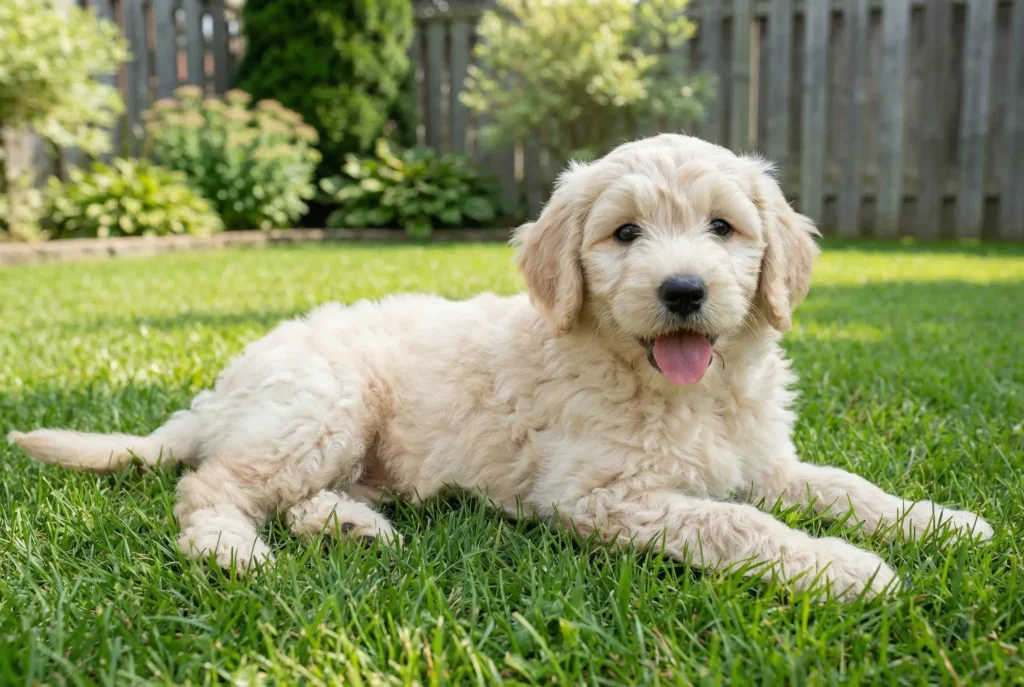
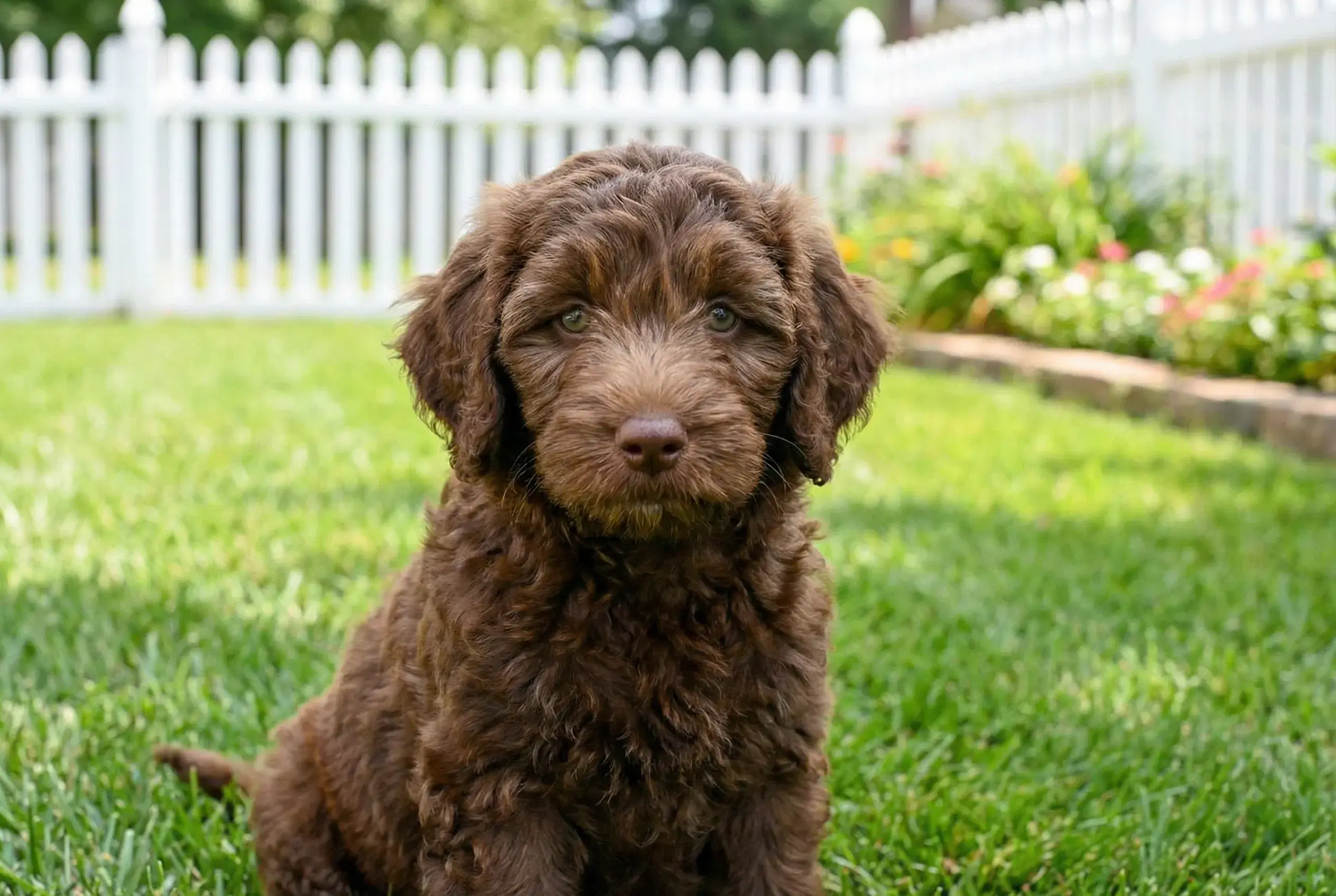
The Mini Goldendoodle has a temperament that most owners describe as gentle, eager to please, and deeply people oriented. It combines the Golden Retriever’s patience and warmth with the Poodle’s alertness and trainability, producing a dog that adapts well to both active families and quieter households. The personality often feels consistent from day one — sociable, soft in nature, and quick to form bonds with everyone in the home.

The 5 Defining Personality Traits Every Owner Mentions
- Affectionate nature. Mini Goldendoodles seek physical closeness throughout the day. Most owners report their dog follows them between rooms and initiates contact regularly — a reflection of emotional attunement inherited from both parent breeds.
- Eager to please. This breed is motivated by approval, which makes training straightforward even for first-time owners. They respond strongly to praise and repeat behaviors reliably once associated with a positive outcome.
- Social intelligence. Mini Goldendoodles read human emotional cues with noticeable accuracy. Owners consistently report that their dog adjusts its energy level to match the mood of the household.
- Playful energy with an off switch. Unlike some high-energy breeds, Mini Goldendoodles sustain focused play for 20 to 40 minutes and then genuinely relax — making them manageable in apartments and smaller homes.
- Low aggression baseline. Unprovoked aggression is rare in well-bred lines. The Golden Retriever influence suppresses territorial and resource-guarding instincts, though individual variation exists as with any breed.
Where the Personality Comes From: Golden Retriever vs. Poodle Influence
The temperament of a Mini Goldendoodle is a behavioral blend where specific traits dominate. The Golden Retriever contributes gentleness, patience with children, and a low reactivity baseline. The Miniature Poodle contributes alertness, a faster learning rate, sensitivity to tone of voice, and a strong need for mental stimulation. When both influences are well balanced, the result is a dog that is easy to live with and consistently responsive to guidance. The ratio between these influences shifts by generation — which is why generation matters more than most buyers expect.
Does Generation Change the Temperament?
Generation has a noticeable effect on Mini Goldendoodle temperament, particularly in terms of predictability, energy consistency, and training responsiveness. The differences are not dramatic, but they are reliable enough to factor into your decision.
| Generation | Genetic Split | Temperament Range | Best Suited For |
| F1 | 50% Golden / 50% Poodle | Widest variation in litter | Families open to variability |
| F1B | 25% Golden / 75% Poodle | More consistent across litter | First-time owners, allergy households |
| Multigen | Varies, tested lines | Most predictable | Buyers seeking specific traits |
F1 Mini Goldendoodle Temperament
F1 Mini Goldendoodles show the broadest personality range within any single litter. One puppy may inherit more of the Golden Retriever’s relaxed confidence, while a sibling leans toward the Poodle’s alertness and independence. This genetic variability produces robust, adaptable dogs, but the temperament outcome is harder to predict at 8 weeks. For buyers with flexible lifestyle expectations, F1 dogs offer excellent value. For those who need a specific behavioral profile from day one, a later generation is a better fit.
F1B Mini Goldendoodle Temperament
The F1B Mini Goldendoodle temperament is more consistent than F1, with higher Poodle influence producing a dog that is sharper in training and quicker to respond to cues. Most owners of F1B dogs report that their dog required more structured daily mental stimulation than expected — puzzle feeders, scent games, and short training sessions are genuine behavioral needs for this generation, not optional extras. The trade-off: F1B dogs show a slightly higher tendency toward separation sensitivity, which means building an independence routine from puppyhood matters more with this generation than with F1 dogs.

How Mini Goldendoodles Actually Behave Day to Day?
Separation Anxiety and the Velcro Dog Reality
Mini Goldendoodles develop strong attachment bonds and are genuinely uncomfortable when separated from their people for extended periods. Most owners can leave their dog alone for 3 to 4 hours without issue. Beyond 6 hours, a meaningful proportion show signs of distress — vocalization, destructive behavior, or house training regression. This reflects the breed’s core temperament rather than a training failure. Dogs that receive sufficient mental stimulation throughout the day — not just physical exercise — show measurably lower anxiety when left alone.
Barking, Zoomies, and the Adolescent Phase
Mini Goldendoodles are situational rather than chronic vocalists — they alert to visitors or unfamiliar sounds but sustained nuisance barking is uncommon in well-exercised, mentally engaged dogs. The adolescent phase between 6 and 18 months brings higher energy, selective recall, and boundary testing that owners call the “teenager phase.” It is normal and temporary. Most dogs settle into a reliably calm adult temperament by age 2. Zoomies — sudden bursts of sprint energy — peak between 4 and 12 months and decrease significantly after 18 months.
Male and Female Mini Goldendoodle Temperament
Gender differences are real but modest — individual variation within each gender far outweighs any consistent pattern.
| Trait | Male | Female |
| Affection style | Openly demonstrative, follows consistently | Affectionate on own terms, slightly selective |
| Maturity rate | Behavioral maturity around 18 to 24 months | Often calmer slightly earlier, 16 to 20 months |
| Training focus | Can be distracted but highly motivated | Steadier attention during sessions |
| Independence | More likely to velcro to one person | Slightly more independent baseline |
Mini Goldendoodles With Kids, Other Pets, and Strangers
Mini Goldendoodles are reliably good with children, other dogs, and strangers, but early socialization determines how naturally this plays out. Puppies exposed to a variety of people, sounds, and environments between 3 and 14 weeks develop social confidence that holds through adulthood. The primary risk with toddlers is not aggression but playful exuberance — a young Mini Goldendoodle at full speed can knock over a small child without any hostile intent. Most dogs develop the impulse control to interact safely without active supervision by 18 months.
With other pets, Mini Goldendoodles coexist well when introduced gradually. Most owners in multi-pet households report adaptation within 2 to 3 weeks. Prey drive is low in well-bred lines — cats that hold their ground are accepted quickly. Small animals such as rabbits or birds require more caution, as the retriever instinct to chase moving prey remains present even in this cross.
Trainability, Intelligence, and Health Considerations
Mini Goldendoodles are among the most trainable small hybrid breeds available, and this quality accounts for much of their popularity with first-time owners. Both parent breeds rank in the top tier of canine intelligence — the Poodle ranks second overall in Stanley Coren’s intelligence assessment. Most Mini Goldendoodles master basic commands within 2 to 4 weeks of consistent short sessions. Positive reinforcement using food rewards and verbal praise produces the fastest results. Sessions of 5 to 10 minutes, repeated two to three times daily, outperform single long sessions in both retention and engagement.
Underlying health issues can affect training responsiveness in ways that mimic personality problems. Hypothyroidism, ear infections, and hip dysplasia — all of which appear in this cross — can temporarily reduce a dog’s focus and willingness to engage. Common health issues to be aware of include progressive retinal atrophy, patellar luxation, and von Willebrand’s disease. Responsible breeders screen for these through OFA certification and DNA testing before breeding. Addressing health issues early protects both the dog’s wellbeing and the training relationship.

Is the Mini Goldendoodle the Right Temperament Match for You?
The Mini Goldendoodle suits a wide range of households but performs best in environments that match its social and cognitive needs. The most satisfied owners are those who understood before bringing their dog home that this breed requires daily engagement — not just physical exercise, but genuine interaction and mental stimulation. The four lifestyle scenarios below reflect what owners actually report, not idealized marketing claims.
- Best fit — families with children aged 5 and above. The breed’s patience, social intelligence, and energy level match well with school-age children who can participate in training and exercise.
- Strong fit — active single owners or couples with regular schedules. Predictable routines reduce separation anxiety risk significantly. Dogs in structured households adapt quickly and remain calm between sessions.
- Moderate fit — apartment dwellers with access to outdoor exercise. The breed’s size and indoor temperament make apartment living workable, but two substantial outdoor sessions daily are non-negotiable for behavioral stability.
- Challenging fit — owners away from home more than 6 hours daily without a plan. Without a structured solution — a dog walker, day care, or a second pet — the breed’s separation sensitivity becomes a consistent management problem.
Frequently Asked Questions
Do Mini Goldendoodles have separation anxiety?
Yes, separation anxiety is a real risk but it is manageable with the right approach from puppyhood. Most Mini Goldendoodles handle 3 to 4 hours alone without distress. Beyond 6 hours, graduated alone-time training, interactive toys, and consistent routines become necessary. The F1B generation shows slightly higher sensitivity to alone time than F1 dogs.
Is the F1B Mini Goldendoodle calmer than the F1?
Not in the relaxed sense — the F1B Mini Goldendoodle temperament is more focused and training-sharp, which can read as calmer because the dog channels energy productively. F1B dogs require more structured activity and mental stimulation than F1 dogs. They are highly capable dogs that need appropriate outlets, not low-maintenance companions.
When do Mini Goldendoodles calm down?
Most Mini Goldendoodles show a meaningful behavioral shift toward calm between 18 and 24 months. The adolescent phase between 6 and 18 months is the most demanding period. Dogs that receive consistent training and sufficient mental stimulation during this window transition to their adult temperament more smoothly than those that do not.
Are Mini Goldendoodles good for first-time dog owners?
Yes, the breed’s temperament and trainability make it one of the most accessible hybrid breeds for first-time owners. The key is realistic expectations around the adolescent phase and separation needs. Owners who invest in puppy training classes and establish a routine from week one consistently report a smoother first year.
Can a Mini Goldendoodle be an emotional support animal?
Mini Goldendoodles are well suited to emotional support animal roles. Their temperament meets the core behavioral requirements of ESA work. Registration requires a letter from a licensed mental health professional, not a breed certification.