Table of Contents:
- Adult Size and Maturity Milestones
- Generations and Size Predictability
- Growth Management: Nutrition, Vetting and Exercise for Adult Minis
- Grooming and Allergy Expectations for Mature Mini Goldendoodles
- Final Thoughts
- Frequently Asked Questions
Understanding how big a full-grown Mini Goldendoodle becomes is essential for any future or current owner. Their size affects everything — from daily care to home space and travel comfort. This guide explains what to expect as your Mini Goldendoodle grows.
Adult Size and Maturity Milestones
A Mini Goldendoodle is considered fully grown when it has reached its adult height and weight and the growth plates have closed or leveled out. Most minis stop growing in height by 10–12 months and fill out by 12–18 months.
Breeders and breed-associations generally place fully grown minis in the 15–30 lb (7–14 kg) weight range and approximately 13–20 inches (33–51 cm) tall at the shoulder, though some variation exists.
It is important to note that “full grown” does not mean “won’t change at all” — many will gain muscle mass, fill out their chest and coat depth after height has plateaued.
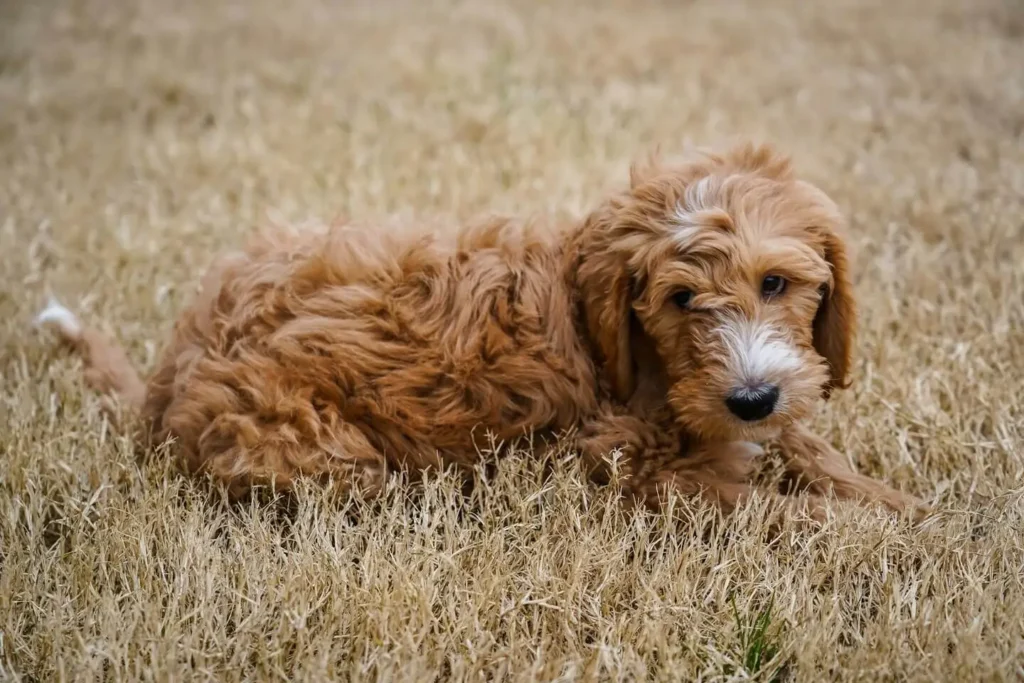
Typical weight and height ranges
Here is a useful comparison table to benchmark adult ultra-mini standard expectations for the mini size category:
| Size Category | Typical Weight Range | Typical Height at Shoulder | Notes |
| Mini Goldendoodle (commonly) | 15–30 lb (≈7–14 kg) | 13–20 in (≈33–51 cm) | The most common “mini” size cited. |
| Upper mini variants | Up to ~35–40 lb | 18–20+ in | Larger mini ranges exist depending on parentage. |
| Sex differences | Males often slightly heavier | Varies | Individual variation based on genetics and body structure. |
It means if your mini is weighing around 20–25 lb and stands ~15–17 inches, you are well within a normal adult size.
Growth timeline: when do minis stop growing and fill out
Growth of minis is relatively rapid in the first six months. For example:
- By 4 months many reach ~50% of adult weight.
- Height often plateaus around 10–12 months, though some “fill-out” continues.
- Full mature body condition often by 12–18 months, and in rare cases up to 2 years.
Because each puppy’s pace is unique, monitoring growth and body condition (rather than fixating on a single number) is more practical.

Generations and Size Predictability
The generation designation (F1, F1B, F1BB) indicates how many times the cross involves the Poodle parent and affects coat type, shedding, and sometimes size predictability.
- An F1 Mini Goldendoodle is a first-cross between a Golden Retriever and a Miniature Poodle. Size (and coat) can vary more.
- An F1B is a cross between an F1 and a Poodle, which generally improves coat uniformity and may have a narrow size range.
- An F1BB is further Poodle back-crossed, often giving an even curlier coat and potentially more consistent hypoallergenicity and size traits.
When looking for a full grown F1B or F1BB Mini Goldendoodle, buyers are often seeking more predictability in size and coat behaviour.
Predicting adult size: parent size, genetics, and growth charts
One of the best predictors of adult size is the size of the parents and the puppy’s weight trajectory. For example, if both parents weigh ~20–25 lb, you’re more likely to get a mini toward the lower end of the range. Use growth charts as a tool: one rule-of-thumb for larger doodles is “weight at 4 months ×2 +5–10 lb” but this is less reliable for minis.
Still:
- Request breeder documentation of parent weights.
- Use your mini’s weight at 4 and 6 months to estimate adult size.
- Understand that genetics, diet and exercise all play a part.
Comparative: mini, medium and standard Goldendoodle
To place minis in context:
- Mini Goldendoodle: ~15–30 lb and ~13–20 inches tall.
- Medium Goldendoodle: ~30–45 lb and ~17–21 inches.
- Standard Goldendoodle: ~50+ lb and ~20–24+ inches tall.
This comparison is useful because it helps owners understand what “mini” means relative to other size categories and plan for lifestyle accordingly.
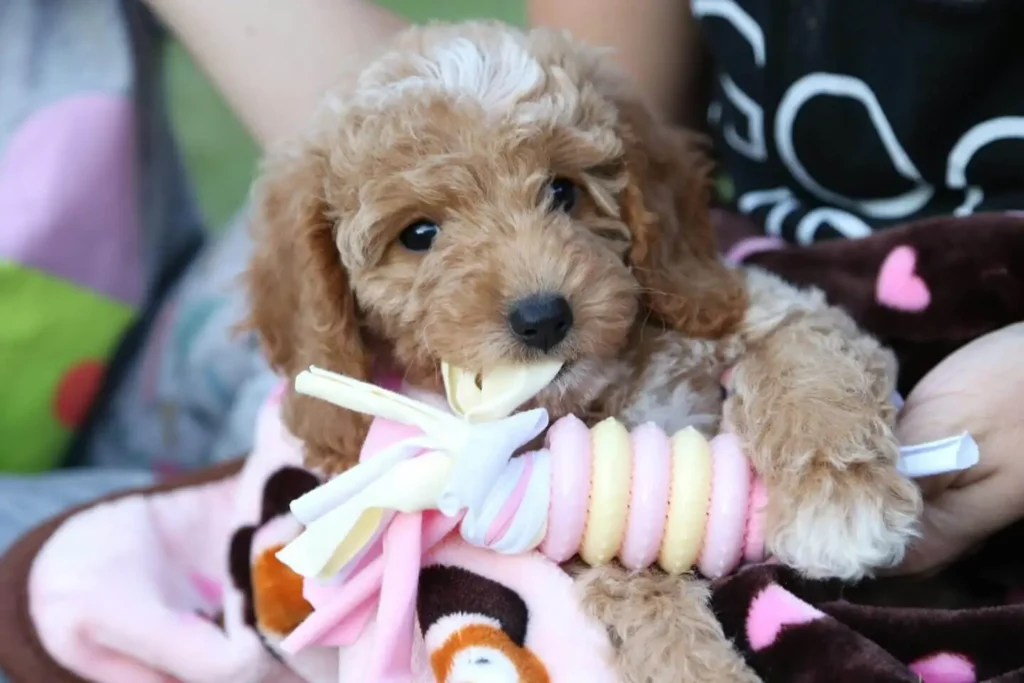
Growth Management: Nutrition, Vetting and Exercise for Adult Minis
Managing nutrition and growth is crucial for reaching healthy adult size. Puppies should be fed a high-quality, life‐stage appropriate formula (puppy food) until they transition to adult food around 12 months for a mini. Balanced nutrition supports healthy bone growth and muscle development, and protects joints from excessive stress.
Inadequate or excessive feeding can lead to undersized adults or overweight adults with joint issues. Monitor body condition rather than weight alone.
Exercise and lifestyle influence on size and body condition
Adult Mini Goldendoodles need around 45–60 minutes of active time each day. This can include walks, short play sessions, or training games that keep their minds engaged. Despite their smaller size, they still need regular exercise to stay fit, prevent excess weight, and support good behavior and emotional balance.
Without adequate activity, even a 20–30 lb adult can gain too much weight or develop behavioural issues.
Health screenings and growth-related risks
Correct — even minis have inherited risks. While weight is lower, standardized screenings remain important:
- Hip and elbow dysplasia or patellar luxation.
- Dental health (smaller dogs often have higher crowding risk).
- Regular vet checkups to track growth plate closure and general wellness.
- Once adult size is reached, shift to adult food and adjust portions accordingly to prevent weight-gain.
Grooming and Allergy Expectations for Mature Mini Goldendoodles
Adult Mini Goldendoodles need consistent grooming:
- Brush 3–4 times per week (especially curly or wavy coats).
- Professional trim every 6–8 weeks (or as your schedule allows).
- At adult size, coat length and density tend to stabilize — enabling more predictable maintenance.
Coat texture (curly vs wavy vs straight) will influence shedding and grooming frequency.
The smaller size does reduce the volume of the coat to maintain, but grooming expectations remain similar: frequency, tools, trimming, ear cleaning.
Final Thoughts
A full-grown Mini Goldendoodle typically weighs between 20–30 lb and stands about 13–17 inches tall. This breed combines the intelligence and affectionate nature of its parent breeds in a compact, easy-to-manage form. Mini Goldendoodles are active and playful like larger dogs but remain comfortable in smaller living spaces and easier to care for during travel.
At Love of Puppies, our mission is to connect families with healthy, well-socialized Mini Goldendoodles. With thoughtful preparation and informed care, your Mini Goldendoodle will grow into a loyal, loving companion who brings warmth and happiness to your family for many years to come.
Frequently Asked Questions
At what age is a Mini Goldendoodle fully grown?
Most human-friendly estimates place full adult height around 10–12 months, with filling-out continuing until 12–18 months. Some dogs may not fully plateau until 2 years, so monitoring body condition is key.
What weight should a full-grown Mini Goldendoodle be?
A healthy adult mini is typically 15–30 lb (7–14 kg), with many target sizes around 20–25 lb for easy manageability. Exact adult size depends on genetics, diet and exercise.
Can a 20-pound Mini Goldendoodle fly in the cabin with me?
Yes — a well-travelled adult mini at ~20 lb fits many under-seat airline carriers. But check the airline’s in-cabin pet size and carrier dimension requirements beforehand.
Does smaller size mean less grooming or no shedding?
No — while smaller size means less surface area, grooming frequency remains important. Minis still require brushing 3–4 times/week and regular trims, and they still shed dander and hair unless grooming is consistent.
If I adopt an adult mini of 25 lb how do I assess if its size is healthy?
Use body condition scoring: ribs should be felt but not seen, waist visible in profile, and the dog moves comfortably. If the adult is 25 lb but out of proportion (e.g., heavy chest, short legs), a vet check is advised.