Table of Contents:
- Adult Size and Maturity Milestones
- Month-by-Month Growth Timeline
- Generations and Size Predictability
- Growth Management: Nutrition, Vetting and Exercise for Adult Minis
- Grooming and Allergy Expectations for Mature Mini Goldendoodles
- Final Thoughts
- Frequently Asked Questions
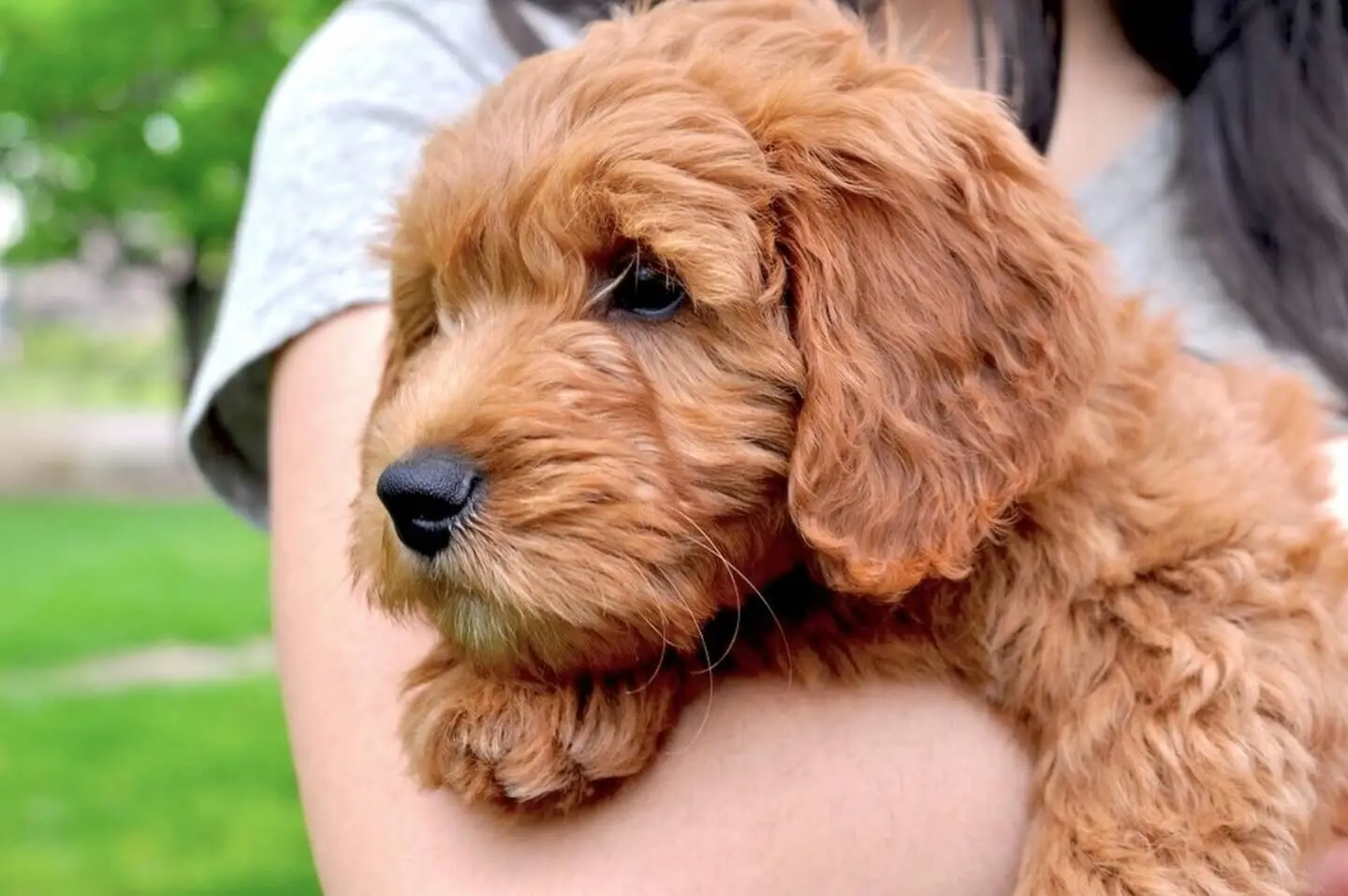
A full-grown Mini Goldendoodle typically weighs 15 to 35 pounds and stands 13 to 20 inches at the shoulder. Most reach their adult height by 10 to 12 months and finish filling out by 12 to 18 months. Size varies by generation, parent size, sex, and individual genetics. This guide breaks down what to expect at every stage.
Adult Size and Maturity Milestones
A Mini Goldendoodle is considered fully grown when it has reached its adult height and weight and the growth plates have closed. Most Minis stop growing in height by 10 to 12 months and finish filling out by 12 to 18 months.
Breeders and breed associations generally place fully grown Minis in the 15 to 35 lb (7–16 kg) weight range and approximately 13 to 20 inches (33–51 cm) tall at the shoulder, though individual variation exists. “Full grown” doesn’t mean “won’t change at all.” Many dogs continue gaining muscle mass and filling out through their chest and coat depth after height has plateaued.
Typical Weight and Height Ranges
| Size Category | Typical Weight Range | Typical Height at Shoulder | Notes |
|---|---|---|---|
| Mini Goldendoodle (standard) | 15–35 lb (7–16 kg) | 13–20 in (33–51 cm) | Most common range cited by breeders and GANA |
| Upper mini variants | Up to ~35–40 lb | 18–20+ in | Larger Minis exist depending on parentage |
| Males vs females | Males typically 2–5 lb heavier | Varies | Size difference is smaller than in Standard Goldendoodles |
Mini Goldendoodle Weight by Month
Growth in Minis is fastest in the first six months, then slows noticeably. Use this table as a general guide. Individual dogs vary, and parent size is the strongest predictor.
| Age | Typical Weight Range | % of Adult Weight |
|---|---|---|
| 8 weeks | 4–9 lb | ~20–25% |
| 3 months | 6–12 lb | ~30–40% |
| 4 months | 9–14 lb | ~45–50% |
| 6 months | 12–22 lb | ~65–75% |
| 8 months | 15–27 lb | ~80–88% |
| 10 months | 17–30 lb | ~90–95% |
| 12 months | 18–33 lb | ~95–100% |
| 18 months | 20–35 lb | 100% (fully filled out) |
How to Estimate Your Puppy’s Adult Weight
Two reliable methods work well for Mini Goldendoodles:
- 8-week weight × 4: A 5 lb puppy at 8 weeks will likely finish around 20 lb. For F1B Minis, multiply by 4.3 (Timberidge Goldendoodles data).
- 14–16 week weight × 2: More accurate as the puppy gets older. A 10 lb puppy at 4 months will likely mature around 18 to 22 lb.
Neither formula is exact. Genetics, diet, and generation all play a role. Mini litters show wider variation than Mediums or Standards because the size range itself is broader.
Growth Timeline: When Minis Stop Growing
- By 4 months, most reach 45 to 50% of adult weight
- Height often plateaus around 10 to 12 months
- Full mature body condition typically by 12 to 18 months, and in some cases up to 2 years
- Muscle mass and chest depth continue developing after height stops
Monitoring growth and body condition over time is more practical than fixating on a single number.
Generations and Size Predictability
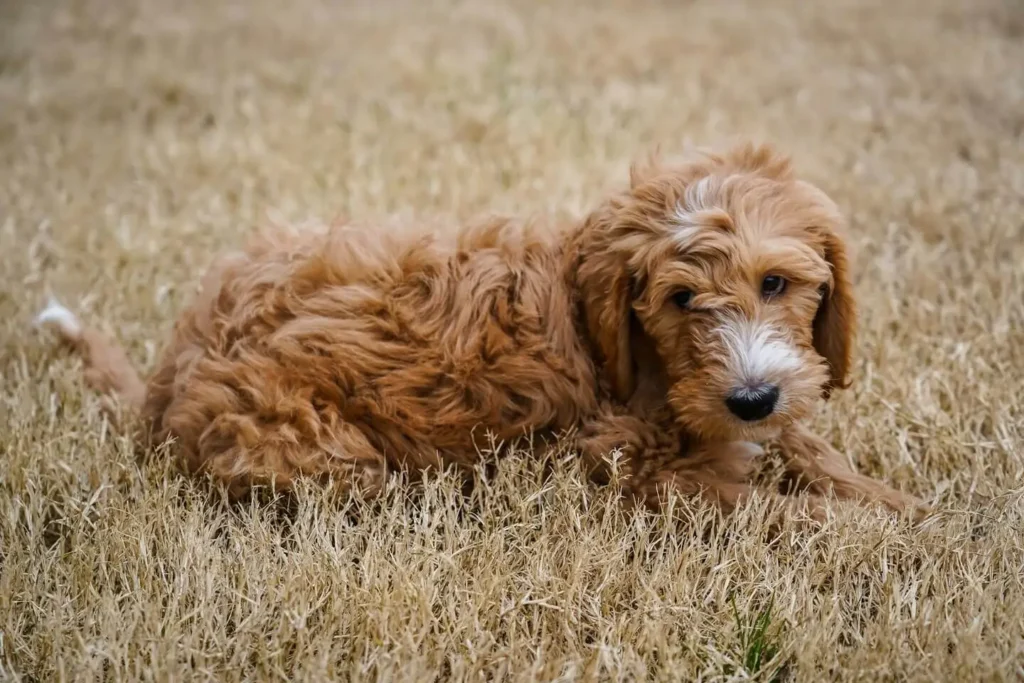
The generation designation (F1, F1B, F1BB) indicates how many times the cross involves the Poodle parent and affects coat type, shedding, and size predictability.
- An F1 Mini Goldendoodle is a first cross between a Golden Retriever and a Miniature Poodle. Size and coat can vary more widely because the Golden Retriever contributes roughly 50% of the genetics, and Golden Retrievers run 55 to 75 lb, significantly larger than a Miniature Poodle.
- An F1B is a cross between an F1 and a Poodle. The higher Poodle percentage (75%) narrows the likely size range and generally produces a more consistent, curlier coat with better hypoallergenic properties.
- An F1BB is backcrossed to a Poodle a second time, giving an even curlier coat, stronger hypoallergenicity, and often the most consistent size prediction of any generation.
When buyers seek a full-grown F1B or F1BB Mini Goldendoodle, they are typically choosing those generations for more predictability in both size and coat behavior.
Predicting Adult Size: Parent Size, Genetics, and Growth Charts
The single best predictor of adult size is the weight of both parents. If both parents weigh 20 to 25 lb, the puppy will likely land at the lower end of the Mini range. If the Poodle parent is on the larger side of Miniature (15–17 lb) and the Golden Retriever parent is a smaller female (55–60 lb), expect a puppy in the middle of the range.
Steps to estimate adult size:
- Request documented parent weights from your breeder
- Use the 8-week or 14-to-16-week formula above to estimate
- Track weight at every vet visit through 12 months and plot it against the growth table
No breeder can guarantee an exact adult size in a hybrid dog. Be skeptical of anyone who promises a specific weight to the pound.
Comparative: Mini, Medium and Standard Goldendoodle
| Size | Adult Weight | Height at Shoulder |
|---|---|---|
| Mini Goldendoodle | 15–35 lb | 13–20 in |
| Medium Goldendoodle | 30–45 lb | 17–21 in |
| Standard Goldendoodle | 50+ lb | 20–24+ in |
This comparison matters for lifestyle planning: apartment vs house, airline travel, car travel, furniture, and exercise space all scale with size.
Growth Management: Nutrition, Vetting and Exercise for Adult Minis
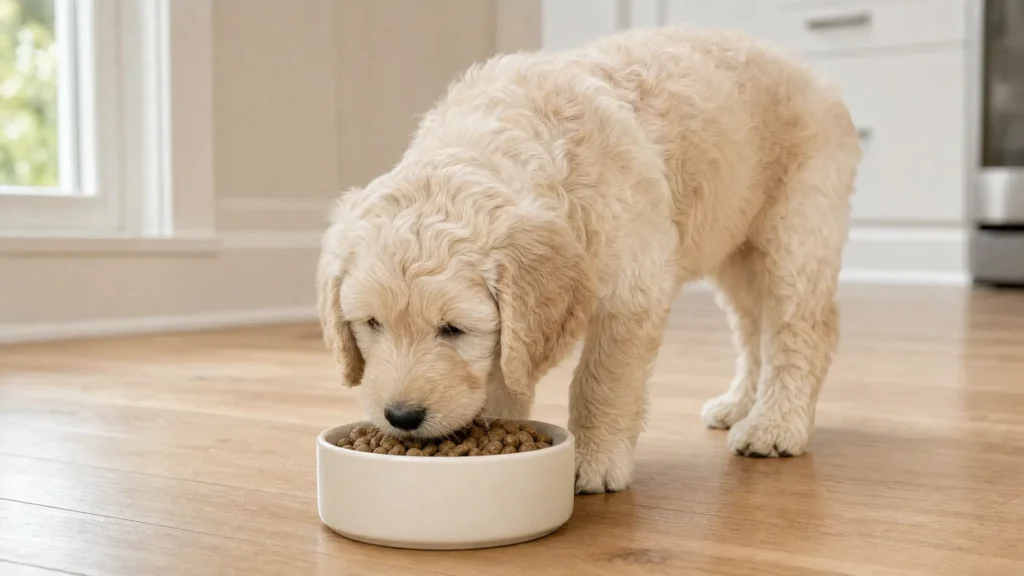
Diet, exercise, and routine vet care all directly affect whether a Mini Goldendoodle reaches and maintains healthy adult size. Overfeeding during the growth phase creates joint stress; underfeeding risks undersized development. Neither extreme serves the dog well.
Nutrition During Growth
Feed a high-quality, life-stage-appropriate puppy formula until transitioning to adult food. For Mini Goldendoodles, that transition typically happens between 10 and 12 months. Switch gradually over 7 to 14 days by mixing increasing proportions of adult food with decreasing puppy food. A faster transition often causes digestive upset.
One practical note many owners miss: avoid overfeeding in the first six months. Rapid weight gain during the growth phase puts stress on developing joints and growth plates. A lean, steadily growing puppy is preferable to a heavier one gaining faster than the skeletal structure can support. Once adult size is reached, adjust portions to maintain a healthy body condition rather than tracking weight alone.
Body condition check: ribs should be felt easily with light pressure but not visible. There should be a visible waist tuck from above and a slight abdominal tuck from the side.
Exercise and Lifestyle Influence on Size and Body Condition
Adult Mini Goldendoodles need 45 to 60 minutes of active exercise daily. This can be walks, fetch, training sessions, or free play. The mix matters less than the consistency.
For puppies, the rule of thumb is 5 minutes of structured exercise per month of age, up to twice daily. A 4-month-old Mini does well with two 20-minute sessions. Avoid running on hard surfaces and high-impact activities (jumping, rough fetch on concrete) until growth plates close, typically around 12 months. Joint damage from premature high-impact loading can affect mobility for life.
Without adequate daily activity, a 20 to 30 lb adult Mini can gain weight quickly and develop behavioral problems rooted in boredom and unspent energy.
Health Screenings and Growth-Related Risks
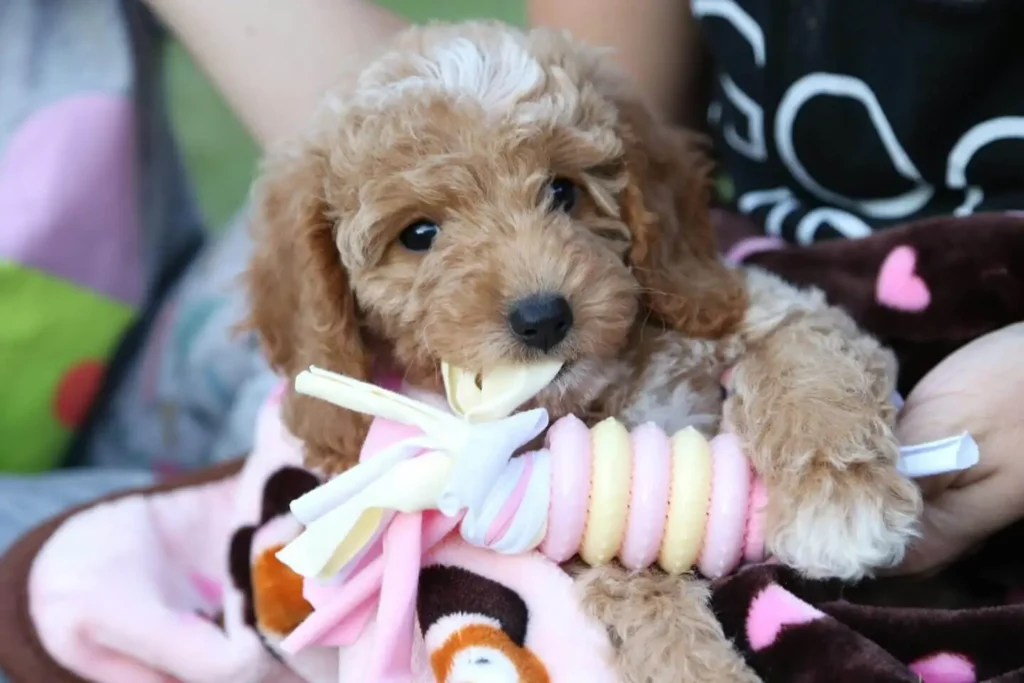
Even at smaller weights, health screenings remain important for Mini Goldendoodles:
- Hip, elbow, and patellar luxation evaluation. Smaller dogs are prone to kneecap issues. The Orthopedic Foundation for Animals (OFA) maintains a public database of certified health clearances for breeding dogs.
- Dental health monitoring. Smaller dogs often have higher tooth crowding risk, which leads to earlier periodontal disease if not managed.
- Regular vet checkups to track growth plate closure and overall body condition.
- Weight check at every visit. Even a 2 to 3 lb gain is significant in a 20 lb dog (10 to 15% of body weight).
Grooming and Allergy Expectations for Mature Mini Goldendoodles
Adult Mini Goldendoodles need consistent grooming regardless of size. Smaller surface area means less total coat, but the grooming frequency stays the same as for larger Goldendoodles.
- Brushing: 3 to 4 times per week for wavy coats; daily for curly coats (F1B and F1BB). During the coat transition period at 6 to 14 months, daily brushing is needed regardless of coat type. The mix of outgoing puppy coat and incoming adult coat mats faster than at any other stage.
- Professional grooming: Every 6 to 8 weeks for a full trim, nail clip, and ear cleaning. Tell your groomer when the coat transition is in progress. A shorter trim during this period is more practical than trying to maintain length while two coat textures are present simultaneously.
- Coat type and shedding: Wavy coats shed more than curly ones. F1B and F1BB Minis with curly coats shed least and suit allergy-sensitive households best. No Goldendoodle coat is completely allergen-free. Dander, not just hair, is the primary allergen, and all dogs produce it. Consistent grooming reduces the amount of dander distributed in the home.
- Ear care: Mini Goldendoodles are prone to ear infections because their floppy ears restrict airflow and their coat grows into the ear canal. Check and clean ears monthly; ask your groomer to pluck excess hair from the ear canal at each professional appointment. Caught early, infections are straightforward to treat. Left unnoticed, they become chronic and painful.
- Coat stability in adulthood: Once the adult coat is fully established, typically by 12 to 18 months, texture and density stabilize and grooming becomes more predictable. Most owners find adult coat maintenance easier than the transition period, provided the brushing routine was established early.
Final Thoughts
A full-grown Mini Goldendoodle typically lands between 15 and 35 pounds and stands 13 to 20 inches tall. Most finish growing in height by 12 months and finish filling out by 18 months, with muscle development and chest depth continuing after the scale stops moving.
Parent size and generation are the two most reliable predictors of adult size. An F1B puppy from two parents under 25 lb will almost certainly stay in the lower half of the Mini range. An F1 from a larger Golden Retriever dam may finish closer to the upper end.
At Love of Puppies, we document parent weights for every litter and share that information with buyers. If you have questions about what size to expect from a specific pairing, we can walk you through the math before you place a deposit.
Frequently Asked Questions
At what age is a Mini Goldendoodle fully grown?
Most Mini Goldendoodles reach adult height by 10 to 12 months. Filling out, which means gaining muscle mass, chest depth, and adult coat density, continues until 12 to 18 months. Some dogs don’t fully plateau until 2 years. Monitor body condition rather than relying on a single target weight.
What weight should a full-grown Mini Goldendoodle be?
A healthy adult Mini typically weighs 15 to 35 lb (7–16 kg), with most falling between 20 and 30 lb. Exact adult size depends on genetics, parent size, generation, sex, and diet during the growth phase. Males average 2 to 5 lb heavier than females.
How much does a Mini Goldendoodle weigh at 6 months?
At 6 months, most Mini Goldendoodles weigh between 12 and 22 lb, which represents roughly 65 to 75% of their adult weight. If your 6-month Mini weighs 15 lb, a reasonable adult estimate is 20 to 23 lb.
Is a 30-pound Goldendoodle still a Mini?
Yes. The upper end of the Mini Goldendoodle range extends to approximately 35 lb depending on the breeding program and parent size. Some breeders use a tighter definition of 15 to 30 lb; others include dogs up to 35 lb. A 30 lb dog from Mini Goldendoodle parents is within a normal adult size for the category.
Do male Mini Goldendoodles get bigger than females?
Yes, but the difference is smaller than in Standard Goldendoodles. Male Minis typically run 2 to 5 lb heavier than females from the same litter. Both sexes follow the same general growth curve, though males may continue filling out slightly longer.
Can a 20-pound Mini Goldendoodle fly in the cabin with me?
Yes. Most 20 lb Mini Goldendoodles fit under-seat airline carriers on many major carriers. Check the specific airline’s in-cabin pet policy for carrier dimensions and weight limits before booking, as these vary and change. The dog plus the carrier together must meet the airline’s total weight limit.
Does smaller size mean less grooming or no shedding?
No. Smaller surface area means less total coat volume, but grooming frequency stays the same: brushing 3 to 4 times per week, professional grooming every 6 to 8 weeks. Minis still shed dander and some hair unless grooming is consistent. Curly-coated F1B Minis shed least and are best suited to allergy-sensitive households, but no coat is allergen-free.
How do I know if my full-grown Mini Goldendoodle is a healthy weight?
Use body condition scoring rather than a target number. Ribs should be felt easily with light pressure but not visible. There should be a visible waist tuck when looking from above and a slight abdominal tuck from the side. If your dog is 25 lb but those landmarks aren’t visible, they’re likely carrying extra weight. Ask your vet to score body condition at every annual exam.
If I adopt an adult Mini at 25 lb, how do I assess if that’s a healthy size?
Check body condition rather than the scale alone. A 25 lb Mini Goldendoodle in good condition will have palpable ribs, a visible waist, and comfortable, fluid movement. If the same dog carries visible fat deposits over the ribs or has lost their waist profile, 25 lb may be above their ideal weight. Your vet can confirm with a formal body condition score and advise on dietary adjustment if needed.