
Table of Contents:
- Size: How Big Do They Get
- Understanding Generations
- Temperament and Personality
- Health and Lifespan
- Grooming Requirements
- Comparing Doodle Breeds
- Is a Mini Goldendoodle Right for You?
- Bringing Your Puppy Home
- Frequently Asked Questions
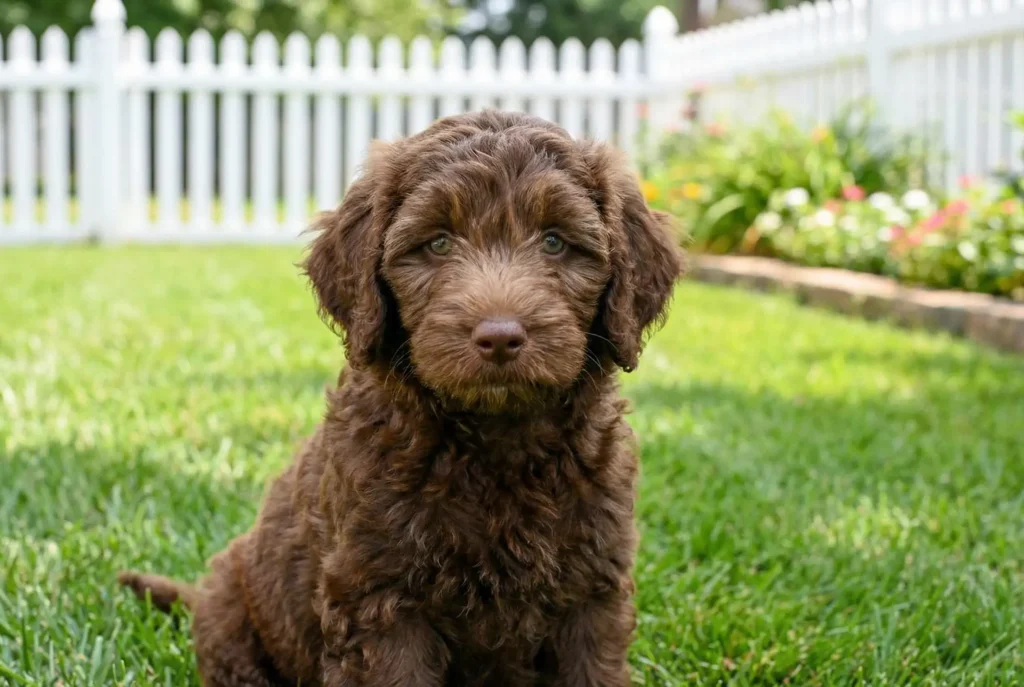
The Mini Goldendoodle is a Golden Retriever and Miniature Poodle cross that weighs 15 to 35 pounds, lives 10 to 15 years, and consistently ranks among the most popular small companion dogs in the country. If you are deciding whether this breed fits your home, this guide covers every decision point — size, generations, coat, temperament, health, grooming, costs, and how to find a trustworthy breeder — with specific numbers and direct answers at each step.
Size: How Big Do They Get
Most Mini Goldendoodles reach 18 to 28 pounds at maturity, within an overall breed range of 15 to 35 pounds and 13 to 20 inches at the shoulder. Size varies because the Miniature Poodle parent itself ranges from 10 to 20 pounds, and that variation flows directly into the offspring. A breeder using a 12-pound Miniature Poodle will consistently produce smaller adults than one using an 18-pound sire or dam, even within the same generation.
| Category | Weight | Height | Typical Fit |
| Petite / Toy Goldendoodle | Under 15 lbs | Under 13 in | Small apartments, seniors |
| Mini Goldendoodle | 15–35 lbs | 13–20 in | Apartments, small homes, families |
| Medium Goldendoodle | 35–50 lbs | 18–22 in | Homes with yards, active owners |
| Standard Goldendoodle | 50–70+ lbs | 22–26 in | Large homes, very active lifestyles |
The most reliable adult size predictor is parent weights. A secondary method — doubling the puppy’s weight at 16 weeks — works well for most Miniature Goldendoodles but becomes less accurate at the extremes of the litter. Growth plateaus at 90% of adult weight by 10 months, with full development complete by 13 to 14 months.

Understanding Generations
Generation labels describe the exact genetic makeup of a Mini Goldendoodle and directly predict coat type, shedding level, and how reliable the hypoallergenic claim actually is. Understanding generations before choosing a puppy prevents the most common buyer disappointment: more shedding than expected, or a coat that is harder to maintain than anticipated.
| Generation | Genetic Makeup | Coat Type | Shedding | Hypoallergenic Reliability |
| F1 | 50% Golden / 50% Poodle | Wavy — variable | Light to moderate | Moderate |
| F1B | 25% Golden / 75% Poodle | Wavy to curly | Minimal | High |
| F1BB | 12.5% Golden / 87.5% Poodle | Curly | Near zero | Highest |
| F2 | 50/50 — second gen | Variable | Variable | Lower |
| Multigen | 3+ generations selected | Curly to wavy | Minimal | High |
F1B is the most commonly bred generation for buyers with allergies or low-shedding requirements. The additional Poodle genetics produce a coat that sheds minimally and carries a more reliable hypoallergenic profile — but that coat mats faster and requires more brushing than an F1 coat. When browsing Mini Goldendoodle puppies for sale, always confirm the generation before comparing prices: F1B and Multigen puppies typically cost more than F1, and the price difference should reflect documented parent testing, not just marketing language.
Temperament and Personality
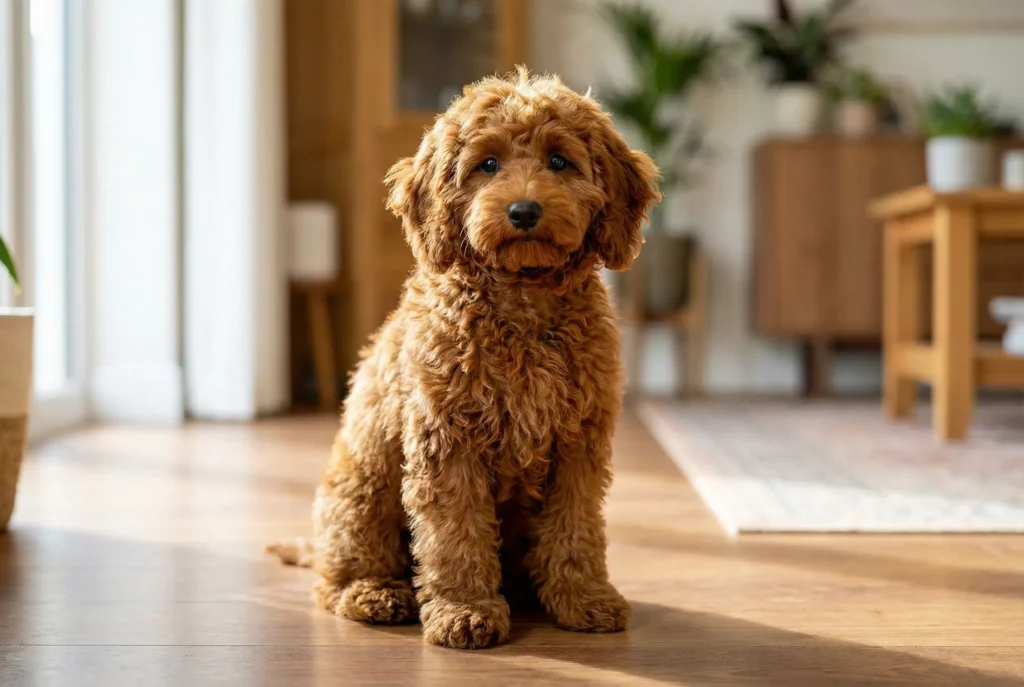
The Mini Goldendoodle is an intelligent, affectionate dog that adapts well to apartments, first-time owners, families with children, and multi-pet households. High trainability from the Poodle side combines with the Golden Retriever’s people-pleasing motivation to produce one of the most responsive small companion breeds available. The one characteristic consistently underestimated by new owners is separation anxiety — a direct consequence of the deep human attachment that makes the breed so appealing. Dogs that bond closely with their owners experience genuine distress when left alone for extended periods without preparation.
Four characteristics define this breed across most individuals, regardless of generation or color.
- High trainability. Most dogs in this breed learn basic obedience commands within weeks of consistent positive reinforcement training. The Poodle genetics make this one of the most trainable small companion breeds available, and the Golden Retriever motivation sustains engagement throughout sessions.
- Social orientation. Naturally friendly with strangers, children, and other animals when socialized before 16 weeks. Dogs that miss this critical window may develop fearfulness or reactivity that requires professional correction — early socialization is not optional.
- Moderate energy level. Daily exercise of 30 to 40 minutes satisfies most adults. Puppies need shorter but more frequent sessions to protect developing joints. The breed adapts to quieter lifestyles as long as mental stimulation through training and play is consistent.
- Separation anxiety tendency. Buyers with full-time office schedules who cannot arrange midday care should address this before bringing a puppy home. Crate training, graduated alone-time practice from the first week, and a consistent daily routine are the three most effective management tools.
Health and Lifespan
A Mini Goldendoodle lives 10 to 15 years, with smaller individuals typically reaching the higher end of that range. Hybrid vigor gives this crossbred a statistical health advantage over both parent breeds, but the most common conditions affecting Golden Retrievers and Poodles can still appear — and responsible buyers should verify that parent dogs have been screened before committing to a purchase.
| Condition | Area Affected | Prevalence | Screening Method |
| Hip Dysplasia | Hip joints | Moderate | OFA hip evaluation |
| Patellar Luxation | Knee | Moderate in small dogs | OFA patella evaluation |
| Progressive Retinal Atrophy | Eyes | Low in crossbreds | CAER eye exam |
| Ear Infections | Ear canal | High — floppy structure traps moisture | Preventive weekly cleaning |
| Skin and Food Allergies | Skin, digestion | Moderate | Elimination diet / allergy panel |
When evaluating Mini Goldendoodle puppies for sale, ask for OFA scores for both parents and a written health guarantee covering genetic conditions for a minimum of 12 months. Ear infections are the most common recurring issue and entirely preventable with weekly ear cleaning, post-bath drying, and keeping the inner ear canal hair trimmed at each professional grooming appointment.
Grooming Requirements
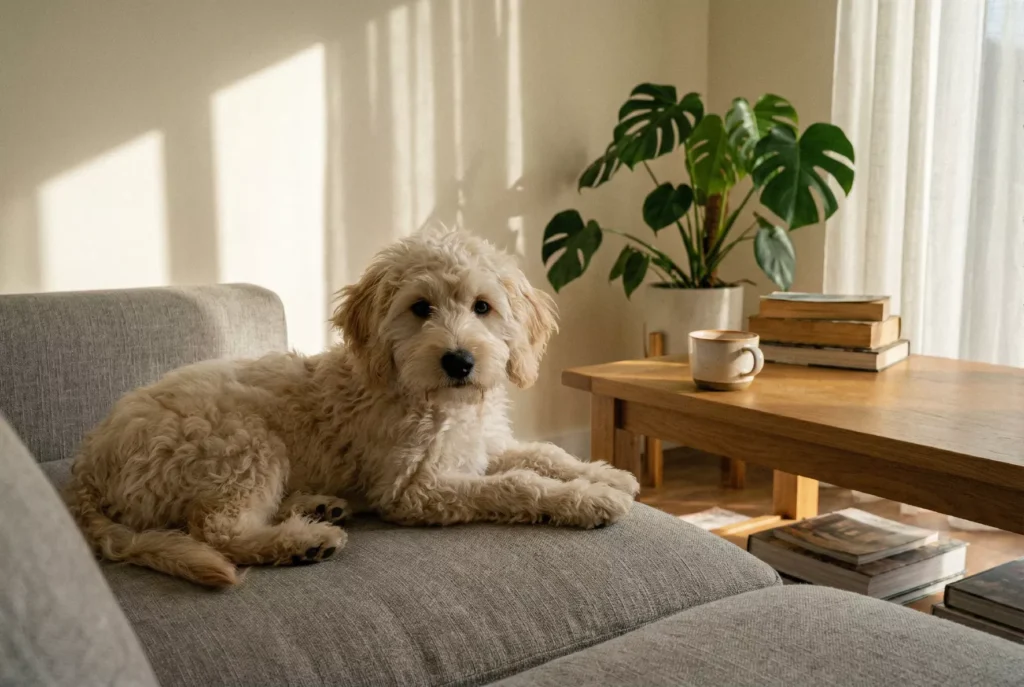
A Mini Goldendoodle is a moderate-to-high grooming commitment — the low-shedding coat that attracts most buyers is exactly the coat type that requires the most consistent brushing to stay mat-free. The most common first-year mistake is inconsistent brushing during the 5-to-8-month adolescent coat transition, when the puppy and adult coats are present simultaneously and mat at accelerated rates. Missing this window typically results in a shave-down at the first professional groom.
- Brushing frequency. Wavy F1 coats require brushing 2 to 3 times per week. Curly F1B and Multigen coats require daily brushing. A slicker brush followed by a steel comb — run all the way to the skin, not just surface-level — is the only method that reliably prevents matting.
- Bathing schedule. Every 4 to 6 weeks using a gentle, dog-safe shampoo. Dry the coat thoroughly before brushing after every bath — brushing a wet coat causes breakage and accelerates mat formation.
- Professional grooming. Every 6 to 8 weeks for trimming, nail clipping, and ear cleaning. The first appointment should happen at 4 to 5 months to establish comfort with the process. Delaying past 6 months makes grooming desensitization significantly harder.
- Ear care. Weekly cleaning with a vet-approved ear cleaner removes the moisture and debris that cause the ear infections this breed is prone to. This single step is the most overlooked preventive measure in the entire care routine.
Comparing Doodle Breeds
The Mini Goldendoodle is the most popular breed in the doodle category, but it is not automatically the right choice for every buyer. Understanding how it compares to the closest alternatives clarifies which breed actually fits a specific household rather than which one photographs best on social media.
| Breed | Weight | Energy Level | Coat Maintenance | Best For |
| Mini Goldendoodle | 15–35 lbs | Moderate | High | Families, first-time owners, allergy concerns |
| Mini Labradoodle | 15–30 lbs | Moderate–High | High | Active owners, older children |
| Cavapoo | 10–20 lbs | Low–Moderate | Moderate | Apartments, seniors, quieter households |
| Mini Bernedoodle | 20–45 lbs | Moderate | Very High | Cold climates, families with space |
| Cockapoo | 12–25 lbs | Moderate | Moderate | Smaller spaces, adaptable lifestyles |
The Mini Goldendoodle’s advantage over the Labradoodle is temperament consistency: the Golden Retriever’s reliable, even-keeled disposition produces more predictable personality outcomes than the Labrador, which shows a wider behavioral range across individuals. Against the Cavapoo, this breed offers a larger size range and slightly higher trainability, at the cost of more grooming commitment. The Mini Bernedoodle is heavier and more heavily coated — a better match for colder climates and owners who want a clearly different silhouette from the classic doodle look.
Is a Mini Goldendoodle Right for You?
Use these four criteria to assess fit honestly before contacting a breeder.
- You have 30 to 45 minutes daily for exercise. This is the realistic minimum for a Mini Goldendoodle to remain behaviorally stable as an adult. Dogs that do not receive adequate daily activity develop destructive behavior and anxiety regardless of how well-bred they are.
- You can commit to a brushing routine. Two to three times per week minimum for wavy coats; daily for curly. If this commitment is not realistic given your schedule, a lower-maintenance breed will be a better long-term fit.
- You have a plan for alone time. If you work outside the home full-time, arrange a dog walker, doggy daycare, or a work-from-home household member to cover midday. A Miniature Goldendoodle left alone for 8 or more hours without any contact is at high risk of developing chronic separation anxiety.
Bringing Your Puppy Home
The first four weeks with a Mini Goldendoodle puppy establish the behavioral patterns and physical routines that shape the dog’s entire life. What happens in this window is more consequential than any training program started later — and more difficult to correct if it goes wrong.
Week One: Settling In Without Overwhelming
Week one is about adjustment, not training. Puppies need 16 to 18 hours of sleep per day, consistent meals on a fixed schedule, and a crate introduced as a safe, positive space from the first night. Limit visitors and novel experiences for the first five to seven days. The puppy’s nervous system is adjusting to a new environment, new smells, and the absence of its littermates. Overloading the first week with guests and outings delays this adjustment and increases the likelihood of anxiety behaviors persisting into adulthood.
Weeks Two to Four: Socialization Window Opens
The developmental window for primary socialization in puppies runs from week 3 to week 16 — experiences introduced during this period shape the dog’s baseline response to novelty for life. Introduce new surfaces (grass, gravel, wood floors, carpet), sounds (traffic, appliances, children), people of different ages and appearances, and gentle handling of ears, paws, and mouth. Keep every experience positive and brief. The goal is a puppy that encounters new things with curiosity, not a puppy that is flooded until it shuts down.
Veterinary appointments, leash introduction, and the basics of crate training all fit within this window. A well-socialized Mini Goldendoodle puppy at 16 weeks is measurably easier to train, less reactive at the groomer, and significantly less prone to the fear-based behaviors that generate the most common owner complaints in the first year.
Frequently Asked Questions
Are Mini Goldendoodles hypoallergenic?
No dog is truly hypoallergenic, but Mini Goldendoodles produce significantly less dander and shed far less than most breeds. People with mild to moderate dog allergies typically tolerate them well. Those with severe allergies should spend time with an adult dog of the same generation before placing a deposit.
What age do Mini Goldendoodle puppies go home?
Mini Goldendoodle puppies go home between 8 and 10 weeks of age. Eight weeks is the legal and developmental minimum in most U.S. states; 10 weeks is considered optimal for temperament development. Puppies released before 8 weeks miss critical socialization learning from their mother and littermates that affects behavior for life.
Is a Mini Goldendoodle good for apartment living?
Yes — the Mini Goldendoodle’s size, moderate energy level, and adaptable temperament make it one of the better hybrid breeds for apartment living. The key requirement is consistent daily exercise of at least 30 minutes. Dogs that do not receive adequate physical and mental stimulation regardless of living space develop destructive behavior and heightened anxiety.
What is the difference between an F1 and F1B Mini Goldendoodle?
An F1 Mini Goldendoodle is 50% Golden Retriever and 50% Miniature Poodle, producing a wavy coat with light to moderate shedding. An F1B is 25% Golden Retriever and 75% Miniature Poodle, producing a wavy-to-curly coat with minimal shedding and higher hypoallergenic reliability. F1B is the preferred generation for allergy sufferers; F1 is often preferred by buyers who want a softer, lower-maintenance coat texture.