Table of Contents:
- What Is an F1BB Mini Goldendoodle
- F1BB Mini Goldendoodle Size
- Shedding, Coat Type, and Hypoallergenic Properties
- Temperament, Personality, and Family Compatibility
- Health, Lifespan, and What Reputable Breeders Test For
- F1BB Mini Goldendoodle Price
- Conclusion
- FAQ
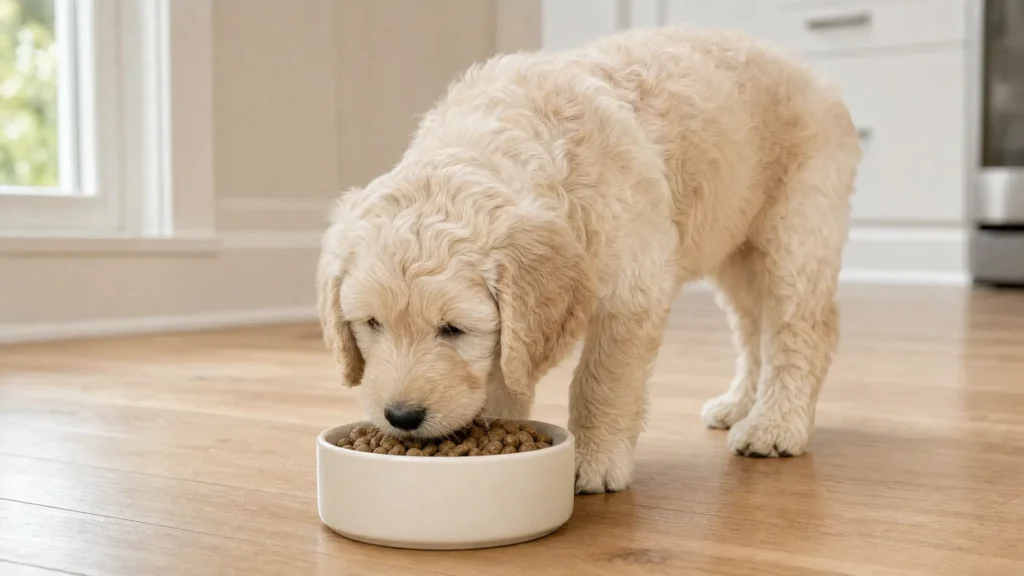
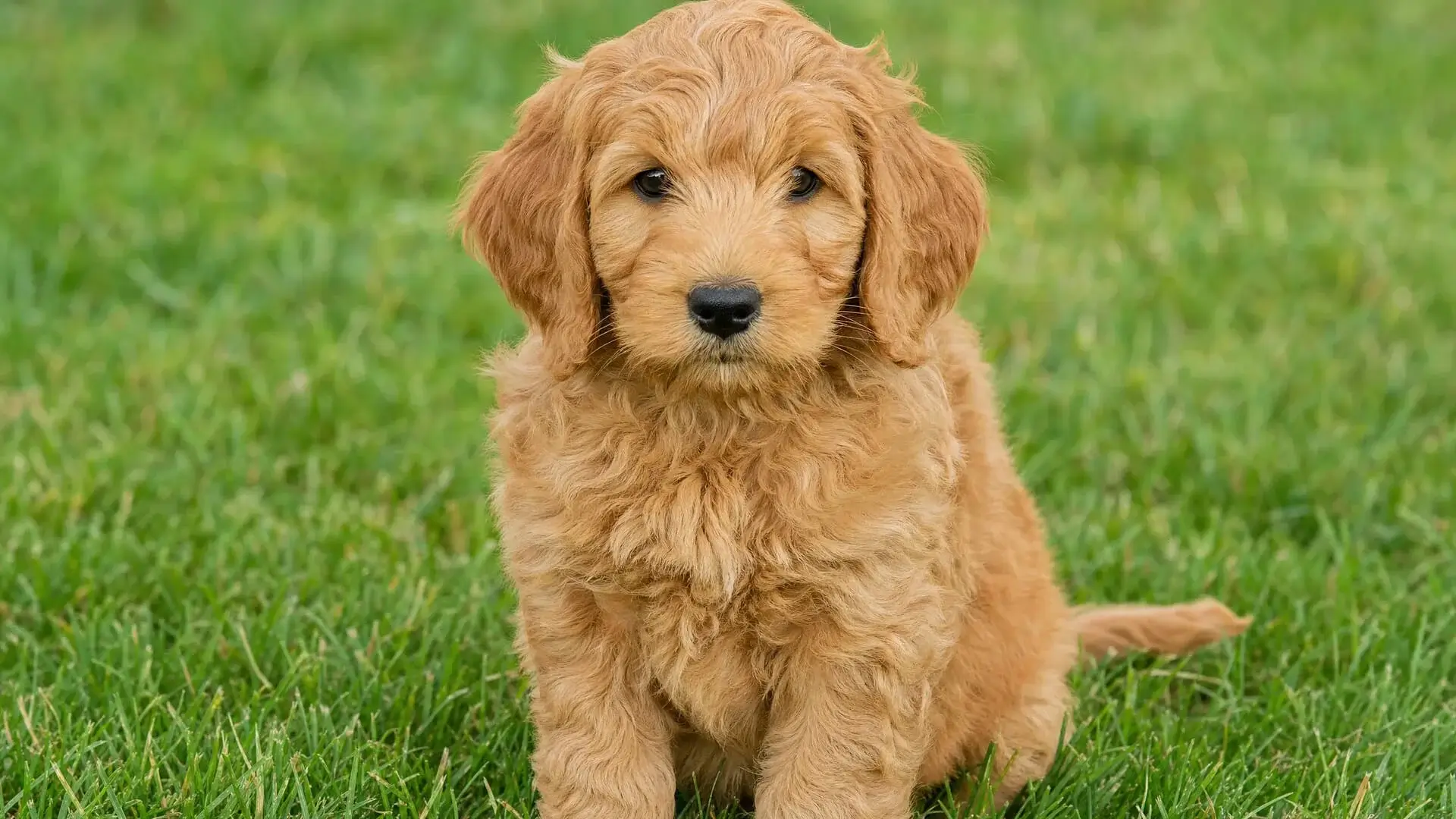
The F1BB Mini Goldendoodle is the most allergy-friendly generation in the Goldendoodle family – a second backcross producing a dog that is 87.5% Miniature Poodle and 12.5% Golden Retriever. This combination delivers the tightest, lowest-shedding coat of any Goldendoodle generation while keeping the friendly, trainable personality that makes this breed so popular with families.
What Is an F1BB Mini Goldendoodle
The F1BB Mini Goldendoodle comes from breeding an F1B Mini Goldendoodle back to a purebred Miniature Poodle, making it the most Poodle-dominant generation in the standard Goldendoodle lineup. At 87.5% Poodle and 12.5% Golden Retriever, this generation offers the highest coat predictability and the most consistent low-shedding traits of any cross. For buyers prioritizing allergy management, that genetic ratio is the main reason this generation commands attention.
The “F” in the designation stands for filial generation, “1” indicates first ancestry line, and the double “B” signals two backcrosses to a Poodle. This naming system matters because it directly predicts coat type, shedding level, and to a degree, temperament. Reputable breeders always disclose generation clearly.

How the F1BB Generation Is Produced: The Breeding Formula
The F1BB generation follows a precise three-step lineage:
- Step 1 – F1 cross. A purebred Golden Retriever is bred with a purebred Miniature Poodle, producing an F1 Mini Goldendoodle that is 50% of each breed.
- Step 2 – First backcross. The F1 is bred back to a purebred Miniature Poodle, producing an F1B at 75% Poodle and 25% Golden Retriever.
- Step 3 – Second backcross. The F1B is bred again to a purebred Miniature Poodle, producing the F1BB at 87.5% Poodle and 12.5% Golden Retriever.
Each backcross is a deliberate choice to reinforce Poodle traits, particularly coat curl, low shedding, and trainability, while retaining enough Golden Retriever genetics to preserve the breed’s signature warmth.
F1BB vs. F1B vs. F1 Mini Goldendoodle: What’s the Actual Difference?
The clearest way to understand the F1BB Mini Goldendoodle is to compare it directly against earlier generations across the traits that matter most to buyers.
| Generation | Poodle % | Golden % | Shedding | Coat Type | Best For |
| F1 | 50% | 50% | Moderate | Wavy / shaggy | Balanced temperament seekers |
| F1B | 75% | 25% | Low | Wavy to curly | Mild allergy households |
| F1BB | 87.5% | 12.5% | Very low | Curly | Moderate–severe allergies |
| Multigen | Varies | Varies | Low–very low | Curly | Consistency-focused buyers |
The F1BB sits at the top of the shedding-reduction ladder among standard generations. Compared to the F1B, already considered highly allergy-friendly, the F1BB produces noticeably tighter curls and more predictable coat behavior across a litter. The trade-off is a slightly reduced expression of Golden Retriever traits, which is worth understanding before purchasing.
F1BB Mini Goldendoodle Size
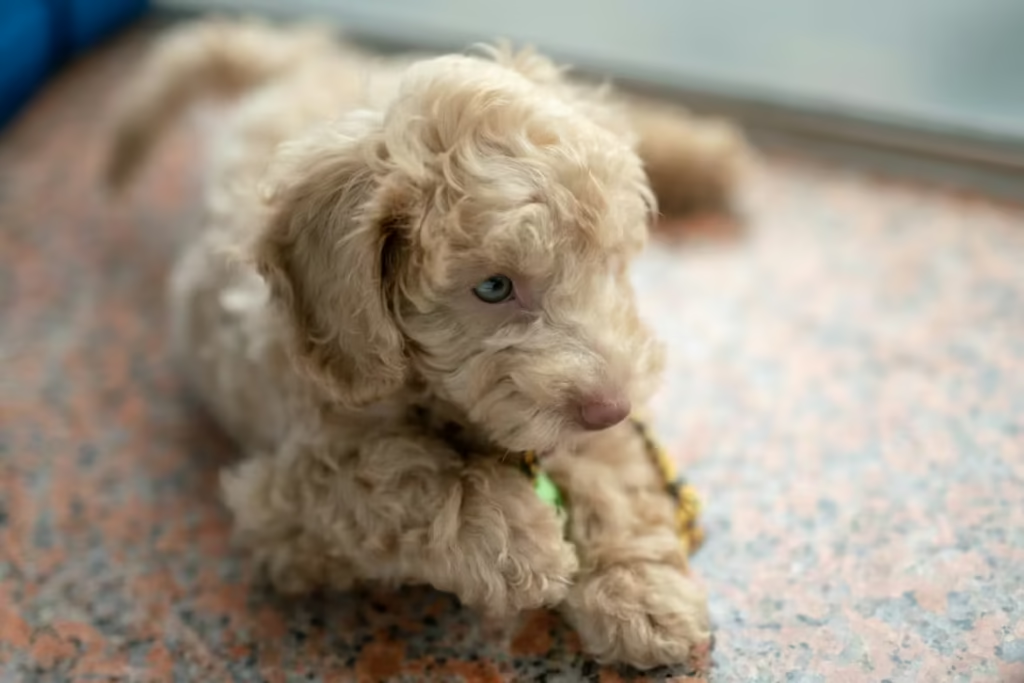
A full grown F1BB Mini Goldendoodle typically weighs between 15 and 35 pounds and stands 13 to 20 inches tall at the shoulder. Size is primarily determined by the Miniature Poodle parent rather than the Golden Retriever side, which is why the Mini designation is reliable. Breeders using true Miniature Poodles, not Standards, produce consistently compact dogs. If precise adult size matters to you, ask the breeder for the parent dogs’ weights before committing.
When Is an F1BB Mini Goldendoodle Fully Grown?
Most F1BB Mini Goldendoodles reach full adult size between 11 and 14 months of age, with the majority of their growth complete by month 9. The Mini size matures faster than Standard Goldendoodles, which can take up to 18 months. Nutrition during the first year has a meaningful impact. Overfeeding a puppy can push adult weight above the expected range, so following a vet-recommended feeding schedule matters from week one.
Coat Colors and Appearance in the F1BB Generation
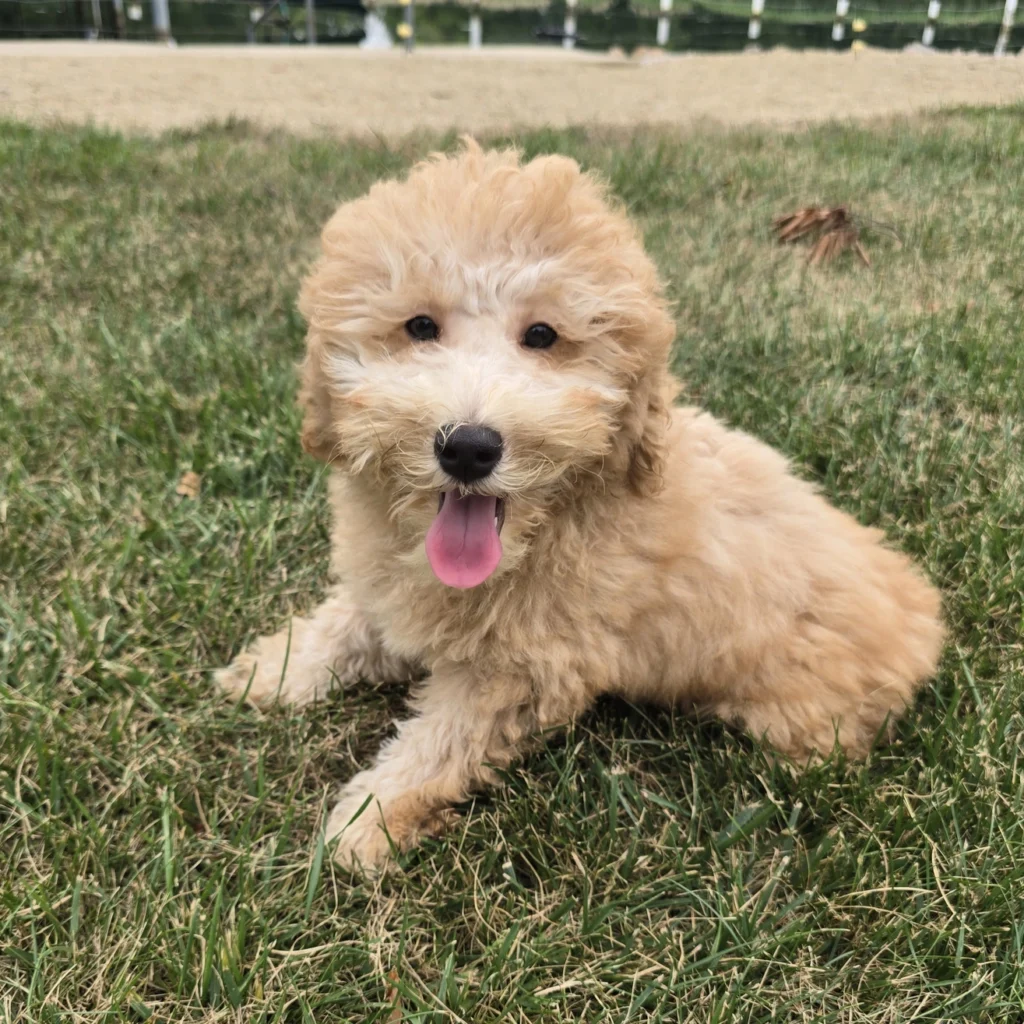
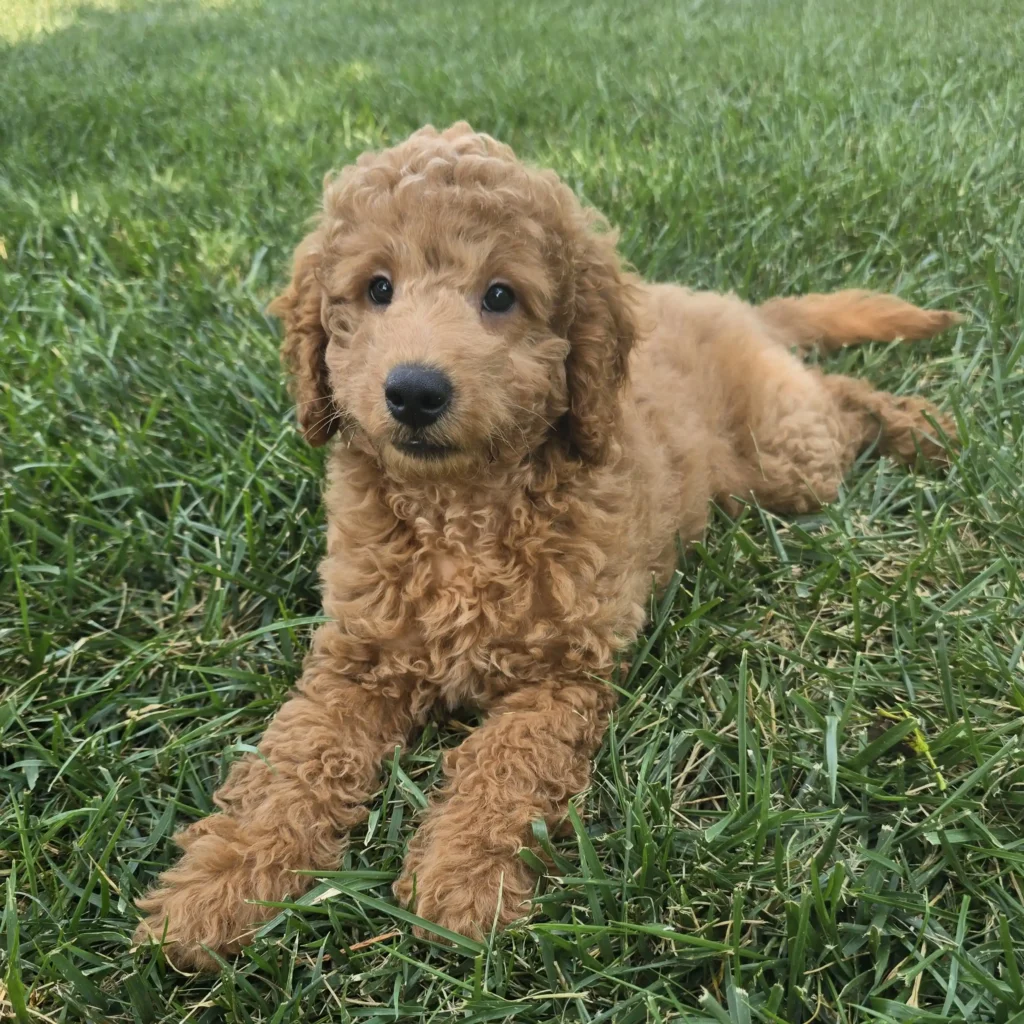
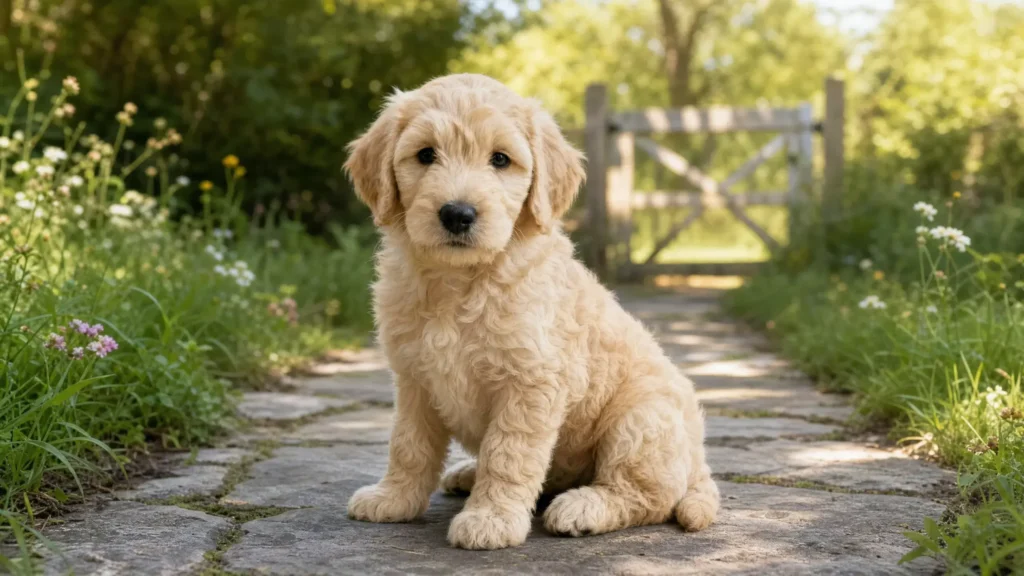
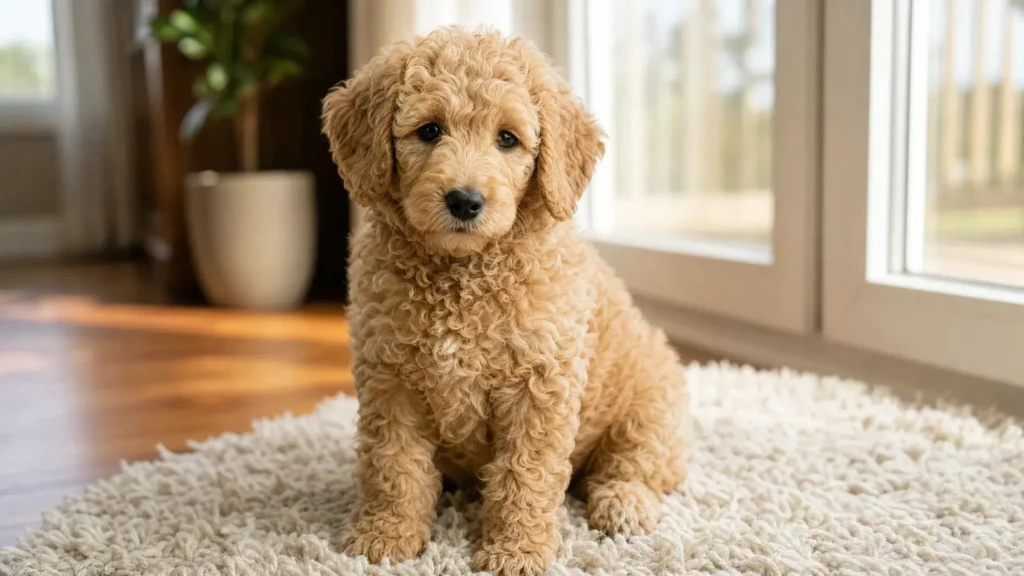
The F1BB Mini Goldendoodle has a dense, tightly curled coat that sits close to the body and gives the dog a rounded, plush silhouette. Coat colors include:
- Cream and apricot. The most common colors in this generation, ranging from pale ivory to a rich golden tone, inherited from the Golden Retriever side of the lineage.
- Red. A deeper, coppery coat that tends to fade slightly with age, highly sought after by buyers who want a more striking look.
- Chocolate. A warm brown inherited from chocolate Poodle lines, consistent across the coat with minimal fading when bred carefully.
- Black and parti. Less common but entirely possible depending on the Poodle parent’s genetics. Parti coats feature two distinct colors in irregular patches.
Shedding, Coat Type, and Hypoallergenic Properties
The F1BB Mini Goldendoodle sheds less than any other standard Goldendoodle generation, making it the top recommendation for households where allergies are a genuine concern. At 87.5% Poodle genetics, the vast majority of puppies in an F1BB litter inherit the Poodle’s tightly curled, low-release coat. In practical terms, this means minimal hair on furniture and floors and significantly less airborne dander than you’d get from an F1 or even an F1B.
Is the F1BB Mini Goldendoodle the Most Hypoallergenic Goldendoodle Generation?
Among standard Goldendoodle generations, yes. The F1BB produces the most consistently hypoallergenic coat. The curly coat structure traps loose hairs and dander against the skin rather than releasing them into the environment, reducing airborne allergen exposure substantially. No dog is completely allergen-free. The American College of Allergy, Asthma & Immunology confirms that dog allergies are triggered by proteins found in dander, saliva, and urine, not the hair itself. The F1BB’s low-shedding coat reduces allergen distribution throughout the home compared to higher-shedding breeds.
For buyers with moderate to severe pet allergies, spending time with a specific puppy before committing, or asking the breeder about saliva and coat testing, is always a smart step.
What to Expect: Coat Texture, Curl Pattern, and Grooming Frequency
The tighter the curl, the more maintenance required. The F1BB coat demands a consistent grooming routine to prevent matting. Expect the following schedule:
- Daily brushing. The dense, curly coat mats quickly, especially behind the ears, under the collar, and around the legs. A slicker brush followed by a metal comb catches tangles before they tighten into mats.
- Professional grooming every 6 to 8 weeks. Most owners keep the coat trimmed to 1 to 2 inches, which reduces brushing time and keeps the dog comfortable year-round.
- Bathing every 3 to 4 weeks. Regular bathing removes accumulated dander, which matters for allergy-sensitive households. Always dry the coat thoroughly to prevent skin irritation.
- Ear cleaning every 2 weeks. The Poodle-dominant coat means hair grows inside the ear canal, a known risk factor for ear infections according to VCA Animal Hospitals. Regular cleaning keeps this manageable.
Temperament, Personality, and Family Compatibility
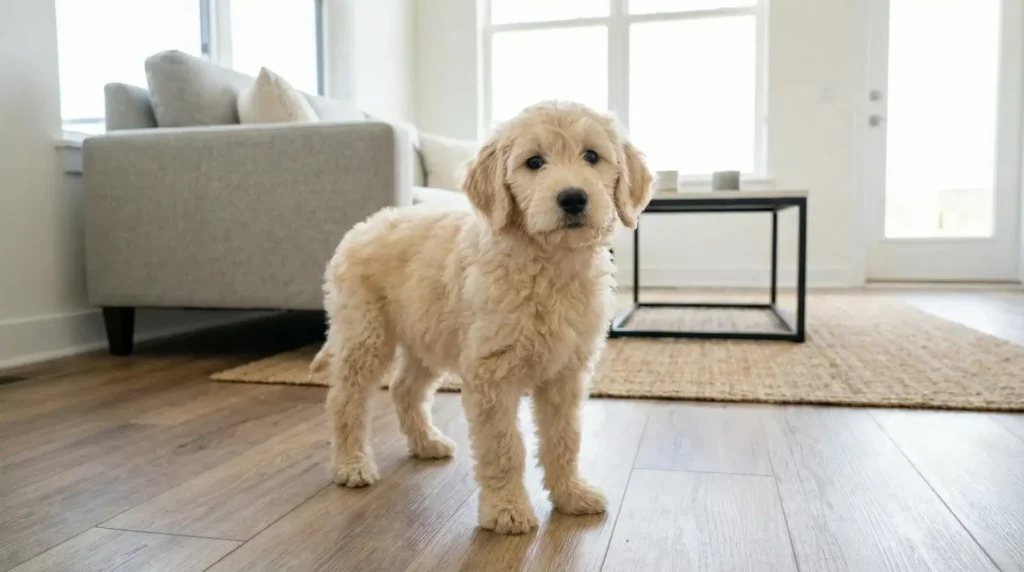
The F1BB Mini Goldendoodle is an intelligent, affectionate, and eager-to-please companion that fits naturally into a wide range of households. The high Poodle percentage makes this generation sharper and more responsive than earlier crosses, but the retained Golden Retriever genetics keep the temperament warm, social, and family-oriented. These are not aloof or independent dogs. They bond closely with their people and thrive on daily interaction.
Is the F1BB More Like a Poodle or a Golden Retriever in Personality?
This is the most common personality concern about the F1BB generation, and the honest answer is: closer to a Poodle, but with clearly visible Golden Retriever warmth. The Poodle influence shows up in heightened trainability, mental sharpness, and a tendency to be more alert and task-focused. The Golden Retriever contribution shows up in the dog’s social ease, patience with children, and strong desire for human closeness. Poodles rank second among all breeds in Stanley Coren’s dog intelligence research, published in Psychology Today. A dog that is 87.5% Poodle is genuinely easy to train from an early age.
F1BB Mini Goldendoodle With Kids, Other Pets, and in Small Spaces
Few family dogs match the F1BB Mini Goldendoodle’s combination of compact size, low shedding, and gentle temperament. Key compatibility points:
- Children. Gentle and playful with kids of all ages. The Mini size makes rough play less risky than with larger breeds, and the Golden Retriever side keeps the dog patient and tolerant rather than reactive.
- Other pets. Generally excellent with other dogs and cats, particularly when socialized from 8 to 16 weeks. The American Veterinary Society of Animal Behavior identifies this window as the most critical for long-term social behavior.
- Apartment and small-space living. The Mini’s manageable energy level and compact adult size make it well-suited to apartment life, provided it receives 30 to 45 minutes of daily exercise and adequate mental stimulation.
- Separation anxiety. The strong bond this generation forms with its owners can tip into separation anxiety if the dog is left alone for long periods routinely. Crate training early and gradual alone-time practice from puppyhood prevents most issues.
Health, Lifespan, and What Reputable Breeders Test For
A healthy F1BB Mini Goldendoodle lives between 12 and 15 years, consistent with other Mini Goldendoodle generations and slightly longer than Standard-sized crosses. This reflects the well-documented relationship between smaller body size and longevity in dogs. Health outcomes depend heavily on the quality of the parent dogs and the testing protocols the breeder follows.
Common health conditions to be aware of include hip and elbow dysplasia, progressive retinal atrophy (PRA), von Willebrand’s disease, and hypothyroidism, all of which can be screened through genetic testing before breeding. Reputable breeders provide OFA (Orthopedic Foundation for Animals) certifications for hips and elbows, CAER eye clearances, and a full genetic panel for both parent dogs. The Orthopedic Foundation for Animals maintains a public database where you can verify any breeder’s health testing claims independently.
Does Backcrossing Reduce Hybrid Vigor: The Honest Answer
Backcrossing does reduce the genetic diversity associated with classic hybrid vigor, but the practical health impact is minimal when breeders test thoroughly. Hybrid vigor, the improved health and vitality seen in first-generation crosses, is strongest in the F1 generation. Each subsequent backcross narrows the gene pool slightly. The F1BB’s coat and allergy benefits come precisely from that narrowing, and responsible health testing of parent dogs compensates for the reduced genetic diversity effectively. Choosing a breeder who runs full genetic panels on both parents is the single most important health decision you can make for an F1BB puppy.
F1BB Mini Goldendoodle Price
F1BB Mini Goldendoodle puppies for sale from reputable breeders typically range from $2,000 to $4,000 in the United States, with pricing varying by location, coat color, breeder reputation, and included health guarantees. The F1BB generation often sits at the higher end of the Goldendoodle price spectrum because producing it requires maintaining three generations of carefully health-tested dogs, a significant investment in time and resources.
Conclusion
The F1BB Mini Goldendoodle is the right choice when coat predictability and allergy management are the priority. At 87.5% Poodle, it delivers the most consistent low-shedding results of any standard generation — but that comes with a grooming commitment and a higher purchase price that buyers should plan for honestly.
If the F1BB sounds like the right fit for your household, Love of Puppies breeds health-tested Mini Goldendoodles with full genetic panels on both parents and a written health guarantee.
FAQ
Is the F1BB better than the F1B for allergy sufferers?
For most allergy-sensitive households, yes. The F1BB’s 87.5% Poodle genetics produce a tighter, lower-shedding coat than the F1B’s 75% Poodle makeup. Individual variation still exists within litters, so spending time with a specific puppy before purchase is always recommended for those with moderate to severe allergies.
How big does an F1BB Mini Goldendoodle get when fully grown?
A full grown F1BB Mini Goldendoodle typically reaches 15 to 35 pounds and 13 to 20 inches in height. Most reach their adult size between 11 and 14 months. Parent weights are the most reliable predictor, so ask your breeder for both parents’ adult measurements.
How long do F1BB Mini Goldendoodles live?
The average lifespan is 12 to 15 years with proper care, nutrition, and routine veterinary attention. Smaller dogs tend to live longer than larger ones, giving the Mini size a longevity advantage over Standard Goldendoodle generations.
What is the difference between an F1BB Mini Goldendoodle and a Multigen?
Both are high-Poodle-percentage generations with low-shedding coats. The F1BB follows a specific three-step lineage from known F1 and F1B parents, while Multigen refers to any Goldendoodle beyond the second generation with varied ancestry. Reputable Multigen programs can produce equally consistent results, but the F1BB lineage is more straightforward to verify.