Table of Contents:
- What Are the Three Mini Goldendoodle Coat Types
- Why Do Mini Goldendoodles Have Different Coat Types
- Shedding and Allergies by Coat Type
- Grooming and Maintenance by Coat Type
- Puppy Coat vs. Adult Coat: What to Expect as They Mature
- How to Choose the Right Coat Type for Your Family
- Frequently Asked Questions
A Mini Goldendoodle can be born with one of three coat types (straight, wavy, or curly), and each one looks, sheds, and behaves differently. The texture depends on which genes a puppy inherits from its Golden Retriever and Poodle ancestry.
What Are the Three Mini Goldendoodle Coat Types
Mini Goldendoodles come in three recognized coat textures (straight, wavy, and curly) plus a rare fourth “improper” variant that some breeders still group under straight. Each type reflects a different balance of Poodle and Golden Retriever genetics. The mini goldendoodle wavy coat is the most common of the three, while a fully curly coat is generally the most sought-after among buyers focused on allergies. Below is a breakdown of what to expect from each.
Straight Coat: Appearance and Traits
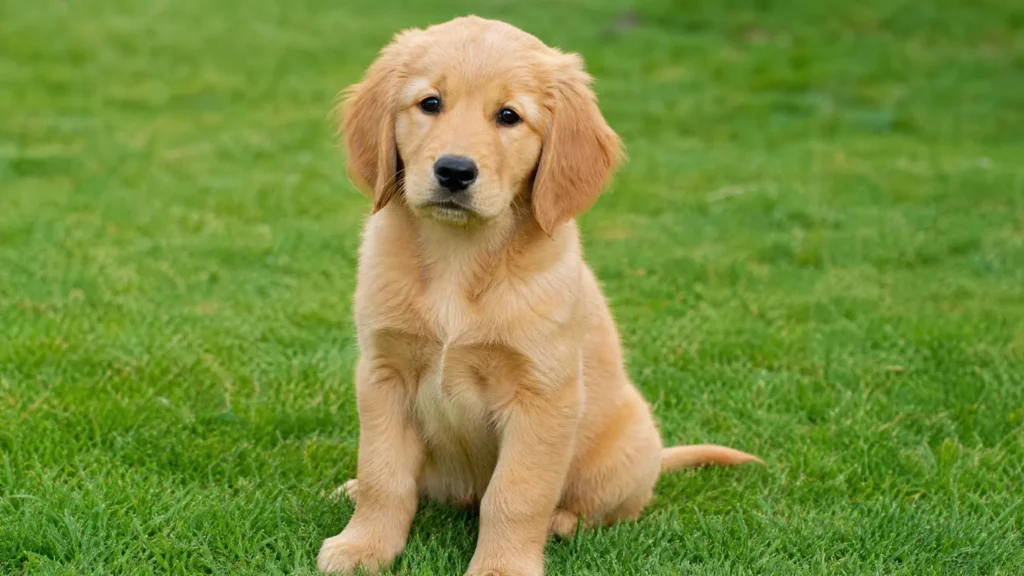
A mini goldendoodle straight hair coat closely resembles the smooth, flowing fur of a Golden Retriever parent. It still carries facial furnishings – the fluffy eyebrows, beard, and mustache typical of Doodles – which is what separates it from a true “improper” or flat coat. Straight-coated Minis shed noticeably more than their wavy or curly littermates, closely mirroring the seasonal shedding pattern of a Golden Retriever, including heavier blowouts in spring and fall. The upside is a soft, silky texture that many owners describe as low-fuss to touch, even if it isn’t low-fuss to clean up around the house.
Wavy (Fleece) Coat: Appearance and Traits
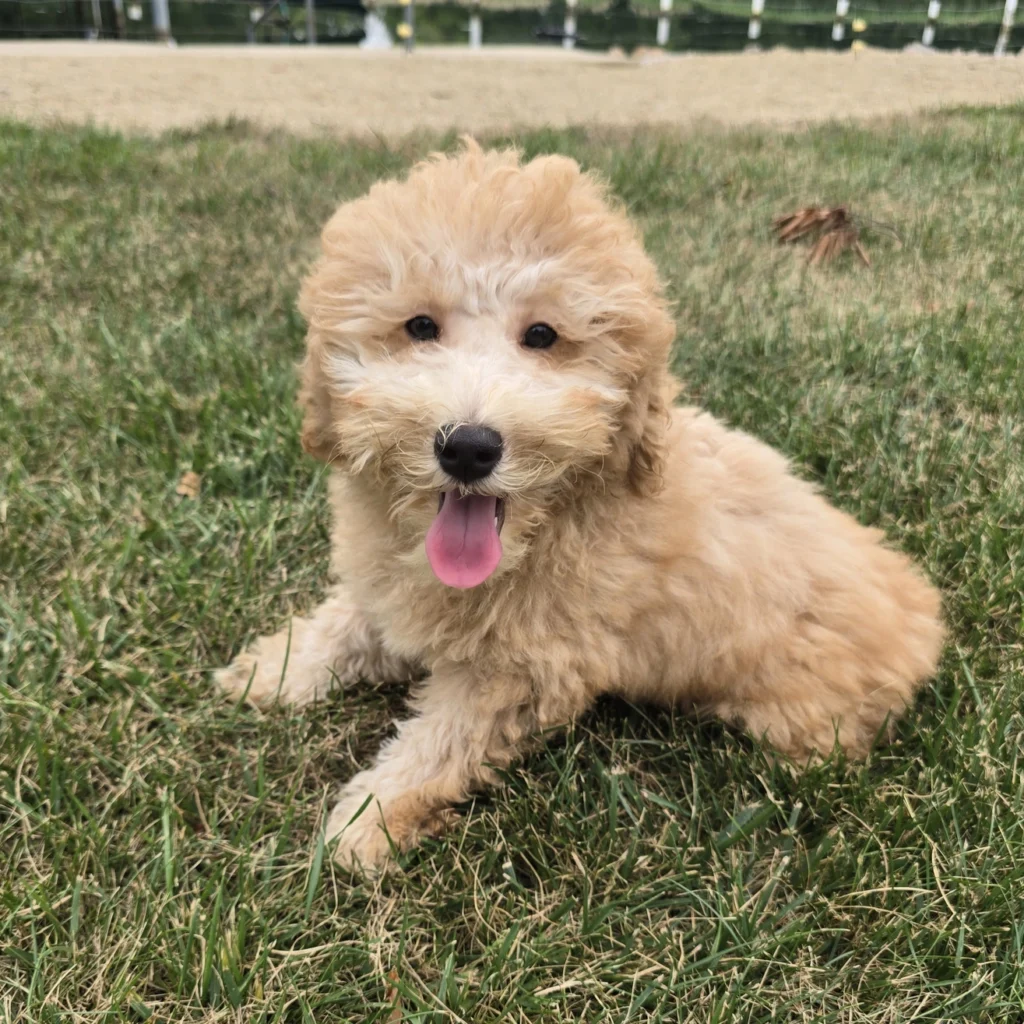
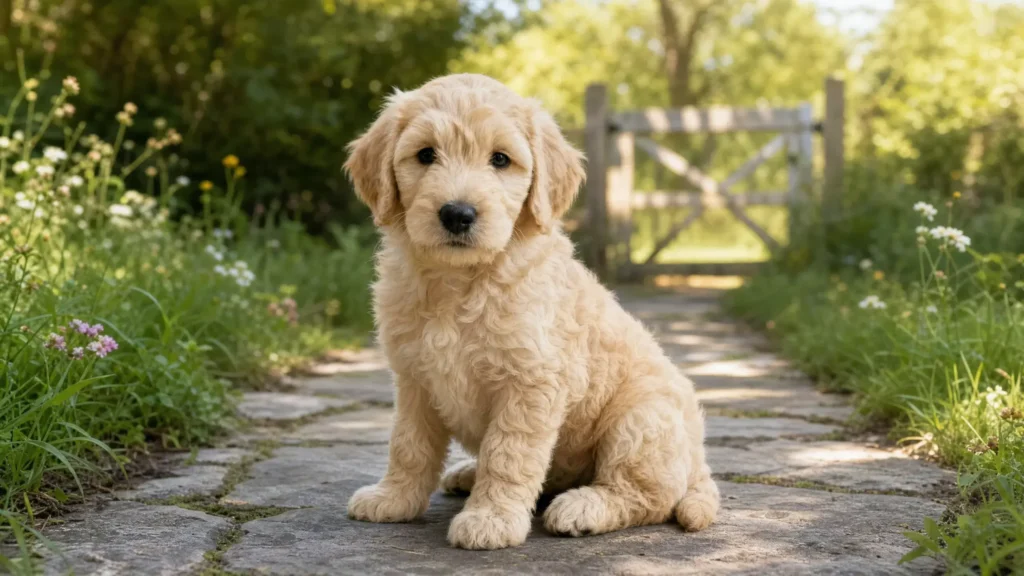
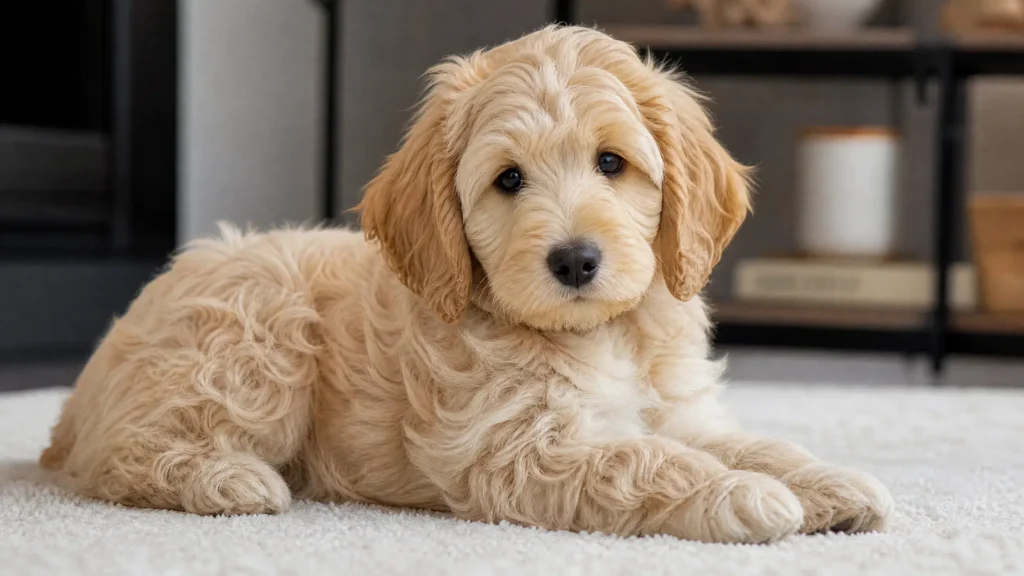
A wavy coat, often called a “fleece”, sits between straight and curly and is the texture most breeders consider the classic Goldendoodle look. It has a soft, plush feel similar to an Angora goat’s fur, with loose waves that give the coat a relaxed, tousled appearance. Shedding is low to minimal, which is why this coat type is frequently marketed as the most versatile option for families balancing appearance, allergies, and manageable upkeep. Puppies with this texture often look almost straight at birth, with the wave becoming fully visible once the adult coat comes in, typically between 8 and 12 months of age.
Curly (Wool) Coat: Appearance and Traits
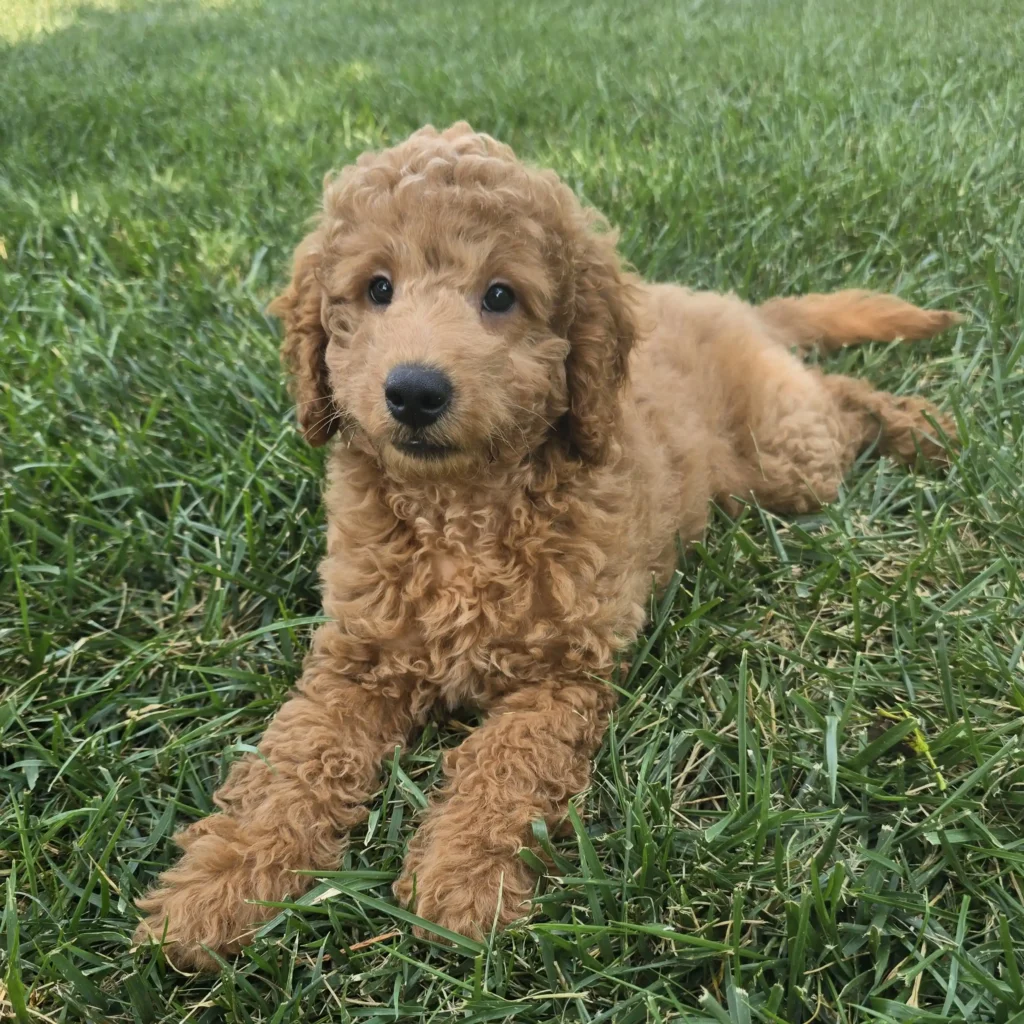
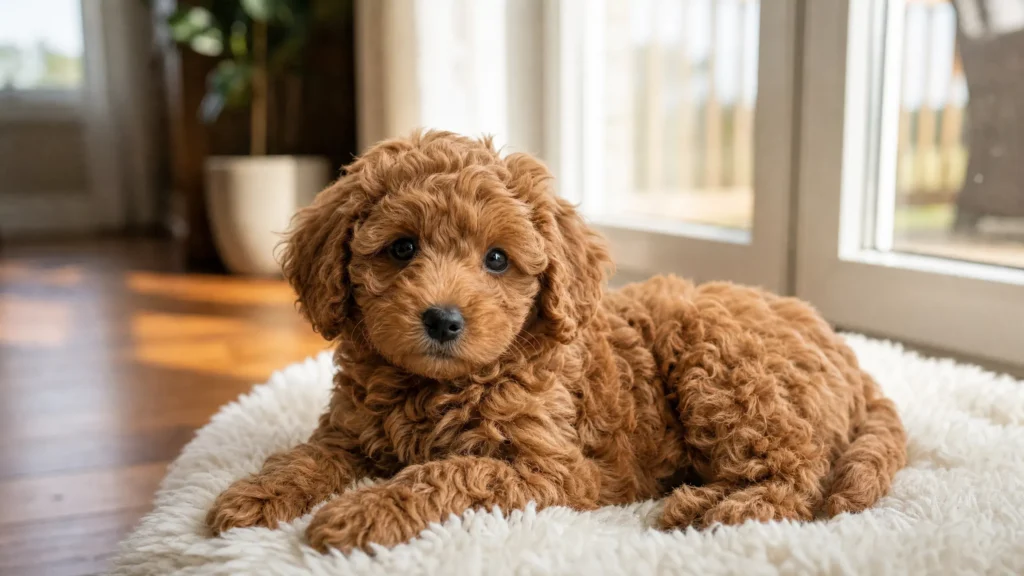
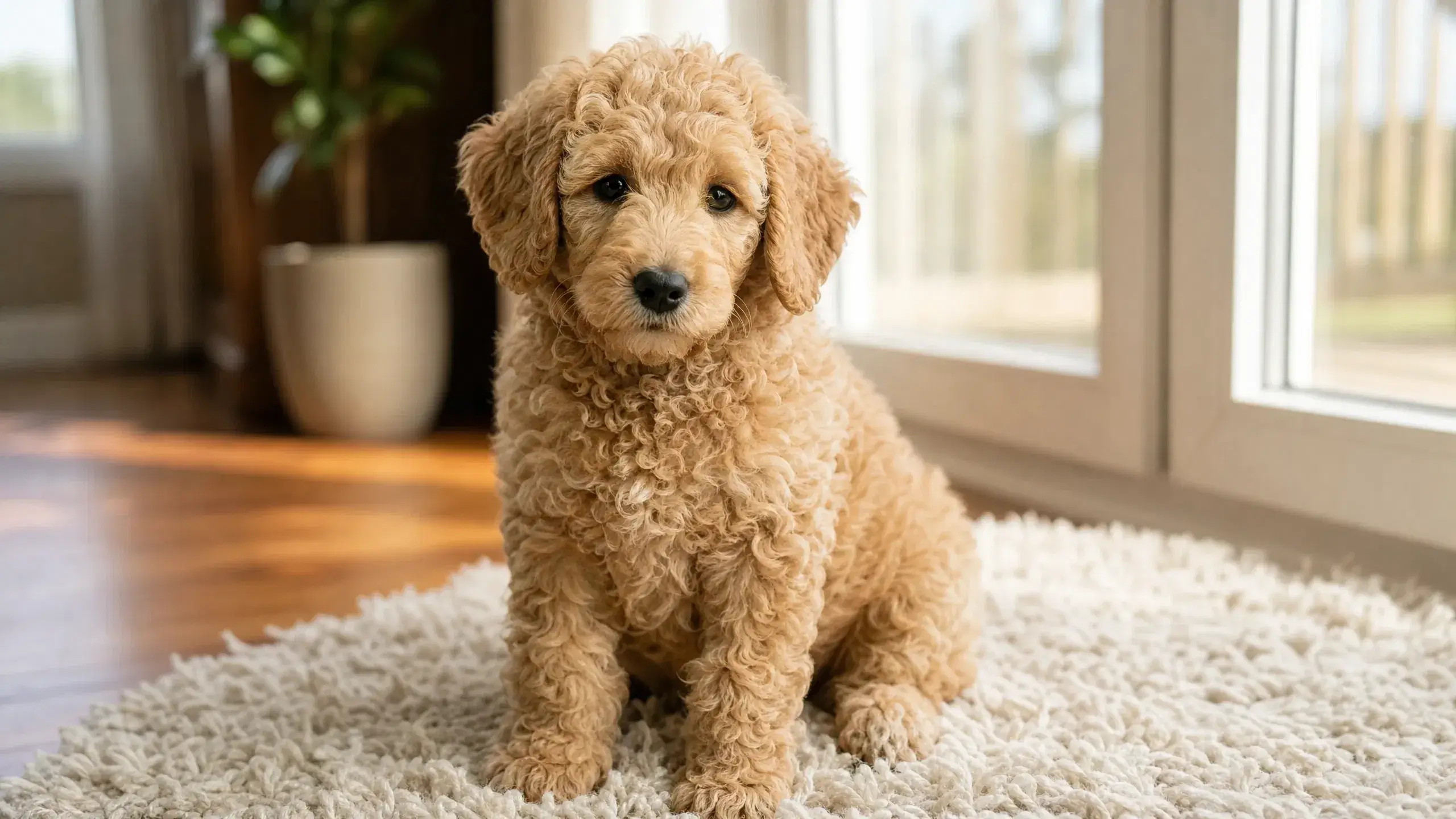
A true curly coat looks and feels almost identical to a Poodle’s coat, with tight, spring-like curls covering the entire body, including the face and ears. This texture sheds the least of the three and is generally regarded as the most allergy-friendly, since less loose hair means less airborne dander. The tradeoff is maintenance. Tight curls trap loose hair inside the coat instead of letting it fall out, so without regular brushing the coat mats quickly, particularly behind the ears and under the legs.
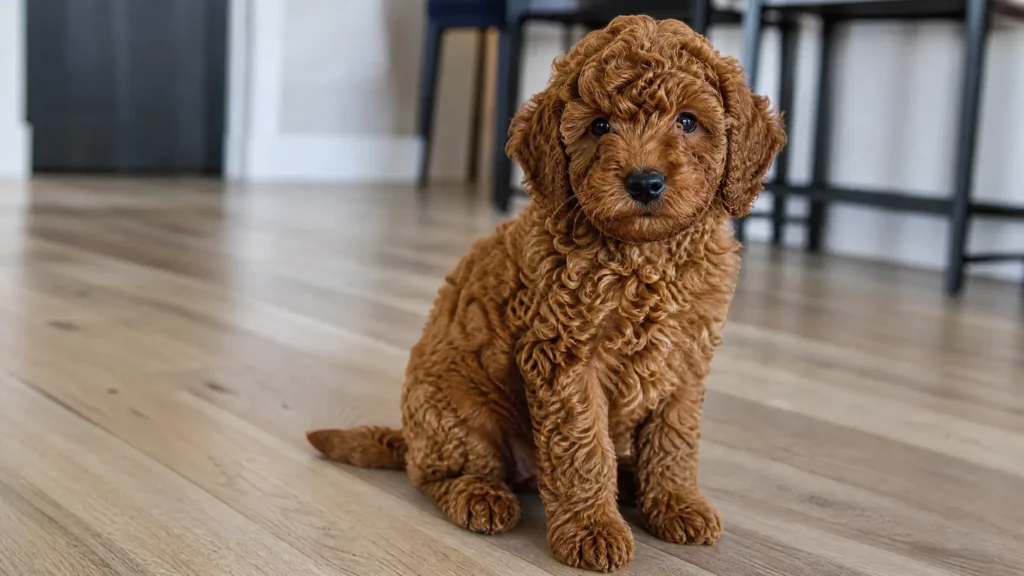
Straight vs Wavy vs Curly: Side-by-Side Comparison
The clearest way to compare all three coat types is shedding level against grooming demand, since the two tend to move in opposite directions.
| Coat Type | Shedding Level | Brushing Frequency | Professional Grooming | Allergy-Friendliness |
| Straight | High (similar to a Golden Retriever) | 1–2x per week | Every 10–12 weeks | Lowest |
| Wavy (fleece) | Low to minimal | 3–4x per week | Every 8–10 weeks | Moderate to high |
| Curly (wool) | Minimal to none | Daily | Every 4–8 weeks | Highest |
Why Do Mini Goldendoodles Have Different Coat Types
Coat type in a Mini Goldendoodle comes down to two specific genes inherited unevenly from the Poodle and Golden Retriever parent lines, not chance. Every puppy in a litter can end up with a different texture even when both parents look identical, because each pup receives its own combination of gene copies. This is confirmed by canine genetics research published in Science, which identified the specific gene variants responsible for curl and furnishings in dogs. Two gene systems in particular drive nearly all of the visible variation.
The Furnishings Gene Explained
The furnishings gene, known scientifically as RSPO2, is what produces the eyebrows, beard, and mustache typical of a Doodle face. A puppy with at least one copy of this gene will grow the wiry facial hair associated with Poodles; a puppy without it looks more like a plain-faced Golden Retriever, a trait sometimes labeled an “improper coat.” Furnishings and curl are inherited separately, so it’s possible to get a dog with full facial furnishings but a straight body coat, or the reverse.
The Curl Gene and How It Shapes Texture
The curl gene, KRT71, influences how tightly the hair shaft coils, and a puppy’s texture tends to track how many copies it inherits. Zero copies of the curl gene typically produces a straight coat, one copy typically produces a wavy coat, and two copies typically produces a tight, curly coat close to a Poodle’s, though real-world outcomes can vary somewhat due to other modifying factors. Reputable breeders increasingly DNA-test their breeding pairs for both RSPO2 and KRT71 to predict litter outcomes more accurately before puppies are even born.
Does Generation (F1, F1B, F2, Multigen) Determine Coat Type
Generation labels like F1, F1B, and Multigen influence the odds of a given coat type but do not guarantee it. An F1B Goldendoodle, bred back to a Poodle, typically carries around 75% Poodle genetics versus 50% in an F1, which raises the statistical likelihood of a curlier, lower-shedding coat. That said, genetics don’t work on averages within a single litter – two F1B siblings can still end up with noticeably different textures depending on which specific gene copies they inherit. Buyers who want a guaranteed outcome should ask for DNA test results rather than relying on generation alone.
Shedding and Allergies by Coat Type
Curly coats shed the least of the three Mini Goldendoodle textures, followed by wavy coats, with straight coats shedding the most by a wide margin. Shedding level is the single biggest factor separating the three types in day-to-day life, since it directly affects vacuuming frequency, clothing lint, and airborne allergens. Straight-coated Minis typically need more frequent lint-rolling and vacuuming, while curly-coated dogs can go longer stretches without noticeable loose hair around the home.
Which Coat Sheds the Least
A tightly curly coat sheds the least because the coiled hair shaft traps loose fur inside the coat rather than releasing it into the environment. Wavy coats shed moderately, releasing some hair but far less than a straight coat. Straight coats shed the most, closely mirroring a purebred Golden Retriever’s seasonal shedding pattern, including heavier blowouts in spring and fall.
Is Any Coat Type Truly Hypoallergenic
No coat type is 100% hypoallergenic, including a full mini goldendoodle curly coat, because allergens come from dander and saliva proteins, not just shed hair. So-called hypoallergenic breeds simply produce and spread fewer allergens. They don’t eliminate them entirely. Curly and wavy coats trap dander closer to the skin instead of dispersing it through the home, which reduces allergic reactions for sensitive individuals.
Best Coat Type for Allergy-Sensitive Households
For households with mild to moderate allergies, a wavy or curly coat is the safer choice over a straight coat.
- Curly coat traps the most dander and sheds the least, making it the top pick for anyone with diagnosed pet allergies.
- Wavy coat offers a strong middle ground, cutting shedding significantly compared to straight while requiring less grooming time than curly.
- Straight coat should generally be avoided in allergy-sensitive homes, since it sheds close to Golden Retriever levels and disperses more dander throughout living spaces.
Grooming and Maintenance by Coat Type
Grooming demands rise directly with coat curl, meaning curly coats require the most upkeep and straight coats require the least. This inverse relationship with shedding is the core tradeoff buyers weigh when picking a puppy: less shedding almost always means more brushing. Professional groomers typically recommend a coat-specific routine rather than treating all three textures the same way.
Straight Coat Grooming Routine
Mini goldendoodle straight hair needs the least hands-on care of the three types, typically just 1–2 brushing sessions per week lasting 10–15 minutes each. Because the coat rarely mats, professional grooming can often be stretched to every 10–12 weeks, and some owners manage with only a few professional visits per year. The main ongoing task is managing loose hair around the home rather than the coat itself.
Wavy Coat Grooming Routine
A wavy or fleece coat needs brushing 3–4 times per week to prevent tangles from forming in friction zones like behind the ears and under the legs. Professional grooming every 8–10 weeks keeps the coat at a manageable length and typically costs in the range of $75–$150 depending on region and groomer. Because the curl pattern is looser than a true curly coat, air circulates more easily through the fur, which reduces matting risk even with less frequent attention.
Curly Coat Grooming Routine
A curly coat requires daily brushing with a slicker brush or wide-tooth comb, since tight curls tangle and mat within days if neglected. Professional grooming appointments every 4–6 weeks are a common recommendation, and many owners also schedule frequent face trims to prevent hair from irritating the eyes. Skipping even a few days of brushing on a curly coat can lead to mats that require shaving out rather than combing loose.
Which Coat Type Is Easiest for First-Time Owners
Straight and wavy coats are generally the easier options for first-time owners, since both tolerate a missed brushing session or two without matting. A tightly curled coat demands daily consistency that can overwhelm a busy household unaccustomed to grooming routines. Owners who want lower shedding without the daily time commitment of a curly coat often find the wavy texture to be the most realistic long-term fit.
Puppy Coat vs. Adult Coat: What to Expect as They Mature
A Mini Goldendoodle’s coat texture is not fully set at birth and typically continues developing well into the dog’s first year. Puppy fur is almost always softer and looser than the adult coat that eventually grows in, which means a puppy that looks straight at eight weeks can mature into a noticeably wavier adult. This transition period, often called the “coat change,” is one of the most confusing stages for new owners trying to judge what they’re getting.
When Does a Goldendoodle’s Coat Change
The coat change is generally reported to begin somewhere around 4–6 months and to be largely complete by 8–12 months, though individual dogs can vary and some continue subtle texture shifts beyond that. During this window, the soft puppy fuzz sheds out and is replaced by coarser adult hair, which is often when true curl or wave becomes visible for the first time. Owners frequently notice the face and muzzle change first, followed by the body coat.
How to Predict Your Puppy’s Adult Coat
Breeders can offer a reasonably reliable prediction by examining a puppy’s muzzle for early crimps and waves well before the full coat change occurs.
- A prominent mustache or crimped muzzle fur usually signals a curlier adult coat is coming.
- A shaggy, beard-like muzzle without tight crimping typically points toward a wavy adult coat.
- Short, smooth, neat facial fur with no visible waves usually indicates a straight or improper adult coat.
DNA testing for the RSPO2 and KRT71 genes remains the most accurate method, and increasingly reputable breeders offer these results before a puppy ever goes home.
How to Choose the Right Coat Type for Your Family
The right coat type comes down to weighing allergy needs against realistic grooming capacity, since no single texture is objectively “best” for every household. A family with no allergy concerns and little time for grooming may do best with a straight or wavy coat, while an allergy-sensitive household should prioritize curly or wavy over straight regardless of grooming effort required. Making this decision before bringing a puppy home avoids costly surprises later.
Coat Type and Cost Differences
Curly-coated puppies frequently carry a price premium over straight or wavy littermates, simply because demand for low-shedding coats outpaces supply within most litters. Breeders who DNA-test for curl and furnishings also tend to charge more across the board, reflecting the added cost of genetic testing. Buyers should treat coat type as one cost factor among several, alongside generation, coloring, and breeder reputation.
Which Coat Type Is Best Overall
There is no universally “best” Mini Goldendoodle coat type, only the best fit for a specific household’s allergy needs and grooming bandwidth. Curly wins for lowest shedding and highest allergy tolerance, wavy wins for the best overall balance of low maintenance and moderate shedding, and straight wins for owners who prioritize minimal grooming time above all else. Matching the coat honestly to daily habits, rather than chasing the most popular look, leads to a far better long-term fit for both the dog and the family.
Frequently Asked Questions
Is a straight-coated Mini Goldendoodle still a real Goldendoodle?
Yes. A straight coat simply means the puppy inherited zero copies of the curl gene, but it still carries Poodle-derived furnishings and the same Goldendoodle temperament and size range. It is a fully legitimate, if less common, coat outcome within the breed.
Can two wavy-coated parents produce a curly puppy?
Yes, this happens regularly. Both parents can carry a hidden curl gene copy even with a wavy phenotype themselves, meaning a percentage of their puppies can be born curlier than either parent.
Does coat type affect a Mini Goldendoodle’s size or temperament?
No. Coat texture is controlled by separate genes from those affecting size and personality, so straight, wavy, and curly Minis show no meaningful differences in temperament or adult weight.
How much does professional grooming cost for a curly coat versus a straight coat?
Curly coats are typically groomed every 4–6 weeks and straight coats every 10–12 weeks, at broadly similar per-visit prices. Because of the difference in frequency, straight-coat grooming tends to cost noticeably less over a year than curly-coat grooming.
Should I choose an F1B Goldendoodle if I want a curly coat?
An F1B has better odds of a curlier coat due to higher average Poodle genetics, but it is not a guarantee. Always ask for parent DNA test results rather than relying on generation labels alone.