Table of Contents:
- Toy Goldendoodle vs Mini Goldendoodle: Size and Weight Compared
- What Determines the Size Difference
- Temperament and Energy Level
- Exercise, Grooming, and Daily Care
- Health, Lifespan, and Size-Related Risk
- Choosing the Right Size for Your Life
- Frequently Asked Questions
A Toy Goldendoodle typically weighs 10 to 20 pounds, while a Mini Goldendoodle runs 15 to 35 pounds, a gap that comes entirely from which size Poodle was used as the parent. In the toy goldendoodle vs mini goldendoodle comparison, both dogs share the exact same Golden Retriever and Poodle cross, so the difference is really about scale, not temperament or breed.
Toy Goldendoodle vs Mini Goldendoodle: Size and Weight Compared
A Toy Goldendoodle stands roughly 10 to 14 inches tall and weighs 10 to 20 pounds, while a Mini Goldendoodle stands 13 to 20 inches and weighs 15 to 35 pounds. Both fall under the broader “small Goldendoodle” umbrella, but the overlap in the middle of these ranges is exactly why so much confusion exists between the two. The clearest way to understand the gap is to look at each size on its own first.
| Size | Typical Adult Weight | Typical Adult Height |
| Toy Goldendoodle | 10 to 20 lbs | 10 to 14 inches |
| Mini Goldendoodle | 15 to 35 lbs | 13 to 20 inches |
Is There a Clear Cutoff Between Toy and Mini
There’s no single, industry-wide cutoff separating a Toy Goldendoodle from a Mini Goldendoodle, which is the main source of buyer confusion in this space. Terms like “Teacup,” “Micro,” and “Petite” get used by different breeders to describe overlapping weight ranges, sometimes even within the same litter description. A few points help cut through the inconsistency.
- No governing body defines Goldendoodle sizes. Unlike a purebred dog, no kennel club maintains an official size standard for Goldendoodles, so each breeder sets their own category boundaries.
- “Teacup” and “Micro” aren’t standardized terms. These labels describe an especially small Toy, but the exact weight they refer to shifts from breeder to breeder.
- Always ask for the parent’s exact size. A breeder’s stated category matters less than the actual height and weight of the Poodle parent, since that number predicts the puppy’s adult size far more reliably than a marketing label.
What Determines the Size Difference
The entire size gap between a Toy and a Mini Goldendoodle comes down to one variable, the size of the Poodle parent, not anything related to the Golden Retriever side. A Toy Poodle and a Miniature Poodle are the same breed at different height classes, not separate breeds with different traits. Understanding that one variable clears up most of the confusion buyers run into.
Toy Poodle vs Miniature Poodle: The Real Source of the Size Gap
A Toy Poodle stands 10 inches or under at the shoulder, while a Miniature Poodle stands over 10 inches but no more than 15 inches, according to the official AKC Poodle breed standard. That roughly 5-inch height difference between the two Poodle varieties is the entire reason a Toy Goldendoodle ends up smaller than a Mini Goldendoodle. Everything else about the two crosses, from coat type to temperament tendencies, comes from the same shared Golden Retriever and Poodle genetics.
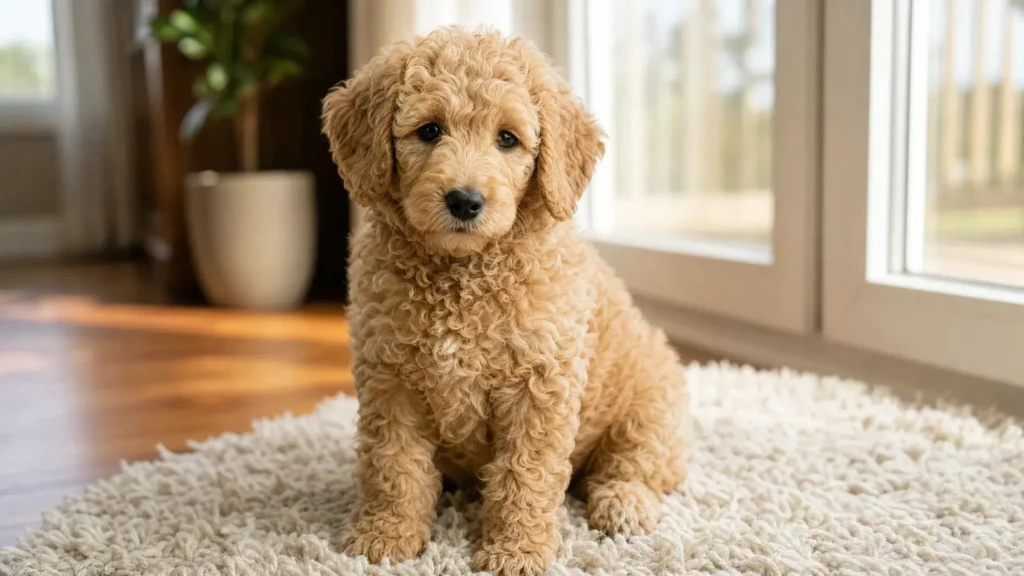
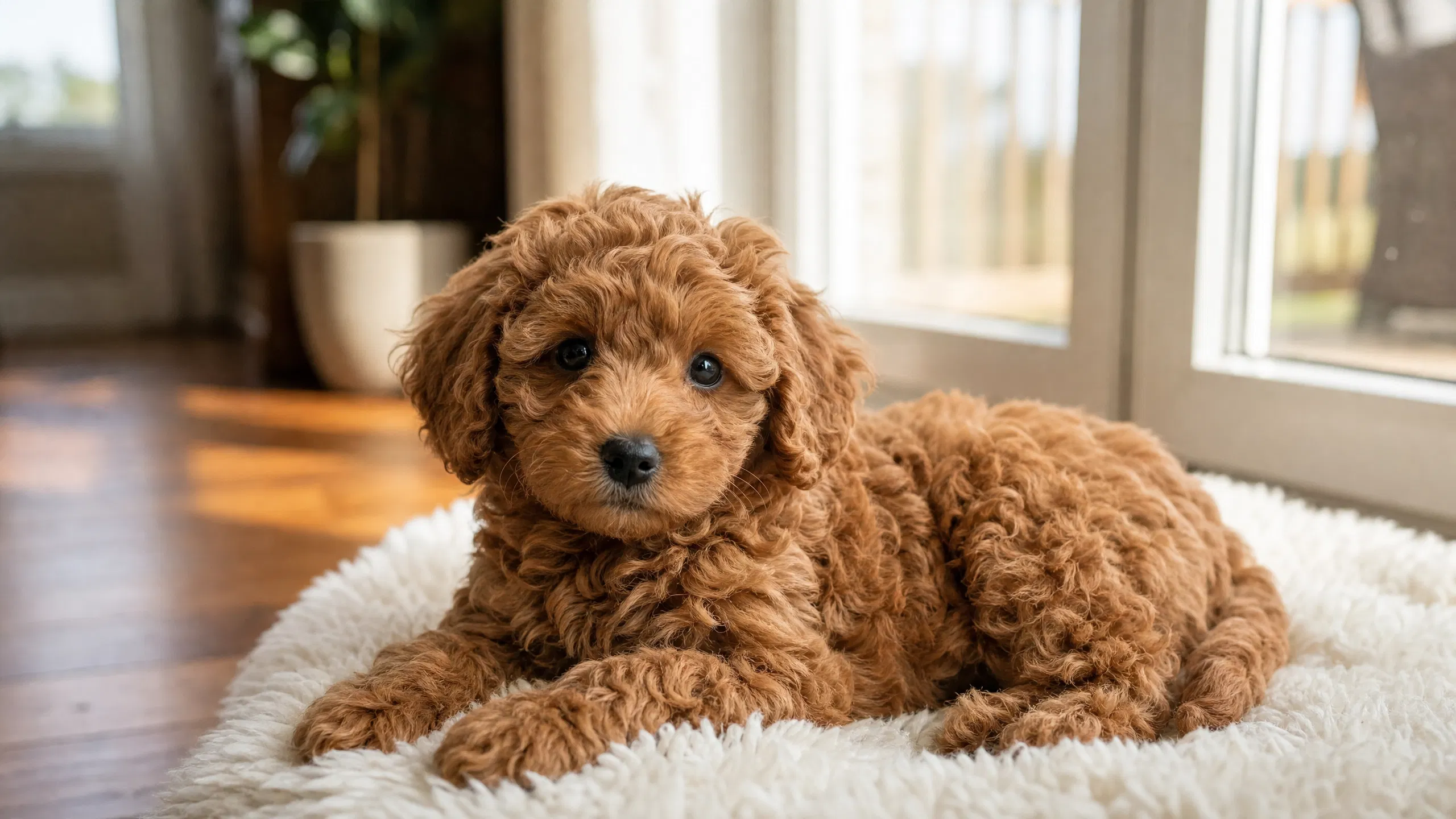
Toy Goldendoodle
Which Generation Gives the Most Predictable Size?
A multigenerational Toy or Mini Goldendoodle gives the most predictable adult size, while a first-generation F1 cross carries the most size variation. This happens because an F1 puppy is a straight 50/50 split between a full-sized Golden Retriever and a much smaller Poodle, two parents with a wide size gap between them. An F1B, bred back to a Poodle, and a multigenerational litter, bred from two Goldendoodle parents, both narrow that variation considerably since the size gap between the parents shrinks with each generation.

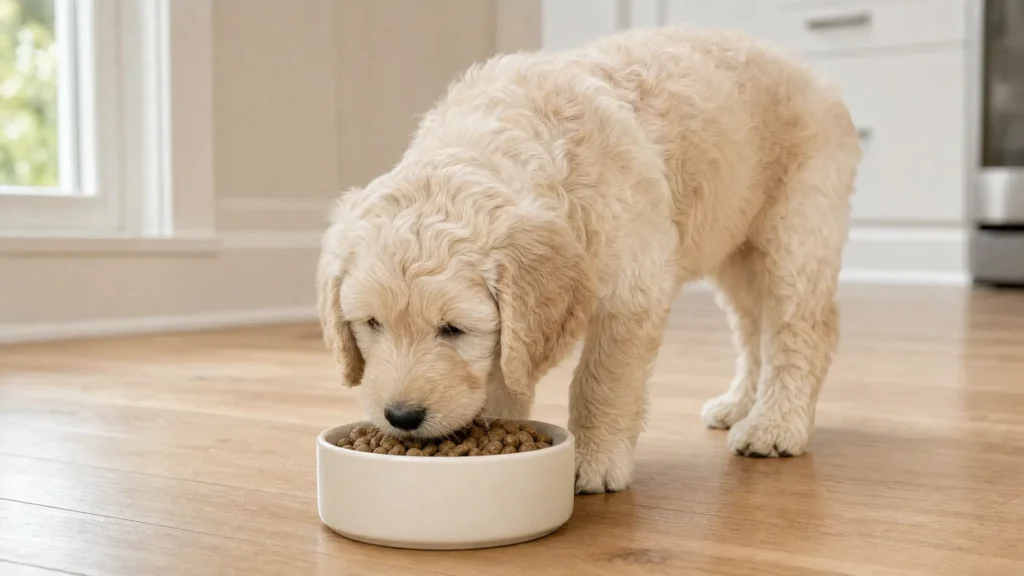
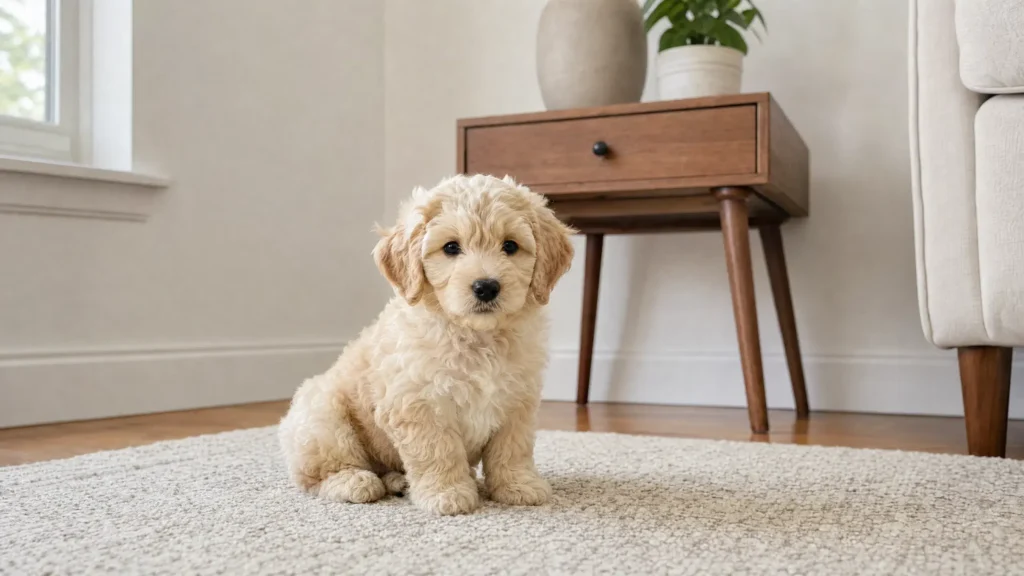
Mini Goldendoodle
Temperament and Energy Level
Toy and Mini Goldendoodles share the same basic temperament, since both come from identical parent breeds, though smaller size doesn’t automatically mean a calmer dog. Owners sometimes assume that going smaller means going quieter, but energy level tracks more with individual breeding lines and upbringing than with size alone. Both sizes are affectionate, people-focused, and highly trainable thanks to their shared Poodle intelligence.
A Toy Goldendoodle isn’t inherently calmer than a Mini Goldendoodle, since temperament comes from the same Golden Retriever and Poodle cross regardless of the Poodle’s size. Some Toy lines do run a bit lower-key simply because Toy Poodles themselves tend to be slightly less physically demanding than Miniature Poodles, but this is a mild tendency rather than a rule. Both sizes need consistent training and socialization to settle into a calm household routine.
Size on its own has little direct effect on temperament, and most of what looks like a size-based personality difference actually comes from generation, individual breeding line, and how the puppy was raised. A Toy Goldendoodle from a poorly socialized litter can be just as reactive as a larger dog raised the same way. Buyers chasing a specific temperament should ask breeders about the individual parents’ personalities rather than assuming size alone will deliver a calmer dog.
Exercise, Grooming, and Daily Care
A Mini Goldendoodle typically needs slightly more daily exercise than a Toy Goldendoodle, though the difference in day-to-day care between the two is smaller than most buyers expect. Both sizes share the same low-shedding coat type inherited from the Poodle side, so grooming routines look nearly identical regardless of size. The main practical differences show up in exercise tolerance and food portions rather than grooming frequency.
Daily Exercise Needs Compared
A Toy Goldendoodle generally does well with 20 to 30 minutes of daily activity, while a Mini Goldendoodle typically needs closer to 30 to 45 minutes. This gap tracks directly with body size and stamina, since a smaller dog tires faster and needs less total distance to feel satisfied. Both sizes benefit from a mix of a walk and some indoor or yard playtime rather than one long outing.
Grooming Requirements Compared
Grooming needs are nearly identical between the two sizes, since coat type comes from the Poodle parent rather than from overall body size. Both typically need a professional trim every 4 to 6 weeks and brushing two to three times a week at home to prevent matting. A Toy Goldendoodle simply takes a groomer less time per session purely because there’s less coat surface area to work through.
Health, Lifespan, and Size-Related Risk
Both Toy and Mini Goldendoodles carry a similar overall health profile, but very small dogs face a somewhat higher risk of certain joint issues than the Mini size does. Patellar luxation, a kneecap condition, shows up more often in toy and small-breed dogs generally, including Poodles specifically. Neither size faces meaningfully different lifespan expectations, both typically living 10 to 15 years with proper care.
Health Risks Specific to Each Size
Patellar luxation is diagnosed in roughly 7 percent of puppies overall, according to the American College of Veterinary Surgeons, and the condition affects toy and small breeds, including miniature and toy Poodles, more often than larger ones. VCA Animal Hospitals notes that about half of affected dogs have both knees involved, and that reputable breeders should screen breeding dogs for this condition before pairing them. A few specific risk factors are worth knowing before choosing between the two sizes.
- Smaller frame, more joint stress per pound. A Toy Goldendoodle’s lighter build still carries the same kneecap structure as a larger dog, which can make luxation slightly more likely.
- Dental crowding in very small dogs. Extremely small Toy lines can develop crowded teeth, since jaw size doesn’t always shrink in perfect proportion with body size.
- Reputable health screening matters more than size choice. Asking whether the Poodle parent has patellar and hip clearances matters far more to long-term health than picking Toy over Mini or vice versa.
Is a Toy Goldendoodle Too Small to Be Safe or Sturdy
A Toy Goldendoodle isn’t inherently fragile, but its smaller frame does call for more supervision around young children than a Mini Goldendoodle needs. Rough handling or accidental drops pose a bigger injury risk to a 12-pound dog than to a 30-pound one, simply due to the size difference. Families with very young kids often find a Mini’s slightly larger, sturdier frame easier to manage day to day, while a Toy tends to suit adult-only households or families with older, gentler children better.
Choosing the Right Size for Your Life
A Mini Goldendoodle typically costs a bit less than a Toy Goldendoodle, since Toy litters tend to be smaller and harder for breeders to produce consistently. Beyond cost, the right choice usually comes down to available space, household activity level, and whether young children are part of the picture. Both sizes make excellent companions once matched to the right home.
A Toy Goldendoodle often costs somewhat more than a Mini Goldendoodle, driven by smaller average litter sizes and higher demand for the smallest possible dog. According to PetMD, Goldendoodle puppies broadly range from $1,500 to $5,000 depending on size, breeder, and generation, and Toy litters frequently sit toward the higher end of that range. Ongoing costs like food and grooming run slightly lower for a Toy simply because there’s less dog to feed and groom.
Both sizes suit apartment living well, but a Mini Goldendoodle is generally the safer pick for families with young children, while a Toy tends to suit singles, couples, or households with older kids. According to the Goldendoodle Association of North America, size categories are based on adult height at the withers, which is worth confirming directly with a breeder rather than relying on marketing terms alone. First-time owners tend to do well with either size, since both share the same trainable, people-oriented temperament that makes Goldendoodles easy to live with.
Frequently Asked Questions
What is the actual size difference between a Toy Goldendoodle and a Mini Goldendoodle?
A Toy Goldendoodle typically weighs 10 to 20 pounds and stands 10 to 14 inches tall, while a Mini Goldendoodle weighs 15 to 35 pounds and stands 13 to 20 inches. The gap comes entirely from the size of the Poodle parent used in the cross.
Is a Toy Goldendoodle the same as a Teacup Goldendoodle?
Not officially, since neither term is standardized across breeders. “Teacup” usually describes an especially small Toy, but the exact weight it refers to varies from one breeder to the next.
Does a Toy Goldendoodle need less exercise than a Mini Goldendoodle?
Yes, generally. A Toy typically does well with 20 to 30 minutes of daily activity, while a Mini usually needs closer to 30 to 45 minutes.
Are Toy Goldendoodles less healthy than Mini Goldendoodles?
Not dramatically, though very small dogs do face a somewhat higher risk of patellar luxation and dental crowding. Choosing a breeder who screens for joint health matters more than the size choice itself.
Which is better for a family with young kids, Toy or Mini?
A Mini Goldendoodle is usually the safer choice for young children, since its sturdier frame holds up better to less careful handling. A Toy tends to suit adult households or families with older, gentler kids.